
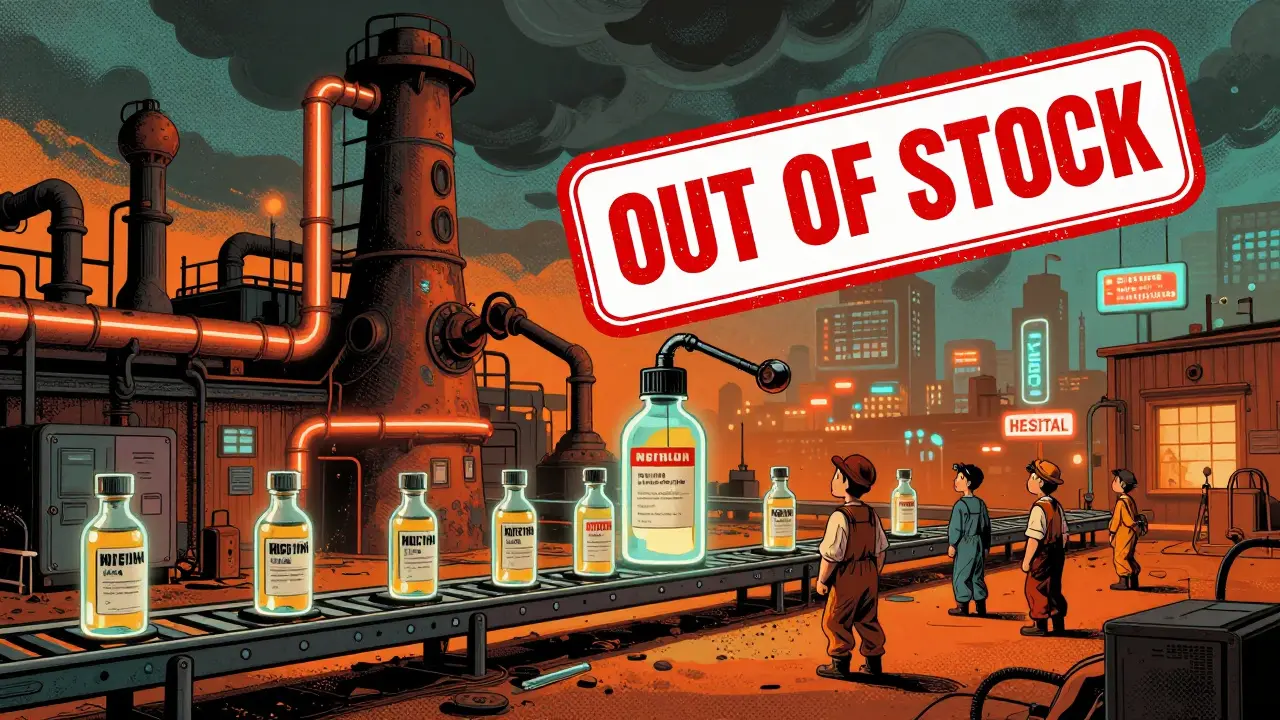
By mid-2025, drug shortages aren’t just a headline anymore-they’re a daily reality in hospitals, pharmacies, and homes. It’s not because factories shut down or raw materials vanished. It’s because the companies making these drugs are losing money every time they produce them.
Why Cheap Drugs Are Now Hard to Find
Generic drugs are supposed to be affordable. That’s the whole point. But when the price of active pharmaceutical ingredients (APIs) jumps 15% overnight, and the drugmaker can’t raise the selling price without losing customers, they face a brutal choice: absorb the loss or stop making it. In 2024, the FDA reported over 300 active drug shortages in the U.S. alone. By October 2025, that number had climbed to 412. The most affected? Insulin, antibiotics like amoxicillin, corticosteroids, and common heart medications like lisinopril. These aren’t niche drugs. They’re the backbone of everyday care. Manufacturers aren’t greedy. They’re trapped. The average profit margin on generic injectables has dropped to 3.2%-down from 12% in 2019. Meanwhile, raw material costs have risen 2.7% annually since 2023, according to the National Association of Manufacturers. For APIs sourced from India or China, tariffs added another 10-11.5% in 2025. Some manufacturers pay up to $18 per kilogram for a key chemical that cost $12 just two years ago.The Domino Effect: From Factory Floor to Pharmacy Shelf
It’s not just about cost. It’s about reliability. When a single supplier in Gujarat or Shanghai shuts down for regulatory inspections-or when a typhoon floods a chemical plant-manufacturers can’t just switch overnight. The FDA requires months of revalidation for any new source. So instead of switching, many companies just wait… and wait. One midsize U.S. generic manufacturer told a trade group in September 2025 that they had been unable to secure a stable supply of potassium chloride for 11 months. They tried three alternate suppliers. Two failed quality tests. The third couldn’t meet volume demands. So they stopped production. No one noticed until hospitals started rationing doses. The same thing happened with doxycycline. A Chinese supplier halted exports due to new environmental regulations. The U.S. had no backup. Within six weeks, pharmacies in 17 states ran out. The FDA issued a warning. Patients switched to more expensive alternatives-or went without.Who Pays the Price?
Patients don’t see the full cost. But they feel it. When a manufacturer can’t make a drug profitably, they stop making it. That reduces competition. Fewer makers mean less pressure to keep prices low. So when the drug finally comes back, it’s often more expensive. In 2024, the average price of a 30-day supply of generic metformin jumped 22% after a major producer exited the market. Hospitals are scrambling. Some are buying from international distributors with questionable quality controls. Others are turning to compounding pharmacies-expensive, slow, and not always covered by insurance. A 2025 survey of 214 U.S. hospitals found that 68% had to use higher-cost alternatives for at least one essential drug in the past six months. And it’s not just patients. Pharmacists are spending hours tracking down alternatives. Nurses are delaying treatments. Primary care doctors are writing off prescriptions because they know the pharmacy won’t have it.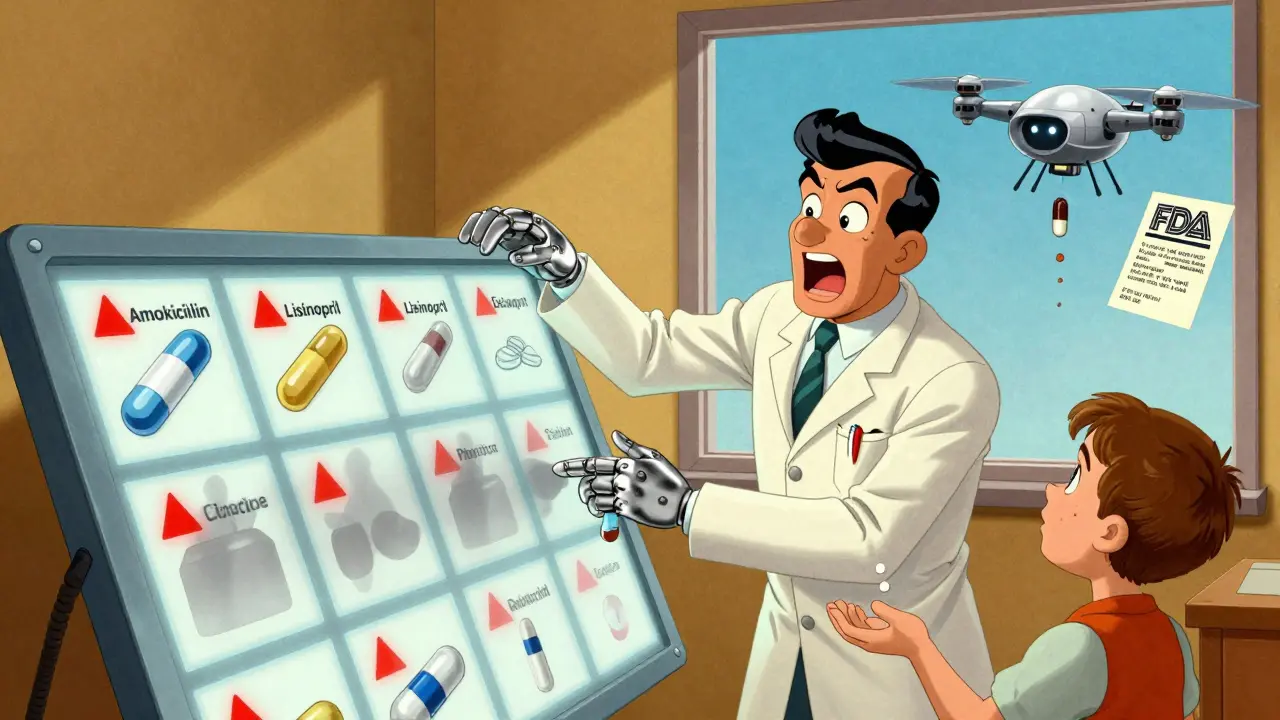
Why the System Keeps Failing
The problem isn’t just tariffs or inflation. It’s the structure of the market. Generic drug buyers-hospitals, pharmacy benefit managers (PBMs), and government programs like Medicaid-prioritize the lowest price. They don’t care about supply reliability. They sign contracts based on bid price alone. So manufacturers compete by cutting costs to the bone: fewer quality checks, single-source suppliers, minimal inventory. A 2025 analysis by the Manufacturers Alliance found that 71% of generic drug makers operate with less than two weeks of raw material inventory. That’s not lean. That’s dangerous. One disruption, and production halts. Meanwhile, the FDA’s inspection backlog grew to 1,800 facilities in 2025. Many foreign plants haven’t been inspected in over three years. The agency can’t approve new suppliers fast enough to replace failing ones.What’s Being Done-And What’s Not
Some manufacturers are trying to adapt. A handful have started dual-sourcing critical APIs-buying from two different countries. That’s up from 29% in 2023 to 53% in 2025. Others are investing in nearshoring: building small production facilities in Mexico or Eastern Europe. But that costs millions. Most small manufacturers can’t afford it. A few are using dynamic pricing tools to adjust based on supply risk. One company in Ohio increased prices on 12 high-risk generics by 8-12% only when inventory fell below 10 days. They kept their margins stable. But they were criticized by PBMs for “price gouging.” The federal government has started a pilot program to stockpile 15 essential generic drugs. But it’s limited to 30 facilities and covers only 8% of the most critical shortages. It’s a Band-Aid. The real fix? Change how drugs are bought. Instead of rewarding the lowest bid, buyers need to reward reliability. Pay a little more for a supplier with a proven track record. Fund backup production lines. Offer tax credits for manufacturers who maintain 90-day inventory buffers. Create a public database of API sources and risk ratings. None of that is happening at scale.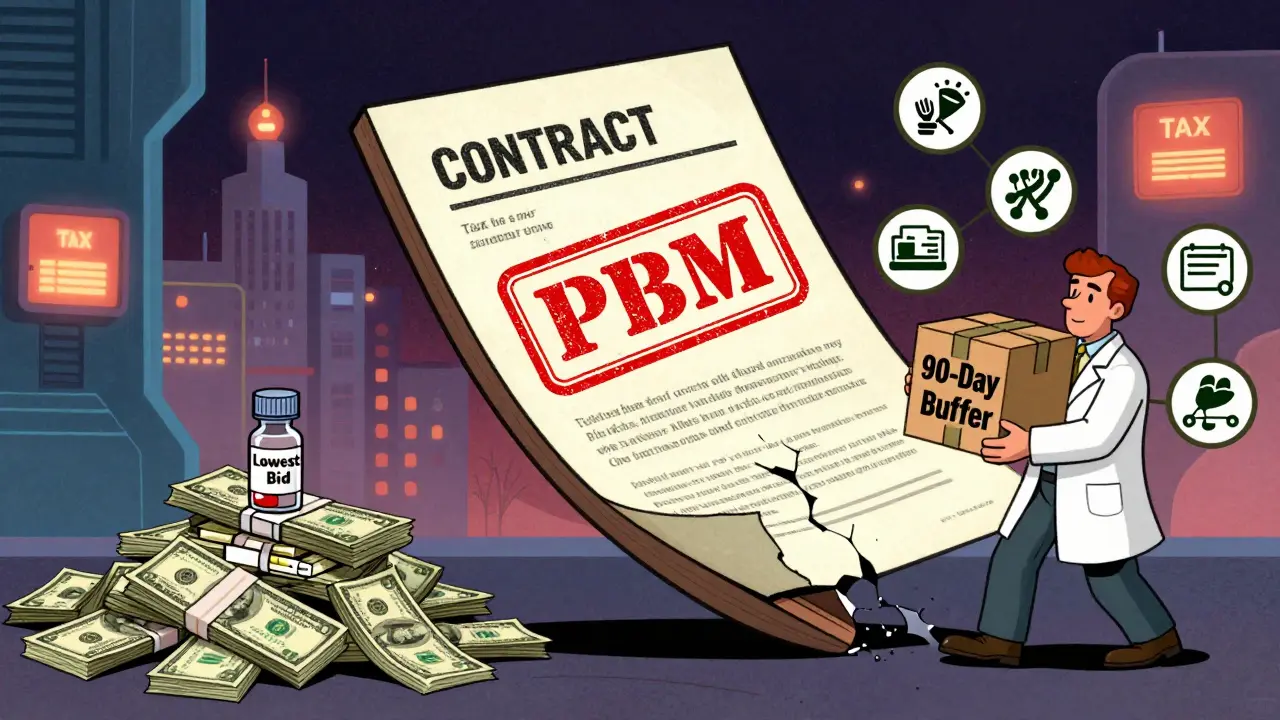
The Future Is Unstable
Without structural changes, drug shortages will keep getting worse. Oxford Economics predicts manufacturing volatility will drop slightly by 2026. But MIT’s Center for Transportation and Logistics warns: without fixing how we source raw materials, drug inflation will stay 1.5-2.0 percentage points higher than pre-2020 levels through 2030. And here’s the hard truth: the drugs we rely on every day-antibiotics, blood pressure pills, insulin-are no longer commodities. They’re fragile, high-risk products. Treating them like toilet paper or paper towels is costing lives. Manufacturers aren’t the villains. They’re the last line of defense in a broken system. And if we don’t fix the financial pressure, they’ll keep walking away. And the next drug that disappears? It might be the one you need.What Patients Can Do
You can’t fix the supply chain. But you can protect yourself:- Ask your doctor for a 90-day supply of essential medications-especially if you’re on a long-term treatment.
- Check the FDA’s Drug Shortages page regularly. It’s updated weekly.
- If your pharmacy runs out, call other local pharmacies. Don’t assume it’s gone for good.
- Consider using mail-order pharmacies. They often have better inventory than local stores.
- Speak up. Tell your representative if you’ve been affected by a shortage. Public pressure drives policy change.
Why are generic drugs suddenly in short supply?
Generic drugs are in short supply because manufacturers can’t make them profitably. Rising costs for raw materials, tariffs, and supply chain disruptions have squeezed margins to as low as 3.2%. When companies can’t cover costs, they stop producing-especially if there’s no incentive to maintain backup supplies.
Are drug shortages only happening in the U.S.?
No. Drug shortages are a global issue. The EU, Canada, Australia, and India have all reported increased shortages in 2025. The problem is worst where manufacturing is concentrated-like in China and India-and where regulatory systems are slow to approve new suppliers.
Can I trust alternative brands if my usual drug is unavailable?
Yes, if the alternative is FDA-approved and labeled as AB-rated (bioequivalent). Your pharmacist can confirm this. Don’t accept unapproved or unregulated imports-they may contain incorrect doses or harmful contaminants.
Why don’t manufacturers just raise prices to cover costs?
Because buyers-like PBMs and Medicaid-demand the lowest possible price. Manufacturers who raise prices risk losing contracts. Even if they can afford to raise prices, they’re locked into bids that don’t account for inflation or supply risk.
Is there a long-term solution to drug shortages?
Yes-but it requires changing how drugs are purchased. Instead of rewarding the lowest bid, buyers should pay for reliability. This means funding backup suppliers, maintaining strategic stockpiles, and incentivizing manufacturers to hold inventory. Without this shift, shortages will keep getting worse.