
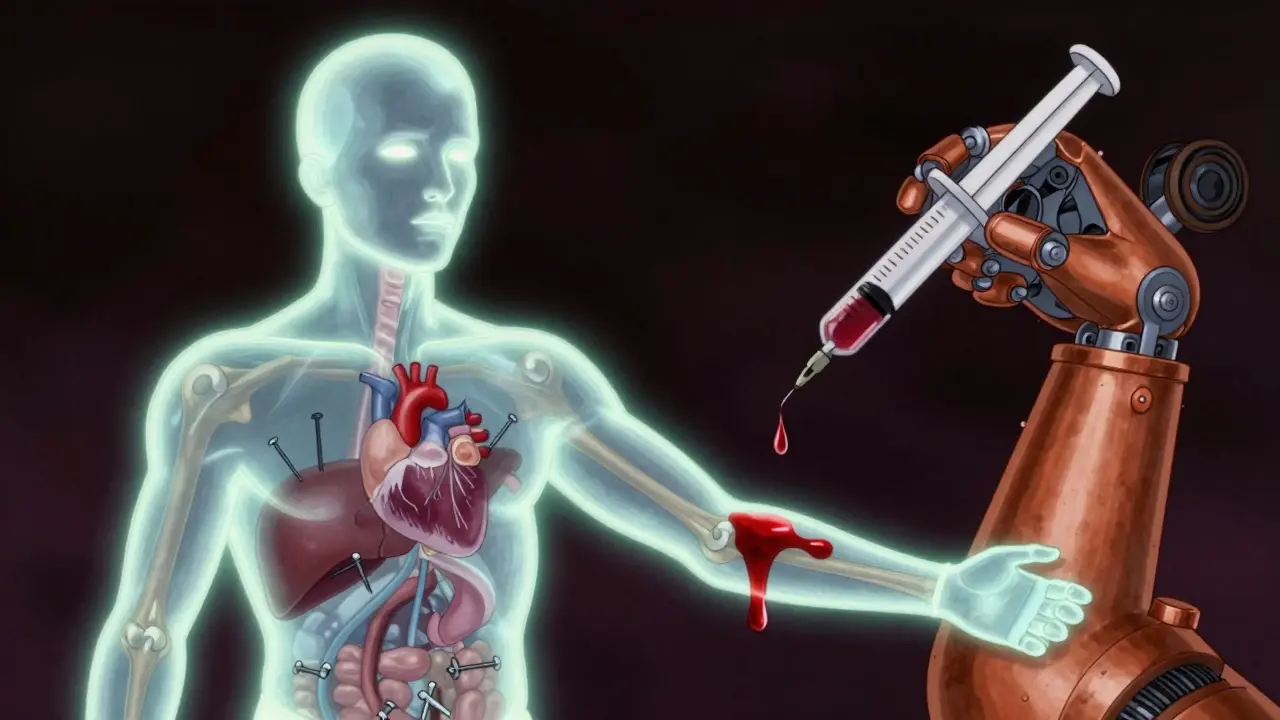
Imagine feeling exhausted all the time, your joints ache for no reason, and your skin looks strangely bronze. You’ve seen doctors, tried supplements, even cut back on coffee - nothing helps. For many people with hemochromatosis, this isn’t just bad luck. It’s a genetic condition quietly poisoning their body with too much iron.
Hemochromatosis isn’t rare. In places like Ireland, Scotland, and parts of Australia, about 1 in 83 people carry the main gene mutation that causes it. Yet, most never know they have it until it’s too late. The body doesn’t know how to stop absorbing iron from food. Over years, that extra iron piles up in the liver, heart, pancreas, and joints. Left untreated, it can lead to cirrhosis, diabetes, heart failure, or even liver cancer.
How Your Body Gets Too Much Iron
Your body doesn’t make iron - you get it from food. Normally, your liver releases a hormone called hepcidin to tell your gut: "Stop absorbing more." In hemochromatosis, that signal breaks. The most common cause is a mutation in the HFE gene, especially the C282Y variant. If you inherit two copies (one from each parent), your body absorbs up to 3 times more iron than it should.
It doesn’t happen overnight. Iron builds up slowly - about half a gram to a full gram per year. A healthy person has 0.8 to 1.2 grams of iron total. Someone with untreated hemochromatosis can end up with over 5 grams. That’s like stuffing 4 extra iron nails into your organs. The liver takes the first hit. Then the pancreas, heart, and joints follow.
Men are affected 5 to 10 times more often than women before menopause. Why? Because women lose iron through periods. Once menopause hits, their risk jumps. That’s why most men start showing symptoms between 30 and 50. Women often don’t notice anything until after 55.
What Symptoms to Watch For
Early signs are vague. They get blamed on stress, aging, or depression. But if you have three of these, get tested:
- Constant fatigue (74% of patients report this)
- Joint pain, especially in knuckles and knees (65%)
- Loss of sex drive or erectile dysfunction (54%)
As it worsens, other signs show up:
- Skin that looks bronze or gray (45%)
- Abdominal pain (38%)
- Diabetes (25%) - iron damages insulin-producing cells
These aren’t random. They’re clues. If your doctor only checks your hemoglobin or iron levels, they’ll miss it. The real red flags are transferrin saturation above 45% and serum ferritin over 300 ng/mL in men (or 200 ng/mL in women). That’s the trigger for genetic testing.
How It’s Diagnosed
There’s no single test. It’s a two-step process:
- Blood tests: Transferrin saturation and serum ferritin. If both are high, hemochromatosis is likely.
- Genetic testing: Looks for HFE mutations - mainly C282Y homozygous (two copies). About 80-95% of diagnosed cases have this. A smaller group has C282Y/H63D (compound heterozygous).
Liver biopsy used to be the gold standard. Now, it’s mostly replaced by MRI with R2* technology. It’s non-invasive, accurate, and shows exactly how much iron is stuck in your liver. No needles. No recovery time.
Doctors often miss it. One survey found 68% of patients saw 3 to 5 doctors over 5 to 7 years before getting diagnosed. That’s why if you have unexplained joint pain, fatigue, or liver enzyme spikes - ask for these two tests. They cost less than $100 in 2026.
Phlebotomy: The Simple, Life-Saving Treatment
The cure is simple: take blood. Regularly.
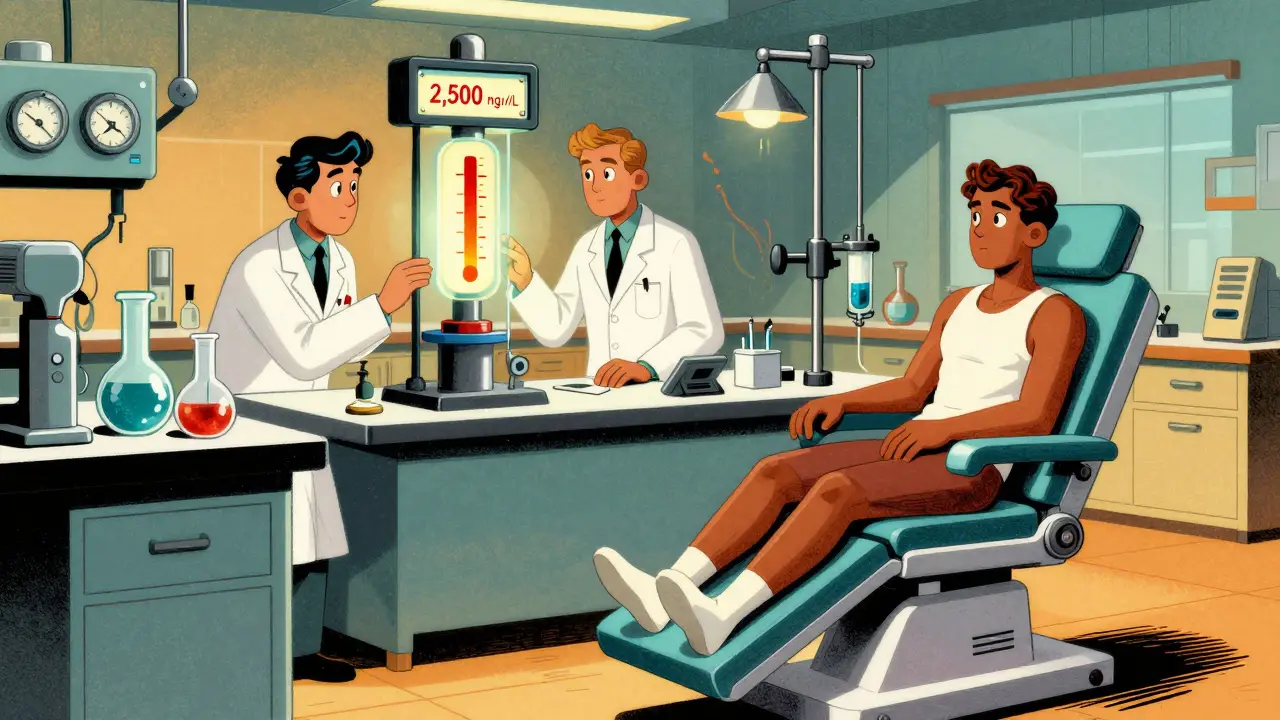
Each 500 mL of blood removes about 200-250 mg of iron. That’s the same amount found in 20 steaks. Your body replaces the blood volume quickly, but the iron? It’s gone.
There are two phases:
- Induction: Weekly phlebotomy until ferritin drops to 50 ng/mL. For someone with ferritin at 2,500, that’s 40-60 sessions over 1-2 years. One Reddit user needed 62 sessions over 15 months.
- Maintenance: Once iron is normal, you switch to every 2-4 months. Most people need 4-6 sessions a year to stay under 100 ng/mL.
It’s not glamorous. But it works. Studies show if you start before ferritin hits 1,000 ng/mL, you can prevent cirrhosis in 99% of cases. Your liver can even heal. Diabetes and joint pain often improve. Sex drive comes back.
Cost? About $0-$50 per session - often covered by insurance. Compare that to chelation drugs like deferasirox, which cost $25,000-$35,000 a year and come with kidney and liver risks.
Why People Stop Treatment - And Why They Shouldn’t
Most patients feel better after the first few phlebotomies. Fatigue lifts. Pain fades. That’s when many stop.
Big mistake.
Iron keeps coming back. Without maintenance, it rebuilds. You’re not cured - you’re managing. The gene didn’t change. Your body still absorbs too much. Skipping sessions for months? You’re inviting liver damage.
One study found 42% of patients get "treatment fatigue" after 2-3 years. They quit. Then their ferritin climbs again. The American Hemochromatosis Society says 89% of those who stick with it are happy - but only if they don’t skip.
Some struggle with vein access. Older patients, or those with small veins, find it harder to draw blood. Others can’t find clinics that accept therapeutic phlebotomy. Blood banks won’t take it - it’s not for donation. You need a hospital or specialized hematology clinic.
Who Else Should Be Tested?
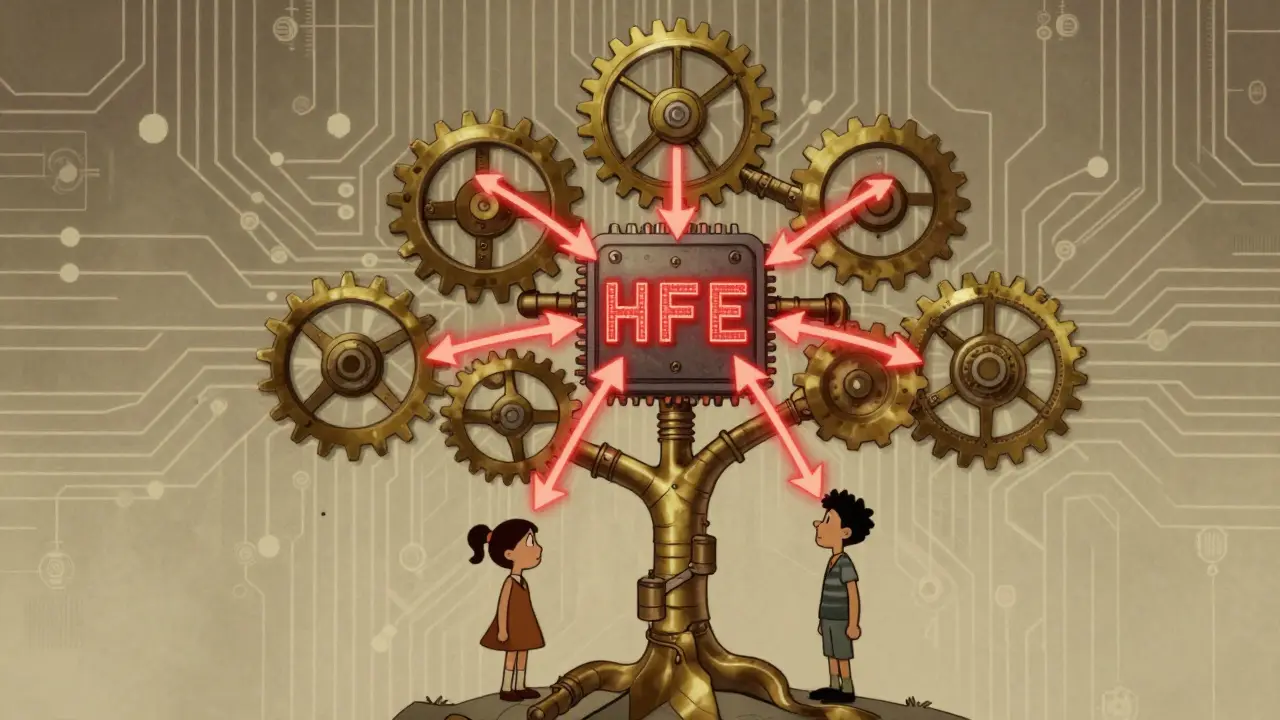
If you’re diagnosed, your siblings, parents, and children need testing. It’s genetic. If you have C282Y homozygosity, each child has a 50% chance of inheriting one copy. If both parents carry it, a child could get two - and develop full-blown disease.
Family screening catches 70% of new cases. That’s why the Hemochromatosis Foundation pushes for cascade testing. Find one case. Test the whole family. Prevent dozens of future liver transplants.
Also, test anyone with:
- Unexplained elevated liver enzymes
- Diabetes with no family history
- Heart failure without coronary disease
- Arthritis in the knuckles
Europeans test routinely. In the U.S., only 12% of primary care doctors order transferrin saturation tests for fatigue or joint pain. That’s changing - but slowly.
What’s Next? New Treatments on the Horizon
Phlebotomy works. But it’s not perfect. Some people can’t tolerate it. Others can’t schedule it. That’s why researchers are testing hepcidin mimetics - drugs that trick the body into thinking it has enough iron.
One drug, PTG-300, showed a 53% drop in transferrin saturation in just 12 weeks. It’s not available yet, but Phase 3 trials are underway. If approved, it could mean pills instead of needles.
Scientists are also building polygenic risk scores. Beyond HFE, there are 27 other genes that influence iron absorption. A 2023 study from the University of Chicago used them to predict severe overload with 89% accuracy. Soon, we might screen people before symptoms even appear.
What You Can Do Today
If you’re tired, achy, or have a family history - get tested. Ask your doctor for:
- Serum ferritin
- Transferrin saturation
- HFE gene testing
Don’t wait for cirrhosis. Don’t wait for diabetes. Iron overload is silent until it’s too late. But it’s one of the easiest genetic conditions to fix - if you catch it early.
And if you’ve been diagnosed? Stick with phlebotomy. Even if you feel fine. Even if it’s inconvenient. Your liver will thank you. Your heart will thank you. And you’ll live longer - probably decades longer.
Can hemochromatosis be cured?
No, it can’t be cured - but it can be completely managed. The gene mutation stays with you for life. But with regular phlebotomy, iron levels stay normal, organs stop getting damaged, and life expectancy returns to normal. Think of it like managing high blood pressure - you don’t cure it, but you control it.
Is hemochromatosis only a problem for people of European descent?
The most common form (HFE-related) is. It’s most frequent in people with Northern European ancestry - especially Irish, Scottish, and Scandinavian. But other rare forms exist in African, Asian, and Middle Eastern populations. So while it’s rare in non-European groups, it’s not impossible. Anyone with unexplained iron overload should be tested.
Can I still eat red meat or iron-fortified foods if I have hemochromatosis?
Yes, but moderation matters. You don’t need to go vegan. But avoid iron supplements, vitamin C with meals (it boosts iron absorption), and raw shellfish (risk of infection). Red meat is fine in normal amounts - but don’t binge. Focus on balance. The real issue isn’t diet - it’s your body’s inability to regulate iron. Phlebotomy does the heavy lifting.
Does alcohol make hemochromatosis worse?
Yes - badly. Alcohol increases iron absorption and directly damages the liver. If you have hemochromatosis and drink, your risk of cirrhosis jumps 10-fold. Doctors recommend complete abstinence. Even moderate drinking can accelerate liver damage. This isn’t a gray area - avoid alcohol entirely.
Can women with hemochromatosis have children?
Yes - but only if iron levels are controlled. High iron can affect fertility and increase miscarriage risk. Once ferritin is under 100 ng/mL and maintained, pregnancy is safe. Always work with a hematologist and OB-GYN. Iron needs increase during pregnancy, so phlebotomy may need to pause temporarily - but only under strict monitoring.
Milad Jawabra
March 4, 2026 AT 15:26Siri Elena
March 5, 2026 AT 19:35Pankaj Gupta
March 7, 2026 AT 01:16Matt Alexander
March 8, 2026 AT 09:55Aisling Maguire
March 10, 2026 AT 02:49marjorie arsenault
March 11, 2026 AT 13:12Deborah Dennis
March 12, 2026 AT 05:22Megan Nayak
March 14, 2026 AT 01:01Divya Mallick
March 15, 2026 AT 13:38Alex Brad
March 17, 2026 AT 12:04Renee Jackson
March 18, 2026 AT 23:36