
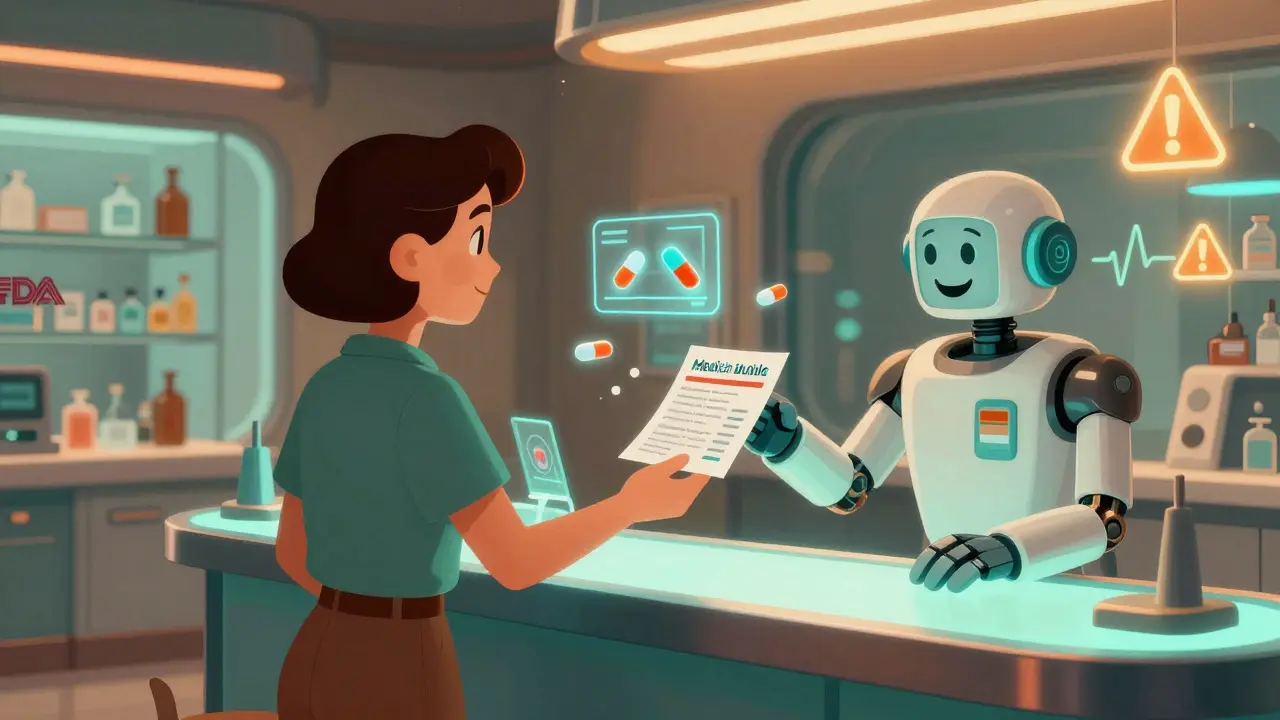
Every time you pick up a prescription for certain high-risk medications, a small paper booklet should be handed to you along with your pills. It’s not just extra paperwork-it’s a FDA Medication Guide, and it could literally save your life. These guides are required by law for drugs that carry serious risks, like life-threatening side effects, dangerous interactions, or situations where taking the medicine wrong could make things worse. But here’s the problem: most people don’t know they exist, don’t understand what’s in them, or don’t realize they can get them even if they’re not handed out automatically.
What Are FDA Medication Guides and Why Do They Matter?
FDA Medication Guides are official patient information sheets approved by the U.S. Food and Drug Administration. They’re not marketing brochures or vague warnings. These are legally required documents that explain the most important safety facts about a drug in plain language. The FDA only makes a Medication Guide mandatory when a drug has one or more of these three risks:
- The drug can cause serious harm if not used exactly as directed
- The risks are serious enough that patients need to understand them before deciding to take it
- Patient behavior-like skipping doses or mixing with other meds-could lead to dangerous outcomes
As of 2011, over 300 prescription drugs required these guides. That number keeps growing as new high-risk medications are approved. Examples include blood thinners like warfarin, certain antidepressants, diabetes drugs with serious side effects, and some cancer treatments. If your doctor prescribes one of these, you’re entitled to the guide-every single time you refill the prescription.
How to Get a Medication Guide When You Pick Up Your Prescription
The easiest way to get a Medication Guide is at your pharmacy. When you hand over your prescription, the pharmacist is legally required to give you the guide if your drug requires one. But here’s what often happens: the pharmacist hands you the bottle, you grab it and leave, and you never even notice the small folded paper tucked inside the box or slipped into the bag.
Don’t assume it’s there. Always ask.
When you collect your prescription, say: “Do I need a Medication Guide for this drug?” If they say no, ask again: “Is this one of the drugs the FDA requires a guide for?” Pharmacists are trained to know which drugs require them. If they’re unsure, they can check the FDA’s list or contact the manufacturer.
And remember-it’s not just for new prescriptions. You’re entitled to a guide every time you refill, even if you’ve taken the drug for years. That’s because new safety information can come out at any time, and the guide gets updated.
What If the Pharmacist Doesn’t Give You One?
You have rights. Under FDA rules (21 CFR Part 208), pharmacists must provide Medication Guides unless a specific exemption applies. Exemptions are rare and usually only apply if you’re getting the drug in a hospital while being monitored by staff.
If you’re getting your medication at a community pharmacy, clinic, or mail-order service, and you don’t get a guide, you can:
- Ask again-politely but firmly
- Request a copy from the manufacturer directly
- Download it from the FDA’s official website
Some patients assume the guide is only for first-time users. That’s wrong. The law says it must be given each time the drug is dispensed. If you’ve been refilling your prescription for months and never received a guide, you’re not being careless-you’re being denied your legal right to safety information.
Can You Get Medication Guides Electronically?
Yes. You don’t have to accept paper. The FDA allows patients to choose electronic delivery instead of printed copies. But here’s the catch: paper is still the default. The pharmacist won’t offer it unless you ask.
To get your Medication Guide as a PDF or via email, say: “Can I get this guide electronically instead of on paper?” Most pharmacies can email it or send a link to a secure patient portal. If they say they can’t, ask for the manufacturer’s contact info-they’re required to provide electronic copies upon request.
Many drugmakers have patient support websites where you can search for your drug and download the latest guide. You can also find them directly on the FDA’s website under their Medication Guides page.
The FDA Is Changing the System-Here’s What’s Coming
The current system has major flaws. A 2012 study found that most Medication Guides are too long, too technical, and hard to read-even though they’re supposed to be written in plain language. Some are over 10 pages. Others use small fonts, confusing layouts, and medical jargon that defeats the whole purpose.
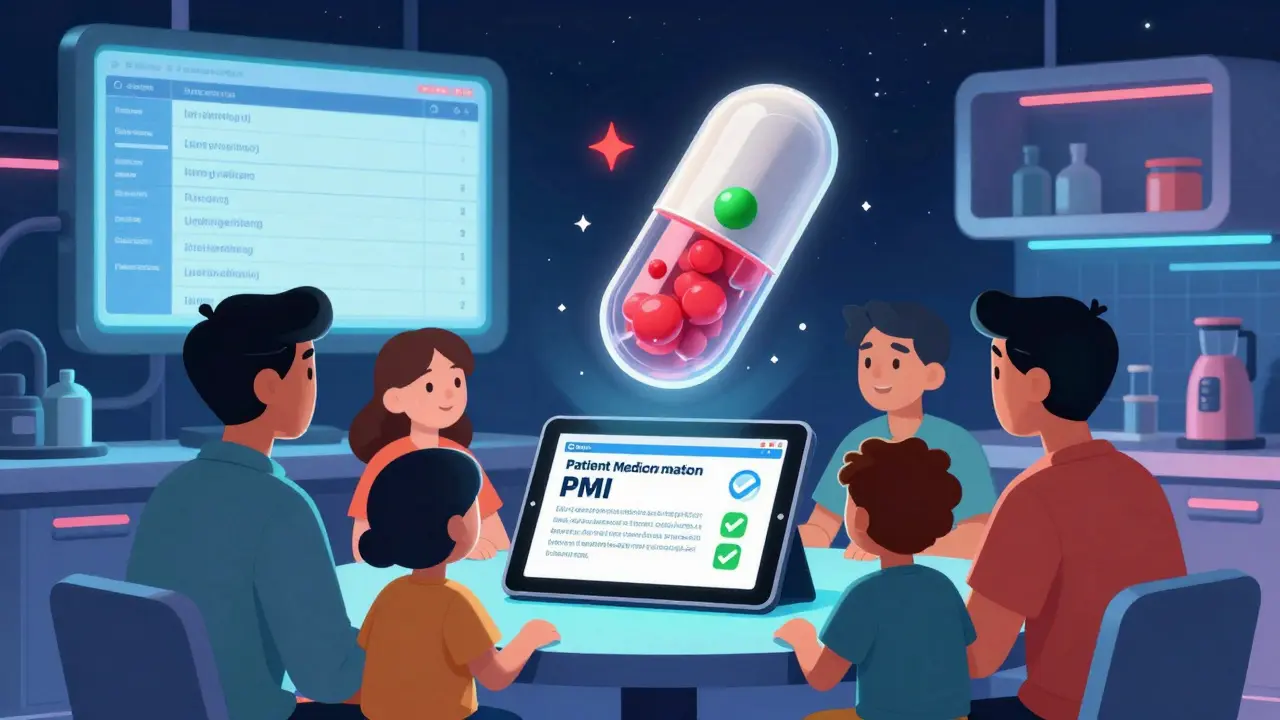
The FDA is fixing this. In 2023, they proposed a new system called Patient Medication Information (PMI). Instead of messy, inconsistent guides, every drug will have a standardized, one-page document with the same headings: drug name, what it’s used for, key safety warnings, common side effects, and what to avoid.
This new PMI will be stored in a free, public FDA online database. You’ll be able to search for any drug and instantly get the latest, easy-to-read safety info. It will be available in both English and Spanish, and updated automatically as new risks are discovered.
Right now, the old system is still in place. But if you’re using a drug approved after 2023, you might already be getting the new PMI format. If you’re on an older drug, you’ll get the new version within 1 to 5 years, depending on when it was first approved.
How to Find Medication Guides Online
You don’t have to wait for your pharmacist. You can find any FDA-approved Medication Guide yourself in minutes:
- Go to www.fda.gov/medicationguides
- Use the search bar to type your drug’s brand or generic name
- Click on the correct match
- Download or print the PDF
You can also search by the drug’s active ingredient if you don’t know the brand name. For example, searching “metformin” will bring up all versions of that diabetes drug, no matter the brand.
Bookmark this page. Keep a folder on your phone with PDFs of all your high-risk meds. You’ll thank yourself the next time your doctor changes your dose or you start a new drug.
What’s in a Medication Guide? What to Look For
Don’t just glance at it-read it. Here’s what every guide must include:
- The drug’s name (brand and generic)
- Why it’s prescribed
- What serious side effects to watch for (like allergic reactions, bleeding, liver damage)
- When to call your doctor or go to the ER
- What to avoid (alcohol, other drugs, foods, activities)
- How to store it properly
- What to do if you miss a dose
Pay special attention to the section titled “Important Safety Information.” This is where the FDA requires the most urgent warnings. If it says “may cause suicidal thoughts,” “can lead to sudden death,” or “avoid if you have kidney disease”-those aren’t vague warnings. They’re red flags.
Don’t rely on your doctor to explain everything. Medication Guides are designed to give you the facts without interpretation. They’re your safety net.

What If You’re a Caregiver or Parent?
If you’re giving medication to a child, elderly parent, or someone who can’t manage their own prescriptions, you have the same right to the Medication Guide. The law says it must be given to the patient or their caregiver. Ask for it by name: “I’m responsible for giving this medicine. Can I get the guide too?”
Many older adults don’t realize they’re entitled to these guides. If your parent is on a high-risk drug and never received one, get it for them. Print it, highlight the key points, and keep it with the medicine.
What About Drugs Under REMS Programs?
Some high-risk drugs are part of a special FDA program called Risk Evaluation and Mitigation Strategies (REMS). These drugs have extra safety rules-like mandatory counseling, special monitoring, or restricted distribution.
If your drug is under REMS, you might be asked to sign a form or attend a training session. The Medication Guide is part of that process. Your doctor or pharmacist must review it with you before you can get the drug. Don’t skip this step. It’s not bureaucracy-it’s protection.
Check if your drug is under REMS by searching its name on the FDA’s REMS website. If it is, the Medication Guide is even more critical. Read it. Ask questions. Keep a copy.
Final Tip: Make It Part of Your Health Routine
Think of the Medication Guide like a car manual. You wouldn’t drive a new car without reading the safety warnings. Don’t take a new medicine without reading its guide.
Keep a small folder or digital file with all your Medication Guides. Update it every time you get a new prescription. Share it with your pharmacist or doctor if you have questions. If you notice a side effect not listed, report it to the FDA through their MedWatch program.
These guides exist because people have been hurt-sometimes fatally-because they didn’t understand the risks. You’re not being paranoid by asking for one. You’re being smart.
Are Medication Guides only for new prescriptions?
No. You’re entitled to a Medication Guide every time you refill a prescription for a drug that requires one-even if you’ve taken it for years. The FDA requires it because new safety information can emerge at any time, and the guide is updated accordingly.
Can I get a Medication Guide if I buy my medicine online?
Yes. If you’re using a U.S.-licensed online pharmacy, they must provide the Medication Guide the same way a local pharmacy does. If you don’t receive one, contact the pharmacy and ask for it. If they refuse, report them to the FDA. Be cautious of foreign websites-they’re not required to follow FDA rules.
What if I don’t understand the guide?
You’re not alone. Many guides are still hard to read. If you’re confused, call your pharmacist or doctor and ask them to explain the key safety points. You can also search for patient-friendly summaries online or ask for a second copy to highlight the parts you need help with.
Do over-the-counter drugs have Medication Guides?
No. Medication Guides are only required for prescription drugs that the FDA has determined carry serious risks. Over-the-counter medicines have different labeling rules, like the Drug Facts label on the box, which is simpler and shorter.
Is there a list of all drugs that require Medication Guides?
Yes. The FDA maintains a complete, searchable list on their website: www.fda.gov/medicationguides. You can search by drug name, active ingredient, or even browse by category. It’s updated regularly as new drugs are added or removed from the list.
Kuldipsinh Rathod
December 27, 2025 AT 00:30I never knew these guides were required every time you refill. I’ve been on warfarin for 5 years and never got one until last month when I asked. My pharmacist looked at me like I’d asked for a unicorn. But I got it. Life-changing stuff.
SHAKTI BHARDWAJ
December 28, 2025 AT 10:39OMG I JUST REALIZED I’VE BEEN GETTING ANTIDEPRESSANTS FOR 3 YEARS AND NEVER GOT A GUIDE???!?!?!?!?!? THIS IS A SCAM I’M SUEING SOMEONE I’M NOT KIDDING
Matthew Ingersoll
December 30, 2025 AT 04:48As someone who works in healthcare compliance, I can confirm: pharmacists are legally obligated to provide these. If they don’t, file a complaint with the FDA’s MedWatch system. It’s not optional. The fact that people don’t know this is a systemic failure.
Ryan Cheng
December 31, 2025 AT 07:42If you’re on a high-risk med and haven’t read the guide, you’re flying blind. I used to skip them too-until my mom had a bad reaction to a drug because she didn’t know it interacted with her fish oil. Now I print every guide, keep them in a folder with my meds, and review them every refill. It’s not paranoia. It’s responsibility.
wendy parrales fong
December 31, 2025 AT 22:38Love that the FDA is moving to one-page PMIs. Too many of these guides are like reading a legal contract written by someone who hates humans. Simple, clear, consistent? Yes please. I wish all health info was like that.
Jeanette Jeffrey
January 1, 2026 AT 06:04Let’s be real-most people won’t read these anyway. You hand someone a 10-page PDF and they’ll just toss it. This whole system is performative safety. The real issue? Doctors don’t explain risks properly. The guide is just a legal shield for pharma.
Shreyash Gupta
January 3, 2026 AT 02:57bro i just searched my drug on the fda site and found the guide… but it was in spanish 😅 i’m indian and my doctor speaks english but the guide doesn’t? wtf is this
Ellie Stretshberry
January 5, 2026 AT 02:10my grandma is on blood thinner and never got a guide until i asked for her. she didn’t even know they existed. i printed it out in big font and taped it to her fridge. now she checks it every time she takes it. small thing but it matters
Zina Constantin
January 5, 2026 AT 14:53I work in a pharmacy and I always offer the guide. But patients rarely ask for it. We’re not hiding it-we’re just assuming you’ll notice it. But now I say, ‘Hey, this drug has a safety guide-want me to print it for you?’ It’s changed how many people actually read them.
Dan Alatepe
January 6, 2026 AT 09:47man i just got my first guide for my diabetes med… and it said ‘may cause sudden death’… i sat in the parking lot for 20 minutes just staring at it… i felt like i was holding a bomb
Angela Spagnolo
January 8, 2026 AT 04:50I’m so glad someone wrote this… I’ve been asking for guides since 2019… and every time they say ‘oh we don’t have one’… and I’m like… ‘but the FDA says you must’… and then they look at me like I’m a problem… please… someone needs to fix this
Alex Ragen
January 8, 2026 AT 14:44It’s ironic that the FDA mandates these guides-designed for laypersons-yet they’re often written with the lexical density of a law review article. The PMI initiative is a step toward epistemic justice, but until pharmacists are trained to contextualize the content, the document remains an artifact of bureaucratic compliance rather than a tool of patient empowerment.
Lori Anne Franklin
January 9, 2026 AT 01:16just got my guide for my new med and it was so clear i cried a little? like… i’ve been scared to take it but now i know exactly what to watch for. thank you for making this post.
Bryan Woods
January 10, 2026 AT 05:45Thank you for outlining the legal framework clearly. This is precisely the kind of public health information that should be disseminated more widely. Pharmacists should be incentivized-not just required-to proactively distribute these guides. Patient safety is not a compliance checkbox; it is a professional obligation.