
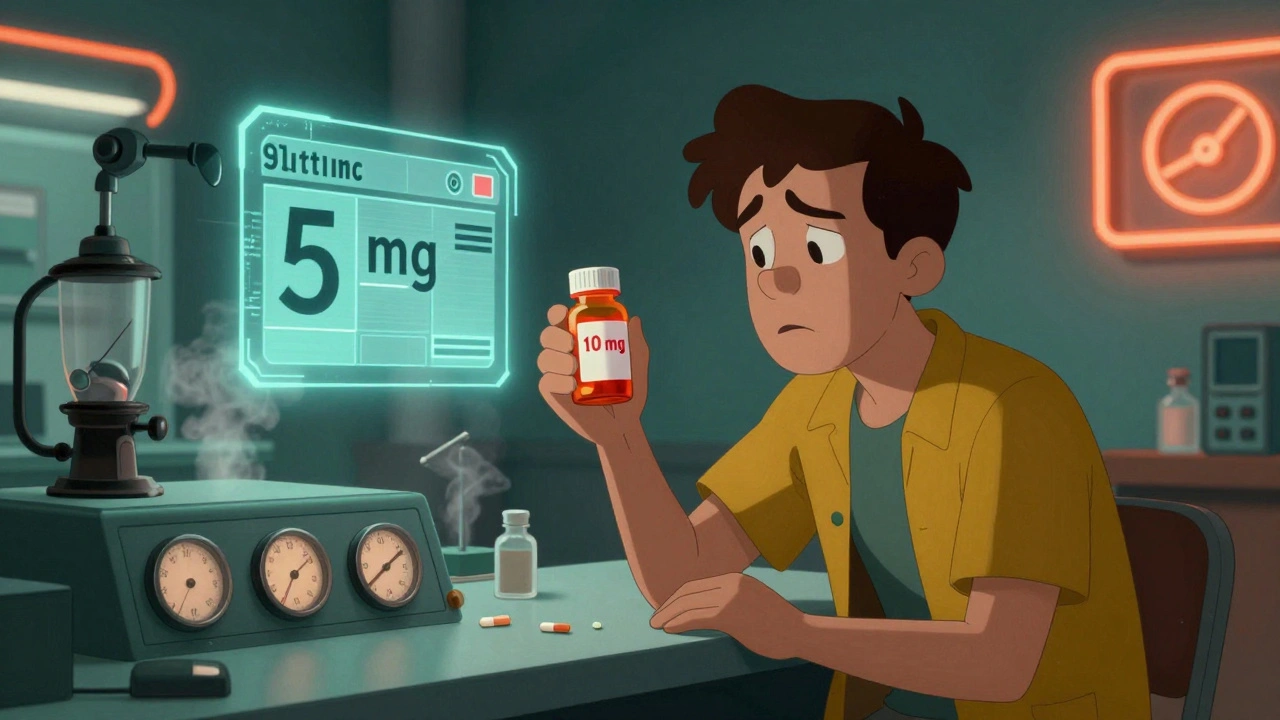
Getting the wrong medicine, the wrong dose, or no instructions at all from your pharmacy isn’t just a mistake-it’s a safety risk. Maybe you picked up your prescription and noticed the pills look different. Or the label says 10 mg when your doctor prescribed 5 mg. Maybe you were never told about a dangerous interaction with your other meds. These aren’t rare. In the U.S., medication errors affect at least 1.5 million people every year, according to the Institute of Medicine. Most never get reported. But if you catch it, you have power. Here’s exactly how to report a pharmacy error-and what actually happens after you do.
What Counts as a Pharmacy Error?
Not every mix-up is a reportable error. A pharmacy error is any mistake that happens between when the prescription is written and when the patient takes the medicine. This includes:- Wrong medication (e.g., you got metformin instead of metoprolol)
- Wrong dose (e.g., 10 mg instead of 5 mg)
- Wrong patient (your prescription given to someone else)
- Wrong instructions (e.g., "take once daily" instead of "take twice daily")
- Missing or incorrect warning labels (e.g., no alert about alcohol interaction)
- Expired or contaminated medication
- Failure to counsel you on how to use the drug safely
Even if no harm happened, if the error could have hurt you-or someone else-it counts. These are called "near-misses." They’re just as important to report because they reveal system flaws before someone gets hurt.
Who Should You Report It To?
You don’t have to choose just one place. In fact, reporting to multiple systems gives you the best chance of triggering real change. Here are the top three options, ranked by impact:- ISMP’s National Medication Error Reporting Program (MERP) - This is the most effective route for patients. ISMP is a nonprofit focused solely on preventing medication errors. Their team interviews reporters to understand exactly how the error happened. They don’t just log it-they dig into why the system failed. Was the pharmacist rushed? Was the label unclear? Was there a software glitch? Their reports go directly to pharmacy chains, hospitals, and regulators to fix the root cause. You can report online or call 1-800-233-7767. Reports are confidential, and you don’t need to give your name.
- FDA’s MedWatch Program - This is the federal government’s official channel for reporting serious adverse events and medication errors. If the error caused harm-like dizziness, hospitalization, or an allergic reaction-this is critical. Submit online at the FDA Safety Information and Adverse Event Reporting Program portal, or call 1-800-FDA-1088. You’ll fill out Form 3500. About 85% of reports come in this way. The FDA doesn’t investigate individual cases, but they track patterns. If dozens of people report the same error with the same drug from the same pharmacy, they can issue warnings or recalls.
- Your State Board of Pharmacy - Every state has one. In California, for example, you can file a complaint online at www.pharmacy.ca.gov. You’ll need to provide the prescription details, the pharmacy name, and ideally, the original medication container. The board can investigate, fine the pharmacy, or even suspend the pharmacist’s license. In 2021, California received 1,842 complaints and took disciplinary action in 217 cases.
Don’t report to the pharmacy alone. Yes, tell them what happened-but don’t rely on them to fix the system. They’re unlikely to report internally unless forced to.
What Documents Do You Need?
The more proof you have, the more likely your report will lead to action. Gather these before you submit:- The original prescription (photo or paper copy)
- The medication container with the label still on
- Any written instructions or counseling notes you received
- Receipt or pharmacy invoice
- Photos of the pills (if they look different from what you usually get)
- Medical records showing your correct dosage (if available)
California’s Board of Pharmacy specifically requires the original container if possible. ISMP asks for details like: "What happened? Why do you think it happened? How could it be prevented?" The more specific you are, the better they can trace the breakdown.
What Happens After You Report?
This is where most people get frustrated. Here’s what you can realistically expect:- ISMP MERP: You’ll get an automated confirmation. If you leave contact info, they may call you for a 10-minute interview. Within 4-8 weeks, they’ll publish a summary of the error (without your name) in their alerts to pharmacies and hospitals. Sometimes, they’ll notify the pharmacy directly and ask them to fix the issue. In one 2023 case, a Walmart pharmacy corrected a dangerous insulin error within 24 hours after an ISMP report-preventing harm to other patients.
- FDA MedWatch: You’ll get no follow-up. 71% of people who report to MedWatch never hear back. But your report goes into a massive database of over 24 million entries. If 10 other people report the same error with the same drug from the same pharmacy, the FDA may issue a safety alert or require a label change.
- State Board: You’ll get an acknowledgment within 14 days (in California). The board will investigate, which can take 3-6 months. If they find fault, they may require staff training, fine the pharmacy, or suspend the pharmacist. But you won’t be told the outcome unless you ask.
Most people don’t realize: reporting doesn’t guarantee punishment for the pharmacist. It’s not about blame. It’s about fixing the system. As Dr. Michael Cohen of ISMP says, "The value of error reporting lies not in counting mistakes but in understanding their root causes to redesign systems that prevent harm."
Why Most Errors Go Unreported (And Why You Should Anyway)
A 2023 survey found that 41% of people who experienced a pharmacy error didn’t report it because they didn’t know how. 29% thought it wouldn’t make a difference. 18% feared retaliation.Here’s the truth: you won’t get fired. You won’t be blacklisted. You won’t be sued. Reporting is protected under federal law. In fact, the Patient Safety and Quality Improvement Act of 2005 shields reports made to Patient Safety Organizations like ISMP from being used in lawsuits.
And yes, it makes a difference. In 2021, a report to ISMP about a confusing label on a blood thinner led to a nationwide redesign of the packaging. In 2022, a report about a software glitch that mixed up similar-sounding drug names helped fix an electronic prescribing system used by thousands of pharmacies.
Even if you never hear back, your report helps. It’s like a smoke detector. Most alarms never save a life-but if no one ever tested them, fires would spread unchecked.
What If You’re Afraid to Report?
It’s normal to feel nervous. You might worry about the pharmacist getting in trouble. Or you might feel guilty for "causing trouble." But here’s the reality: pharmacists want to get it right. Most errors happen because of workload, fatigue, poor labeling, or outdated software-not because someone is careless.Reporting isn’t about punishing individuals. It’s about protecting the next person. The pharmacist who made the mistake might be the same one who saved someone’s life last week. But if the system doesn’t change, they’ll make the same mistake again.
And if you’re still unsure, here’s a simple rule: if you’d want someone to report it if it happened to their parent, your child, or your best friend-then report it.
What’s Changing in 2025?
The system is slowly improving. In 2023, the FDA launched a pilot mobile app for MedWatch that increased consumer reporting by 37%. California now lets you track your complaint status online. The National Coordinating Council for Medication Error Reporting and Prevention updated its terminology standards in January 2023 to make reports more consistent.There’s also a bill in Congress-the Patient Safety Improvement Act of 2023-that would create a national mandatory reporting system for serious errors, standardize how they’re classified, and require pharmacies to tell patients what happened after a report.
For now, the best tool you have is your voice. Don’t wait for someone else to fix it. If you see a mistake, report it. You’re not just protecting yourself-you’re protecting everyone who walks into that pharmacy next.
Can I report a pharmacy error anonymously?
Yes. ISMP’s MERP program allows fully anonymous reports. You don’t need to give your name, phone number, or email. The FDA’s MedWatch also accepts anonymous reports. State boards may ask for contact info to follow up, but you can usually say "I prefer not to share" and still file the complaint.
How long do I have to report a pharmacy error?
There’s no strict federal deadline, but timing matters. ISMP and the FDA accept reports anytime, but the sooner you report, the better. State boards like California’s require complaints within 12 months. If you’re filing a HIPAA complaint about privacy violations, you have 180 days. For maximum impact, report within 30 days while details are fresh and the medication container is still available.
Will reporting get me in trouble with my pharmacy?
No. Federal law protects you from retaliation. Pharmacies cannot refuse to fill your prescriptions, charge you extra, or treat you differently because you reported an error. If they do, that’s a separate violation you can report to your state board or the Office for Civil Rights (OCR) under HIPAA.
What if the error didn’t hurt me-should I still report it?
Absolutely. Most serious errors start as near-misses. A 2022 study found that for every serious error reported, there are 10 to 100 near-misses that go unnoticed. Reporting these helps catch system flaws before someone gets hurt. ISMP treats near-misses as critically as actual harm events.
Can I report a pharmacy error if I’m not the patient?
Yes. Family members, caregivers, or even bystanders can report. You’ll need to provide the patient’s name (unless reporting anonymously) and proof you’re acting on their behalf-like a signed note or a power of attorney. If you’re reporting for someone who’s incapacitated or deceased, you can still file the report with documentation.
How do I know if my report made a difference?
You won’t always get a personal update. But ISMP publishes monthly safety alerts on their website that describe real errors and how they were fixed. If you reported a labeling issue and later see a new, clearer label on the same drug, that’s your impact. The FDA also issues public safety alerts. If you reported a dangerous interaction and later see a boxed warning on the drug’s label, your report helped.
Ryan Brady
December 9, 2025 AT 05:24Raja Herbal
December 11, 2025 AT 00:41Lola Bchoudi
December 12, 2025 AT 17:30Morgan Tait
December 13, 2025 AT 02:08Darcie Streeter-Oxland
December 14, 2025 AT 08:03Steve Sullivan
December 14, 2025 AT 11:53Arun Kumar Raut
December 14, 2025 AT 19:18precious amzy
December 16, 2025 AT 03:52Carina M
December 16, 2025 AT 20:43Ajit Kumar Singh
December 17, 2025 AT 12:30Maria Elisha
December 17, 2025 AT 21:22Angela R. Cartes
December 18, 2025 AT 20:22