
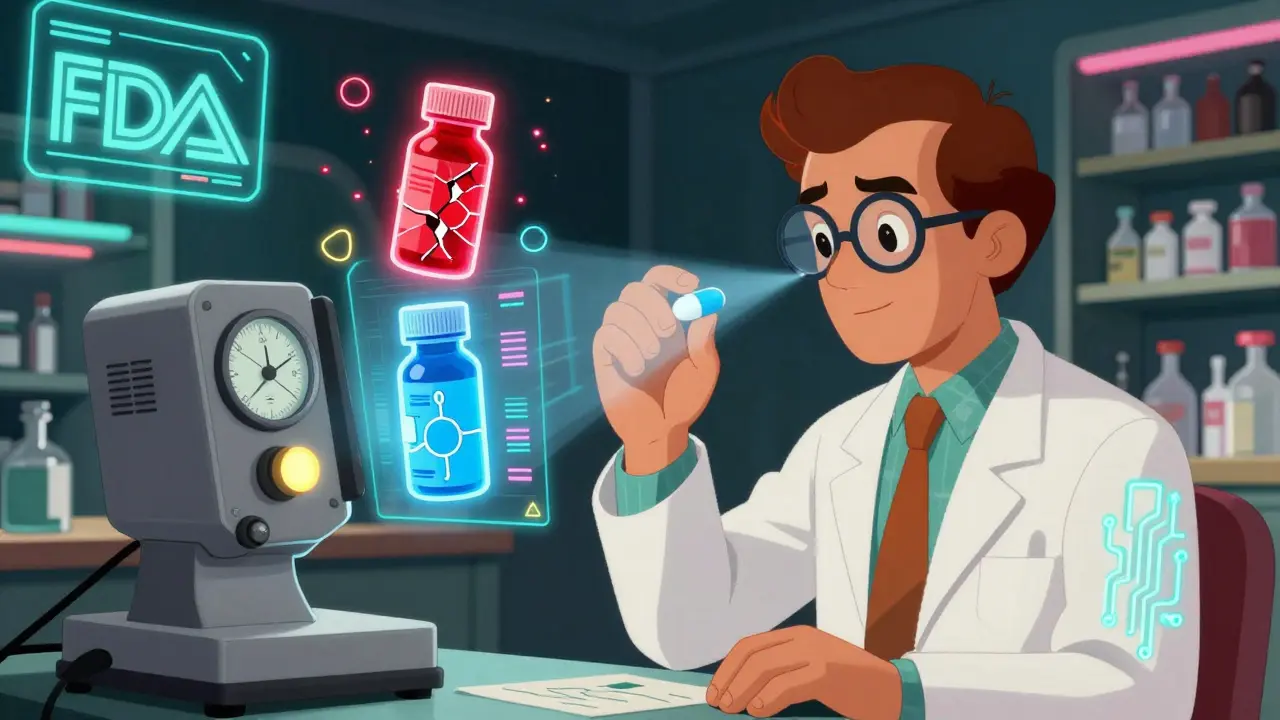
Every pill, every vial, every bottle that reaches a patient should be safe. But in 2024, law enforcement agencies around the world uncovered 6,424 incidents of counterfeit, stolen, or diverted medicines - affecting more than 2,400 different drugs across every therapeutic area. From fake cancer treatments to counterfeit insulin, the threat isn’t theoretical. It’s real. And pharmacists are the last line of defense.
Why Pharmacists Can’t Ignore Counterfeit Drugs Anymore
Pharmacists don’t just count pills. You’re the final checkpoint before a medication enters a patient’s body. That means if a counterfeit drug slips through the supply chain, it’s likely you’ll be the one handing it over - unknowingly. And that’s not just a mistake. It’s a life-or-death risk. Counterfeit drugs aren’t always obvious. Some look identical to the real thing. Others have slightly off packaging, misspelled labels, or inconsistent tablet color. But the worst ones? They’re chemically wrong. A fake antibiotic might contain no active ingredient. A counterfeit heart medication could have too much or too little of the drug. Either way, the patient suffers. The problem is growing. Interpol’s Operation Pangea XVI in 2025 seized over 50 million counterfeit doses and shut down nearly 13,000 illegal online pharmacies. Criminals are now targeting high-value drugs like biologics, oncology treatments, and diabetes medications - products that cost hundreds or thousands of dollars per dose. These aren’t cheap knockoffs. These are sophisticated fakes built to fool even experienced pharmacists.What Training Actually Looks Like Today
Training isn’t just about watching a video or reading a PDF. Modern pharmacist education on counterfeit detection is practical, tech-driven, and built around real-world scenarios. The WHO and FIP launched a competency-based curriculum in 2021 after piloting it with 355 pharmacy students in Cameroon, Senegal, and Tanzania. The results? Students improved their ability to identify falsified medicines by over 60%. This isn’t theory - it’s measurable skill building. In the U.S., training often comes through continuing education platforms like TrainingNow.com. Their 45-minute Medicare Fraud, Waste, and Abuse (FWA) course isn’t just about compliance - it teaches pharmacists to spot red flags: medications priced way below wholesale cost, suspicious suppliers, or unusual ordering patterns. Many pharmacies require staff to complete this within 90 days of hire. But the biggest shift? Technology. Gone are the days of calling manufacturers to verify batch numbers. Today, tools like RxAll’s handheld devices use spectral analysis and AI to scan a pill or vial in seconds. The device compares the drug’s chemical signature against a database of authentic products. If something’s off - even a 1% difference in composition - it alerts the pharmacist. Community pharmacists who’ve used these tools say they’ve cut verification time by 80% and boosted their confidence in every dispensed medication.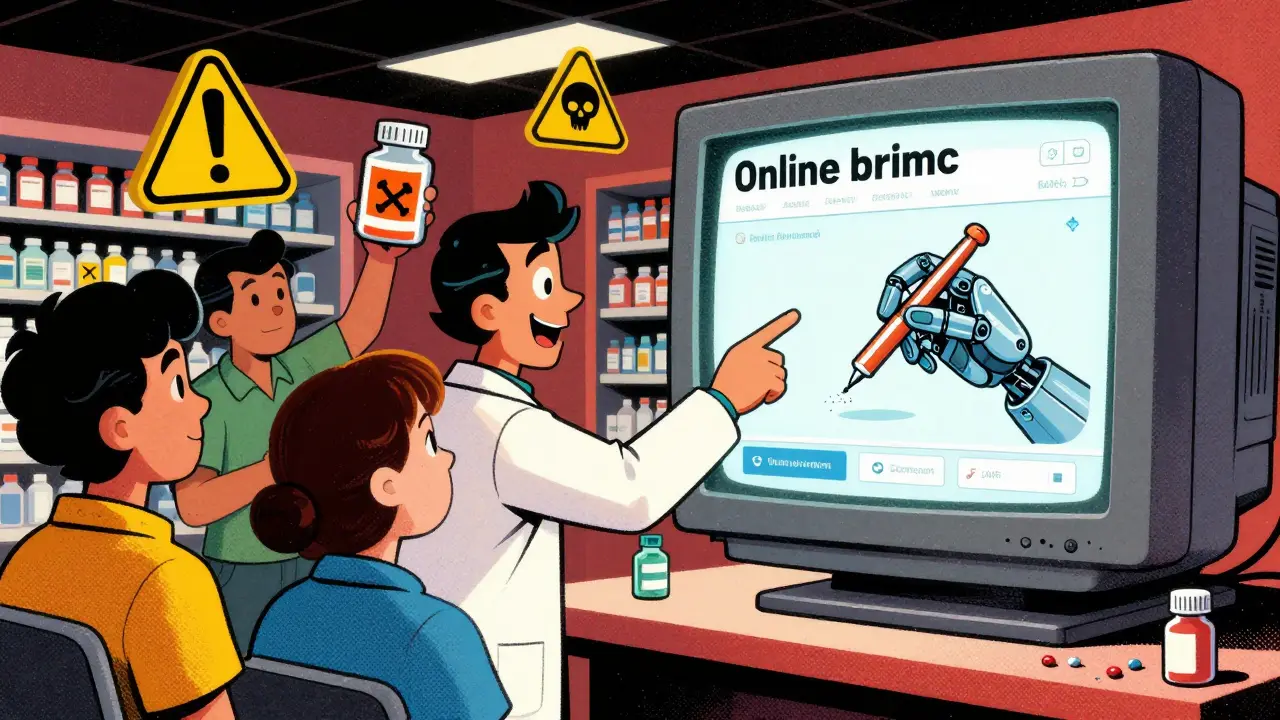
Red Flags Every Pharmacist Must Know
No tool is perfect. That’s why training also builds critical thinking. Here are the top warning signs you need to watch for:- Prices that are too good to be true. If a medication is 50% cheaper than the wholesale acquisition cost, it’s a red flag. Criminals undercut legitimate distributors to lure buyers.
- Unfamiliar or unverified suppliers. Always check the manufacturer’s website for their list of authorized distributors. If the vendor isn’t on it, walk away.
- Specialty drugs from random online sellers. Biologics, injectables, and oncology drugs have tightly controlled distribution chains. If someone’s selling them on a website or through a third-party mail-order service, it’s likely fake.
- Packaging inconsistencies. Tiny things matter: font size on the label, alignment of the barcode, slight color differences in the blister pack, or missing tamper-evident seals.
- Unusual order volumes. A small clinic ordering 500 units of a high-cost cancer drug? That’s not normal. Verify the prescription and the source.
Global Gaps and Why They Matter
The U.S. has the most advanced drug tracking system in the world - the Drug Supply Chain Security Act (DSCSA). By 2023, every prescription drug package had to carry a unique identifier. By 2025, all systems must be interoperable. That’s a huge advantage. But in many low- and middle-income countries? There’s no such system. Pharmacists rely on visual inspection, supplier reputation, or luck. That’s why the WHO’s updated toolkit, set for release in late 2024, is so important. It’s designed to scale the FIP pilot program globally - especially for regions where counterfeit drugs are most common. The result? A two-tiered system. In developed nations, pharmacists have tools and data. In others, they’re left guessing. That’s not just unfair. It’s dangerous. A counterfeit drug made in one country can end up in another through online sales or gray-market supply chains.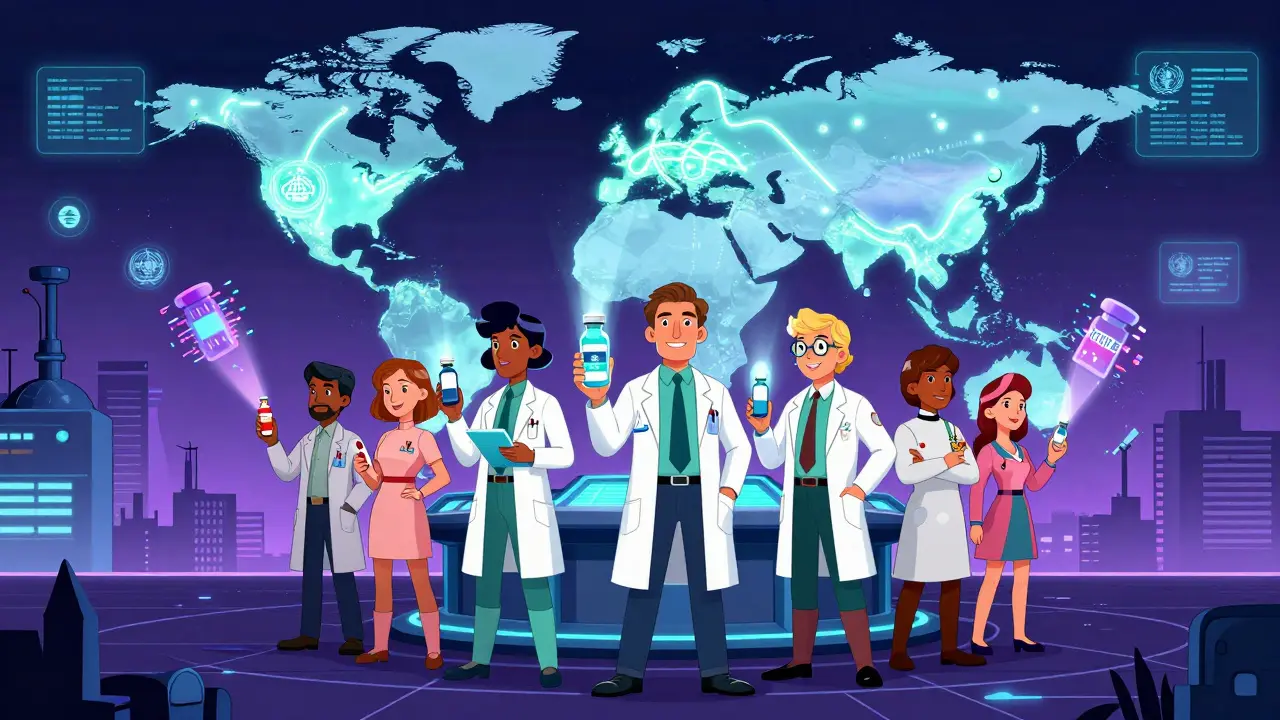
The Future: AI, Biologics, and Patient Education
The next wave of counterfeit threats is coming. Fake biologics. Counterfeit insulin pens. Falsified mRNA vaccines. These aren’t sci-fi. They’re already on the radar. RxAll and other tech companies are training their AI models to detect subtle differences in complex molecules - something no human eye can see. In 2025, these tools will be able to identify counterfeit versions of monoclonal antibodies and gene therapies, which are among the most expensive and hardest-to-replicate drugs. And it’s not just pharmacists who need training. Patients do too. RxAll’s platform now includes resources for patients to learn how to spot fake meds online - like checking for secure websites (https), verifying pharmacy licenses, and avoiding deals that seem too good to be true. Pharmacists are being asked to do more than dispense. They’re being asked to educate. To question. To verify. To be detectives.What You Can Do Right Now
You don’t need to wait for your pharmacy to roll out a new training program. Start today:- Review your pharmacy’s supplier list. Cross-check every vendor against the manufacturer’s authorized distributor list.
- Ask your manager if your pharmacy uses any verification tools. If not, request a demo of RxAll or similar tech.
- Complete a free 30-minute course on counterfeit detection. The WHO and FIP offer free modules in English and French.
- Join a pharmacist forum like RxAll’s community board. Real stories from real pharmacists are the best teachers.
- Speak up. If you see something suspicious, report it. Contact your state board of pharmacy or the FDA’s MedWatch program.
How common are counterfeit drugs in the U.S.?
While the U.S. has the most secure drug supply chain in the world thanks to the DSCSA, counterfeit drugs still enter through online pharmacies, illegal distributors, and international shipments. The Pharmaceutical Security Institute reported over 6,400 incidents of pharmaceutical crime in 2024, including theft and diversion. Most fake drugs in the U.S. come from overseas online sellers, not local pharmacies.
Can I trust online pharmacies?
Only if they’re verified. Look for the VIPPS seal (Verified Internet Pharmacy Practice Sites) from the National Association of Boards of Pharmacy. Avoid sites that sell prescription drugs without a prescription, offer drugs at extremely low prices, or don’t list a physical address. Over 96% of online pharmacies operate illegally, according to the FDA.
What should I do if I suspect a counterfeit drug?
Don’t dispense it. Isolate the product and report it immediately. Contact your state board of pharmacy, the FDA’s MedWatch program, or your local health department. If you’re part of a pharmacy chain, follow internal protocols - most have hotlines for suspected counterfeits. Document everything: batch number, packaging details, supplier info.
Are there free training resources for pharmacists?
Yes. The World Health Organization and the International Pharmaceutical Federation offer a free, bilingual (English/French) curriculum on counterfeit detection. It’s designed for students and practicing pharmacists and includes real case studies. The U.S. FDA also provides free online modules on drug safety and counterfeit awareness.
Do I need special equipment to detect counterfeits?
Not always. Many fakes can be caught with careful visual inspection - mismatched labels, poor print quality, or missing security features. But for high-risk drugs like biologics or oncology products, handheld verification devices like RxAll’s spectral analyzers are becoming standard. These tools give you scientific proof, not just suspicion.
How often should pharmacists receive counterfeit training?
At least annually. Counterfeit methods evolve quickly. New fakes appear every year - especially around new drug launches or public health crises. Many pharmacies require annual training as part of compliance. If your pharmacy doesn’t offer it, request it. Your patients depend on you staying informed.
Jodi Harding
January 17, 2026 AT 12:01They’re selling fake insulin like it’s discount soda online. People are dying because someone clicked ‘Buy Now’ on a shady site. This isn’t conspiracy-it’s negligence dressed up as commerce.
Andrew Qu
January 19, 2026 AT 05:44I’ve been a pharmacist for 18 years. I used to just eyeball packaging. Now I use RxAll daily. One time it flagged a batch of metformin that looked perfect-turns out the active ingredient was 87% off. Saved a diabetic kid’s life. Training isn’t optional. It’s survival.
Danny Gray
January 20, 2026 AT 12:53So let me get this straight-we’re trusting AI to tell us if a pill is real? Next they’ll tell us if our spouse is cheating. What happened to professional judgment? Or is that too much to ask now that we’ve outsourced our brains to gadgets?
Aysha Siera
January 21, 2026 AT 20:05Big Pharma owns RxAll. They want you scared so you buy their gadgets. The real problem? The FDA lets counterfeit drugs in because they’re paid off. Watch the news-every time someone reports a fake, the case disappears. Coincidence? I think not.
rachel bellet
January 22, 2026 AT 19:38Let’s not romanticize pharmacists as frontline heroes. You’re a cog in a broken system. If your pharmacy doesn’t have DSCSA-compliant serialization, you’re complicit in regulatory failure. Stop patting yourselves on the back for scanning pills-fix the supply chain.
Pat Dean
January 24, 2026 AT 03:35Why are we even talking about this? In America, we don’t let foreign criminals poison our citizens. Shut down the websites. Arrest the sellers. Ban the imports. Stop wasting time with ‘training modules’-this is a war, not a seminar.
Jay Clarke
January 25, 2026 AT 17:01Y’all act like counterfeit drugs are some new horror show. Nah. This is just capitalism doing what it does best-turning suffering into profit. I saw a guy buy fake Viagra on Instagram last week. He didn’t even care. He just wanted to feel something. We’re not fighting fakes-we’re fighting apathy.
Selina Warren
January 26, 2026 AT 04:04Listen. I used to think this was just a pharmacy problem. Then my aunt got sick from fake chemo. She didn’t die from cancer. She died because someone sold her a sugar pill with a fake barcode. Don’t wait for your pharmacy to train you. Train yourself. Today. Now. Your patient might be your mom.
Naomi Keyes
January 26, 2026 AT 21:02It is imperative, as a professional in the healthcare domain, to recognize that the proliferation of counterfeit pharmaceuticals constitutes a systemic failure of regulatory oversight, logistical integrity, and pharmacovigilance infrastructure. Furthermore, the reliance upon proprietary technological solutions such as RxAll introduces potential conflicts of interest, vendor lock-in, and data privacy concerns that are inadequately addressed in current discourse.
Additionally, the implicit assumption that all pharmacists possess equal access to these tools is not only empirically false but ethically indefensible, particularly when juxtaposed against the global disparities in healthcare resource allocation.
One must also interrogate the epistemological foundation of spectral analysis as a gold standard-what if the reference database is compromised? What if the AI model was trained on falsified data? The very tools designed to prevent deception may themselves be vectors of it.
Moreover, the narrative of ‘patient education’ as a solution is dangerously paternalistic. Patients are not passive recipients of information; they are agents navigating a labyrinth of misinformation, economic coercion, and medical distrust.
Therefore, while the intent of the article is laudable, the proposed interventions remain superficial, technocratic, and devoid of structural critique.
kenneth pillet
January 27, 2026 AT 21:28Been using RxAll for 2 years. Best thing since barcode scanners. One time it caught a fake blood pressure med from a ‘trusted’ supplier. No drama, no panic-just flagged it, called the rep, and moved on. Training matters but the tool matters more. Also, typos are real, sorry.
Tyler Myers
January 28, 2026 AT 23:02They say 96% of online pharmacies are illegal. So why are we still allowed to order from them? Because the government makes money off the drug trade. Big Pharma pays the FDA. The FDA pays the cops. The cops ignore the sites. It’s a pyramid. And we’re the bottom layer getting poisoned.
Zoe Brooks
January 29, 2026 AT 02:36My grandma got a fake statin last year. She didn’t know. Neither did the pharmacist. We found out because her cholesterol went through the roof. I cried. But then I signed up for the WHO course. Now I check every bottle. I’m not a hero. I’m just not gonna let someone else’s mom die because no one cared enough to look.
Kristin Dailey
January 29, 2026 AT 03:02Stop the training. Just ban all imports from China and India. Problem solved.
Wendy Claughton
January 30, 2026 AT 23:15Just… wow. I never realized how much pressure pharmacists are under. I thought you just handed out pills. But you’re literally the last human between a patient and death? That’s… heavy. I’m so sorry you have to carry this. 🤍 I just started a pharmacy tech program. I promise I’ll learn. I’ll scan. I’ll speak up. I won’t look away.
Stacey Marsengill
January 31, 2026 AT 04:53You think this is bad? Wait till the next pandemic. They’ll flood the market with fake vaccines. And you’ll be the one holding the syringe, smiling, while your patient turns blue. You think training helps? It doesn’t. You’re just a pawn. And the system? It’s already won.