
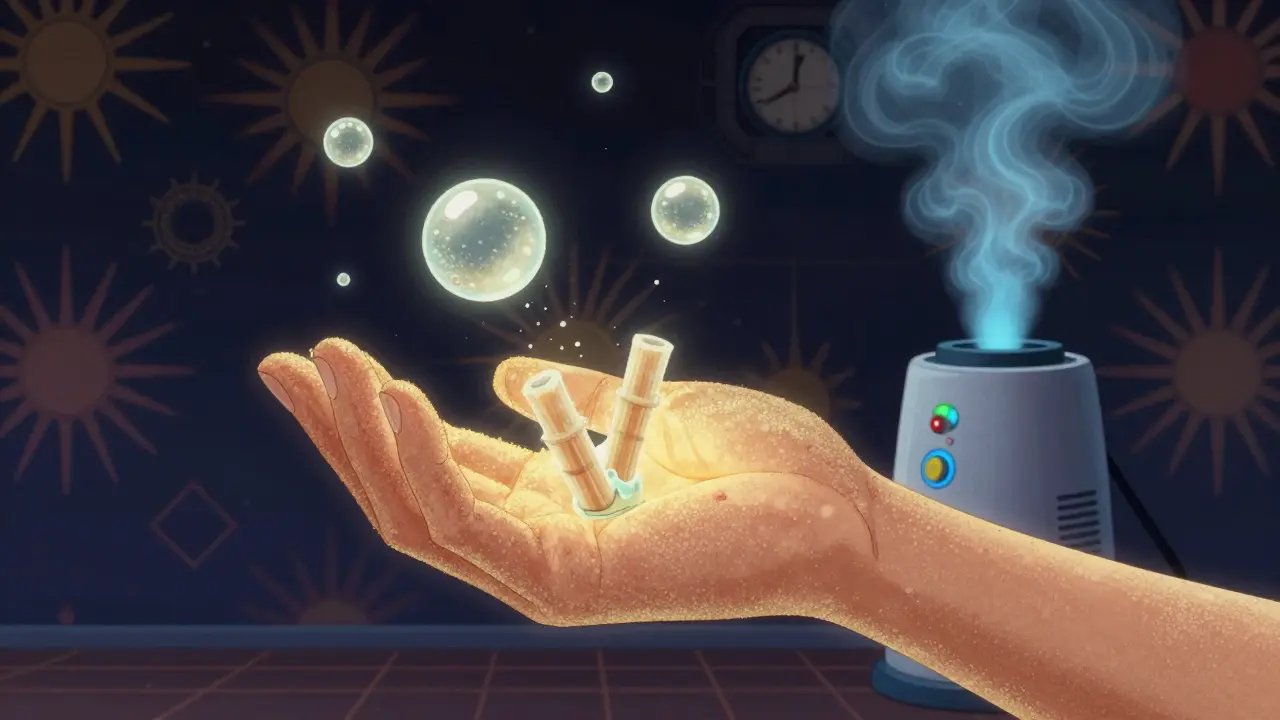
Keratosis pilaris isn't dangerous. It won't spread. It won't turn into something worse. But for millions of people, those tiny, sandpaper-like bumps on the arms, thighs, or buttocks are a daily annoyance. They’re not acne. They’re not eczema. They’re just… there. And they don’t go away on their own. If you’ve ever looked in the mirror and wondered why your skin feels like coarse gravel, you’re not alone. About 50-70% of teens and 40% of adults have it. In Australia, where winter air drops humidity below 40%, it gets worse. Dry skin + follicle clogs = more bumps.
What Exactly Is Keratosis Pilaris?
Keratosis pilaris (KP) happens when keratin - a protein that protects your skin - builds up around hair follicles. Instead of shedding naturally, it hardens into tiny plugs. Each bump is just 1-2 millimeters wide. They’re usually skin-colored, red, or brown, and they feel rough to the touch. Think of it like a clogged drain, but in your skin. No infection. No bacteria. Just a glitch in how your skin renews itself.
The most common spots? Upper arms (92% of cases), thighs (70%), and buttocks. Less often, it shows up on the chest, back, or even cheeks. It’s not itchy or painful, but it can sting if you rub it too hard. And yes - it runs in families. If one parent has it, there’s a 50-70% chance you will too. That’s because mutations in the filaggrin gene mess with your skin’s natural barrier, making it drier and more prone to buildup.
Why It Gets Worse in Winter
In Sydney, we know dry winters. Central heating, cold winds, low humidity - all of it strips moisture from your skin. Healthdirect Australia tracked KP flare-ups and found symptoms spike when indoor humidity drops below 40%. That’s why your arms feel rougher in July than in January. Hot showers make it worse. They strip away natural oils. So do harsh soaps and scrubbing. You might think rubbing with a loofah helps, but 68% of people who do end up with more redness and dark spots from inflammation.
It’s not just weather. If you have eczema, your odds of KP jump to 50-80%. Same with ichthyosis. These conditions all share one thing: a broken skin barrier. Your skin doesn’t hold onto moisture well. So it dries out. And when it dries, keratin piles up.
What Actually Works - Backed by Science
There’s no cure. But you can make it better. A lot better. Dermatologists agree: focus on two things - exfoliation and hydration. Not one or the other. Both.
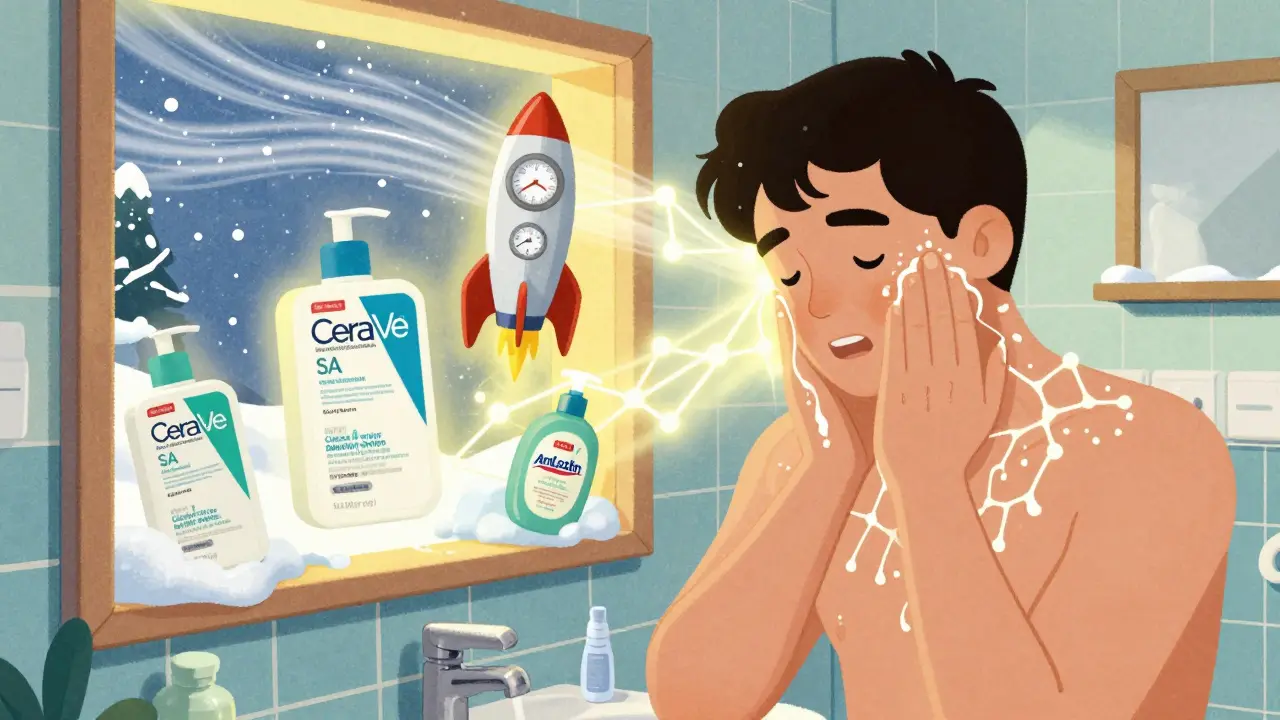
Lactic acid (10-12%) is one of the most reliable options. Mayo Clinic’s 2023 guidelines say it improves texture by 40-60% in 4-6 weeks. AmLactin, the most popular OTC product, contains exactly that. Reddit users report 62% saw major improvement with twice-daily use. It works by gently dissolving the keratin plugs. You might feel a slight sting at first, but it fades after a week.
Urea (10-20%) is another winner. It pulls moisture into the skin and breaks down dead cells. Healthdirect Australia found 65% of users saw less scaling after 8 weeks. CeraVe SA Lotion combines urea with salicylic acid and ceramides - a triple threat. Over 2,100 reviews on DermStore give it a 4.5/5 rating, with 79% saying it works best right after a shower.
Alpha-hydroxy acids (AHA), like glycolic acid (8-12%), also help. Paula’s Choice 8% AHA Lotion got 4.2/5 stars, with 68% noticing smoother skin in 4 weeks. But don’t overdo it. Once a day is enough. Twice can irritate.
Retinoids (tretinoin 0.025-0.1%) are powerful. DermNet NZ says 70% of users see improvement - but only after 3-6 months. And 40% get red, peeling skin at first. Most people quit too soon. MySkinTrack data shows 73% abandoned retinoids within 6 weeks. If you stick with it, results come. But patience is non-negotiable.
What Doesn’t Work (And What Makes It Worse)
Scrubs. Loofahs. Dry brushing. These are traps. They don’t remove keratin plugs - they irritate the follicles. That triggers more inflammation. And that leads to dark spots that take months to fade. The American Academy of Dermatology warns: aggressive exfoliation makes KP look worse.
Also skip anything that claims a “cure.” The FDA issued 17 warning letters in 2022-2023 to companies selling KP products with false claims. No product erases KP permanently. Even laser therapy only reduces redness by 50-75%. It doesn’t stop new bumps. And at $300-500 per session, it’s not covered by Medicare.
The Right Routine - Step by Step
Here’s what dermatologists recommend based on Cleveland Clinic and Mayo Clinic protocols:
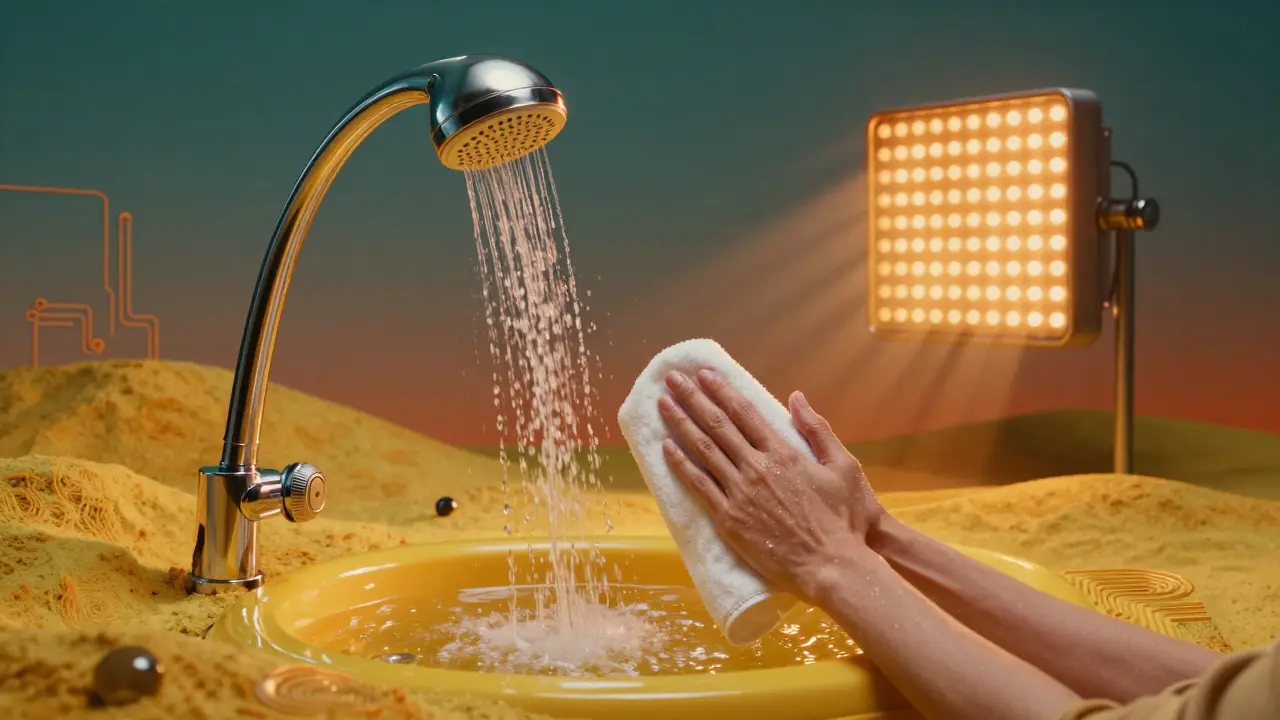
- Wash with lukewarm water. Hot water dries you out. Stick to 10-minute showers.
- Pat skin dry - don’t rub. Leave it slightly damp.
- Apply your exfoliant (lactic acid, urea, or AHA) to damp skin within 3 minutes of showering. That’s when your skin is 50% more absorbent.
- Wait 1 minute, then apply a ceramide-rich moisturizer. CeraVe, Eucerin, or Vanicream all work. Ceramides rebuild your skin’s barrier.
- Do this every night. Consistency matters more than strength.
- Use a humidifier in your bedroom. Keep humidity at 40-50%. It cuts winter flare-ups by 60%.
- Wear loose cotton clothes. Tight fabrics rub and irritate.
Results take time. Most people see improvement in 8-12 weeks. But if you stop for a week? Bumps come back in 2-4 weeks. This isn’t a fix. It’s maintenance.
What’s on the Horizon
Science is moving forward. In early 2024, a study in the Journal of Cosmetic Dermatology found that putting lactic acid into tiny lipid bubbles (liposomes) made it gentler and 25% more effective. That’s coming to market soon.
LED light therapy devices cleared by the FDA in 2023 show promise - 35% fewer bumps after 8 weeks of home use. And microbiome-based treatments (think probiotics for your skin) are in Phase 2 trials. They’re targeting the skin’s natural bacteria to reduce inflammation.
Even genetic testing is being explored. Companies like 23andMe are working with dermatologists to identify filaggrin mutations and tailor treatments. But for now, stick with what works: exfoliate gently. Moisturize daily. Be patient.
Real Talk: Managing Expectations
Dr. Caroline Robinson put it best: “Perfection isn’t the goal. Smoother, more comfortable skin is.”
Only 28% of people with KP get completely clear by age 30. 41% see big improvement. 31% still deal with it. That’s normal. This isn’t a failure. It’s biology.
Most users on RealSelf say the hardest part isn’t the bumps - it’s the endless routine. “I have to do this forever?” Yes. But it’s not hard. Two steps. Every night. Like brushing your teeth. You don’t stop because you don’t see instant results. You do it because it works over time.
And if you’re embarrassed? You’re not alone. One Reddit thread had 1,247 comments - all from people who finally found a routine that helped. You can too.
Is keratosis pilaris contagious?
No. Keratosis pilaris is not contagious. It’s a genetic skin condition caused by keratin buildup in hair follicles. You can’t catch it from touching someone or sharing towels, sheets, or clothing.
Can keratosis pilaris be cured?
There is no permanent cure for keratosis pilaris. It’s a chronic condition that tends to improve with age - often fading by the 30s - but it can return if skincare routines stop. Treatment focuses on managing symptoms: reducing bumps, smoothing texture, and preventing dryness.
What’s the best OTC product for keratosis pilaris?
CeraVe SA Lotion and AmLactin are top choices. CeraVe SA combines salicylic acid, urea, and ceramides - ideal for gentle exfoliation and barrier repair. AmLactin has 12% lactic acid, clinically proven to soften rough patches. Both are affordable, widely available, and backed by thousands of user reviews.
Do I need a prescription for keratosis pilaris?
No. Most cases respond well to over-the-counter treatments. Prescription retinoids (like tretinoin) are an option for stubborn cases, but they’re not necessary for most people. Start with OTC options first. Only see a dermatologist if OTC products don’t help after 3 months.
Why does keratosis pilaris get worse in winter?
Dry air lowers skin moisture, causing keratin to harden and clog follicles. Indoor heating and cold winds reduce humidity below 40%, worsening dryness. Hot showers strip natural oils. Together, this creates the perfect storm for bumps to flare up. Using a humidifier and moisturizing right after bathing helps significantly.
Stick with it. Your skin doesn’t need to be perfect. Just smoother. And that’s possible - with the right routine, and the right expectations.
Linda Franchock
February 16, 2026 AT 05:03Oliver Calvert
February 17, 2026 AT 09:00Agnes Miller
February 18, 2026 AT 19:21Haley DeWitt
February 20, 2026 AT 08:04PRITAM BIJAPUR
February 22, 2026 AT 02:53Digital Raju Yadav
February 23, 2026 AT 16:23Kancharla Pavan
February 24, 2026 AT 20:10Geoff Forbes
February 26, 2026 AT 18:30Brenda K. Wolfgram Moore
February 27, 2026 AT 05:27Dennis Santarinala
February 28, 2026 AT 13:52