
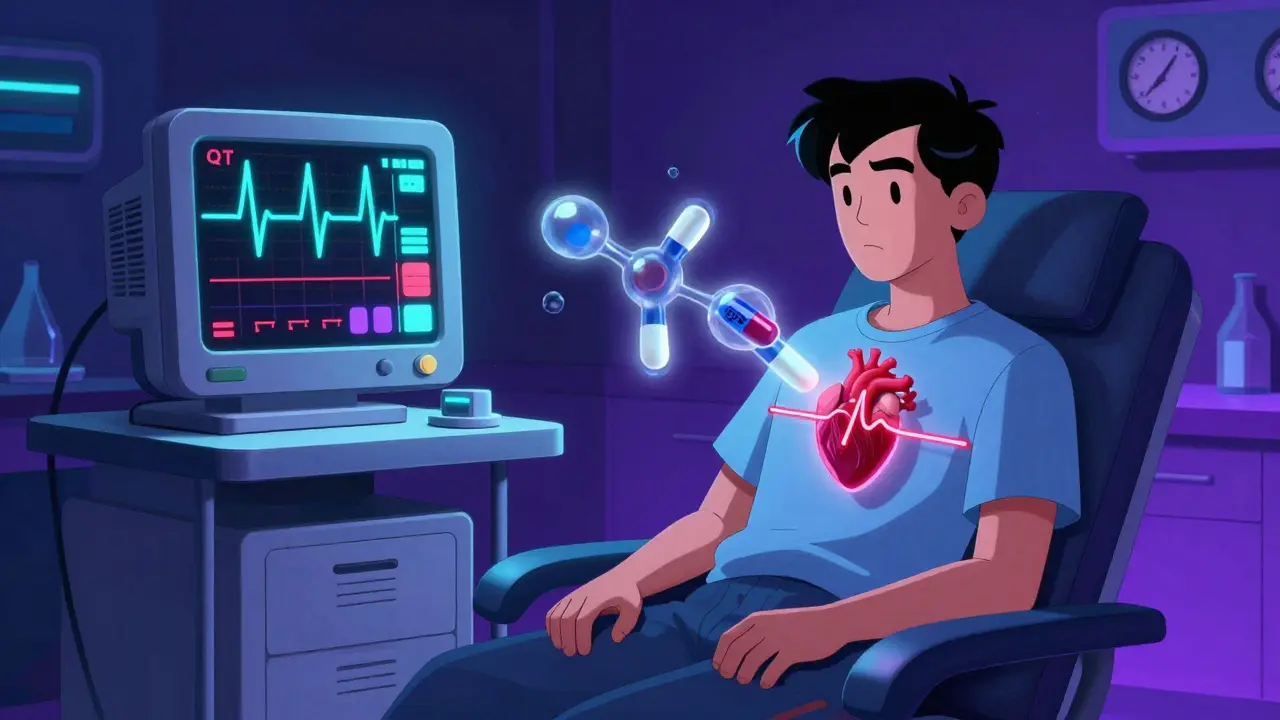
Methadone QT Risk Calculator
When someone starts methadone for opioid dependence or chronic pain, they’re not just taking one drug-they’re stepping into a web of hidden risks. The biggest danger isn’t always the opioid effect. It’s what happens when methadone meets other medications. Many patients don’t realize that common antibiotics, antidepressants, or even antifungals can push methadone levels dangerously high, triggering a life-threatening heart rhythm problem called torsade de pointes. This isn’t rare. In fact, it’s one of the leading causes of preventable death in methadone treatment programs.
Why Methadone Is Different from Other Opioids
Methadone isn’t like oxycodone or hydrocodone. It lasts longer-sometimes up to 59 hours-so it’s given once a day. That’s convenient for patients, but it also means any buildup in the body sticks around. Unlike other opioids, methadone doesn’t just bind to opioid receptors. It also blocks the hERG potassium channels in the heart. That delays the heart’s reset cycle after each beat, which shows up on an ECG as a longer QT interval. When that interval stretches beyond 500 milliseconds, the risk of sudden cardiac arrest jumps fourfold.
Studies show that nearly 30% of people on methadone have QTc intervals above 460 ms, compared to just 10% in people not taking it. And it’s not just about the dose. Some patients on 40 mg a day develop dangerous prolongation, while others on 200 mg don’t. That unpredictability is what makes methadone so tricky.
How CYP Enzymes Control Methadone Levels
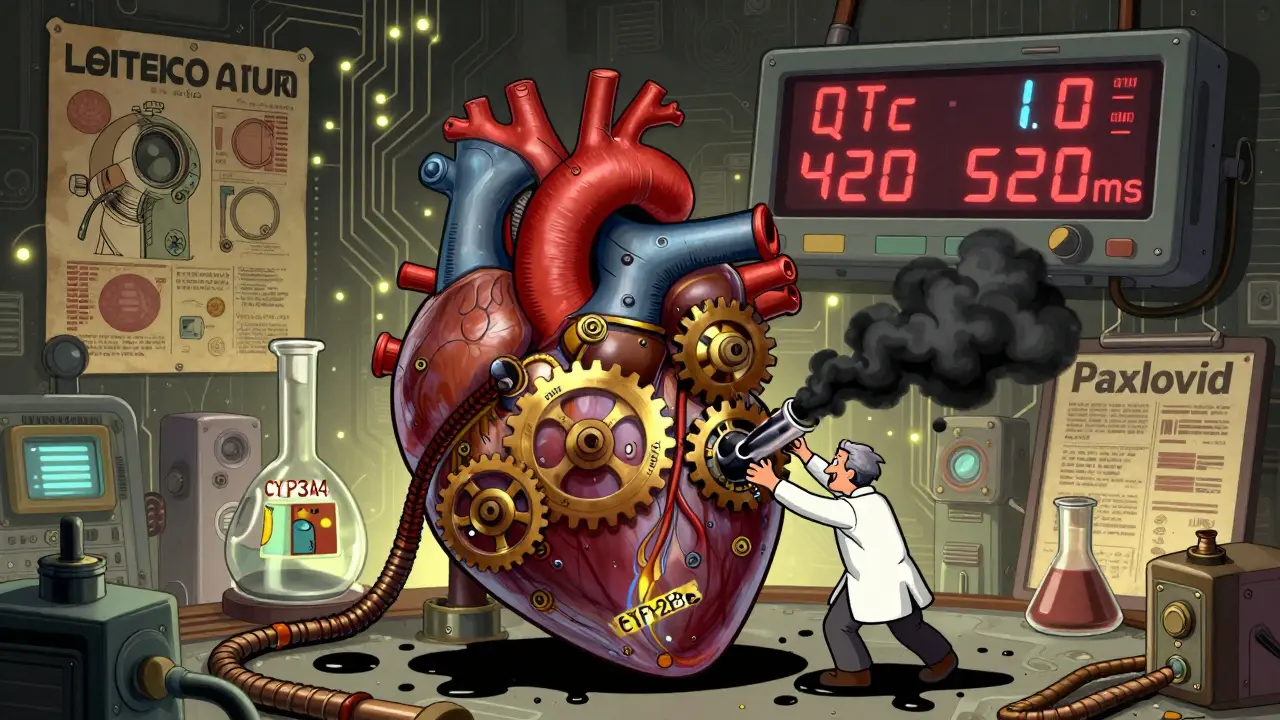
Your body breaks down methadone mostly through two liver enzymes: CYP3A4 and CYP2B6. These are like factory workers that process the drug so it can be cleared. But if another drug slows down or stops these workers, methadone piles up. That’s when serum levels spike-sometimes by 30% to 50%.
The worst offenders are CYP3A4 inhibitors. These include:
- Clarithromycin (an antibiotic)
- Fluconazole (an antifungal)
- Fluoxetine and paroxetine (certain antidepressants)
- Valproate (a seizure medication)
- Ritonavir (part of Paxlovid, used for COVID-19)
One JAMA study found that 12% of methadone patients with prolonged QT had fluoxetine in their system. Another 6% had clarithromycin. These aren’t obscure drugs-they’re prescribed all the time. And many prescribers don’t check for interactions before writing the script.
QT Prolongation: The Silent Killer
There’s no warning sign before torsade de pointes hits. No chest pain. No dizziness. Just a sudden, chaotic heart rhythm that can kill in seconds. The heart doesn’t pump blood. The brain doesn’t get oxygen. And because methadone lingers in the body for days, the danger doesn’t go away when you stop the interacting drug.
Normal QTc? 430 ms or less for men, 450 ms or less for women. Anything above 470 ms in women or 450 ms in men is prolonged. Above 500 ms? That’s a red zone. The CDC reports that in the early 2000s, methadone-related deaths rose nearly 400% in just five years. Many of those were linked to QT prolongation, not overdose.
And here’s the catch: women are more vulnerable. Their baseline QT intervals are naturally longer. A 460 ms QTc might be normal for a man but dangerously high for a woman. Yet, many clinics still use the same thresholds for everyone.
Who’s at Highest Risk?
It’s not just about the dose. It’s the combo. The strongest risk factors are:
- Taking methadone with a CYP3A4 or CYP2B6 inhibitor
- Low potassium or magnesium levels (common in people with poor nutrition or vomiting/diarrhea)
- Existing heart disease or history of arrhythmias
- Female gender
- Older age
- Liver impairment (slows methadone breakdown)
A 2018 review of 32 cases found that over half of the patients had at least one CYP inhibitor or another QT-prolonging drug. Nearly 40% had heart disease. One-third had low potassium. And only 21 out of 32 had clear dose-related QT changes. That means you can’t rely on dose alone to predict risk.
What Clinicians Are Doing About It
Guidelines have changed. In 2023, the American Society of Addiction Medicine lowered the ECG monitoring threshold from 100 mg/day to 50 mg/day. Why? Because studies now show QT prolongation can happen even at lower doses-if there’s an interaction.
Best practice now includes:
- Baseline ECG before starting methadone
- Repeat ECG after 2-4 weeks, and again after any dose change or new medication
- Check electrolytes-especially potassium-regularly
- Use a drug interaction checker before adding any new prescription or OTC med
- Warn patients: don’t start new meds without telling their prescriber
Some clinics now use automated alerts in their electronic health records. If a patient on methadone gets a prescription for fluconazole, the system flags it. That’s not optional anymore-it’s standard of care.
Buprenorphine: The Safer Alternative?
Compared to methadone, buprenorphine has a much lower risk of QT prolongation. It doesn’t block hERG channels the same way. Studies show its QTc changes are minimal-even at high doses. That’s one reason why buprenorphine prescriptions have jumped from 1.4 million in 2016 to over 2.1 million in 2021.
But buprenorphine isn’t right for everyone. Some patients need methadone’s longer duration. Others respond better to its effects. The goal isn’t to eliminate methadone-it’s to use it safely.
The Hidden Risk: New Drugs, Old Problems
One of the biggest emerging threats is Paxlovid. That’s the COVID-19 antiviral with ritonavir, a powerful CYP3A4 inhibitor. A patient on 80 mg of methadone who takes Paxlovid for five days can see methadone levels spike. That spike doesn’t vanish when Paxlovid ends-it lingers because methadone sticks around for days.
There are no published case reports yet linking Paxlovid and torsade de pointes, but the mechanism is clear. Clinicians in Sydney, Melbourne, and Philadelphia are now asking: “Did this patient take Paxlovid?” before they even look at the ECG.
What Patients Need to Know
If you’re on methadone, you need to know three things:
- Don’t take new medications without checking with your treatment provider-this includes antibiotics, antifungals, painkillers, and even herbal supplements like St. John’s Wort.
- Know your ECG results. Ask for a copy. If your QTc is over 450 ms, find out why.
- Report muscle cramps, fatigue, or irregular heartbeat. These can be signs of low potassium or early arrhythmia.
Many patients think if they feel fine, they’re safe. But torsade doesn’t wait for symptoms. It strikes silently. That’s why monitoring isn’t optional-it’s lifesaving.
The Future: Personalized Risk Prediction
Researchers are now building tools to predict who’s at risk before it’s too late. The National Institute on Drug Abuse is funding a study that looks at genetics-especially CYP2B6 variants-along with age, sex, and other meds. Early results suggest that people with certain gene patterns break down methadone much slower, even without inhibitors.
One day, a simple blood test might tell your doctor: “This patient has a high genetic risk. Avoid fluoxetine. Monitor ECG every two weeks.” That’s the future. But today, the best tool is still a careful review of every medication and a baseline ECG.
Can methadone cause sudden death even at low doses?
Yes. While higher doses increase risk, methadone can cause fatal heart rhythms even at doses under 50 mg per day-especially when combined with CYP inhibitors like fluconazole or fluoxetine. The risk isn’t always tied to dose; it’s tied to drug interactions, genetics, and electrolyte levels.
How often should I get an ECG on methadone?
Baseline ECG is required before starting. After that, get one at 2-4 weeks, then again after any dose change or if you start a new medication. If your dose is above 50 mg/day or you’re on a CYP inhibitor, monthly ECGs are recommended until stable. Some clinics do quarterly checks for long-term patients.
Are over-the-counter drugs dangerous with methadone?
Absolutely. Cold medicines with dextromethorphan, antifungals like ketoconazole (sometimes sold OTC), and even certain antacids with cimetidine can interfere with methadone metabolism. Always check with your pharmacist before taking anything new-even if it’s labeled “natural.”
Does alcohol increase methadone’s QT risk?
Alcohol doesn’t directly prolong the QT interval like CYP inhibitors do, but it can worsen electrolyte imbalances and liver function-both of which increase methadone toxicity. Heavy drinking also raises the risk of accidental overdose. Avoid alcohol completely while on methadone.
What should I do if I need an antibiotic while on methadone?
Tell your prescriber you’re on methadone. Avoid clarithromycin, fluconazole, and azithromycin if possible. Ask for alternatives like amoxicillin, doxycycline, or cephalexin. If you must take a high-risk antibiotic, get an ECG before and after starting it, and monitor for dizziness or palpitations.
There’s no perfect solution yet. Methadone saves lives-but it demands respect. The same drug that helps someone stay off heroin can kill them if the wrong pill is added to the mix. The key isn’t fear. It’s awareness. Check your meds. Get your ECG. Know your numbers. That’s how you stay safe.
Brenda King
January 20, 2026 AT 17:17Methadone saved my life but almost killed me too when I got that fluconazole for a yeast infection 😅 I didn’t know it could mess with my heart. Got an ECG and my QTc was 490. Scared the crap out of me. Now I check every med with my pharmacist before touching it. Don’t be like me.
Keith Helm
January 22, 2026 AT 16:28Standard of care must include mandatory ECGs for all methadone initiations. Failure to do so constitutes negligence.
Lauren Wall
January 24, 2026 AT 10:33People just take pills like candy these days. No wonder we have bodies piling up.
Kenji Gaerlan
January 24, 2026 AT 16:00so like… if u got a cold and u on methadone u just gotta suffer? no antibiotics? wtf
Hilary Miller
January 24, 2026 AT 20:31I’m from Nigeria and we don’t even have ECG machines in half the clinics here. Methadone programs are expanding but nobody’s talking about QT. We need global guidelines, not just US ones.
Margaret Khaemba
January 25, 2026 AT 18:46Does anyone know if gabapentin interacts with methadone? My doctor prescribed it for nerve pain but I’m nervous now. I’ve got a QTc of 440 and I’m female. Should I be worried?
Malik Ronquillo
January 27, 2026 AT 04:39Oh wow, so now we’re blaming antibiotics? My cousin died on methadone and the coroner said overdose. Turns out he was on clarithromycin for a sinus infection. No one told him. Guess he just wasn’t smart enough to read the fine print. 😒
Daphne Mallari - Tolentino
January 29, 2026 AT 01:14The lack of systematic pharmacogenetic screening in outpatient addiction treatment remains a glaring deficiency in contemporary clinical practice. The conflation of pharmacokinetic variability with therapeutic compliance is both empirically unsound and ethically precarious.
Neil Ellis
January 30, 2026 AT 11:22Methadone’s like a quiet storm-calm on the surface, but underneath? A whole damn hurricane waiting to flip your heart. But here’s the good news: awareness is the anchor. Get your ECG. Know your meds. Talk to your pharmacist. You’re not just surviving-you’re reclaiming your life. Keep going.
Alec Amiri
January 30, 2026 AT 14:25Wow, so methadone’s dangerous? Shocking. Next you’ll tell me smoking kills. People shouldn’t be on opioids at all. End of story.
Lana Kabulova
January 31, 2026 AT 12:57Wait-so if you’re female, over 50, on fluoxetine, with low potassium, and liver issues… you’re basically a walking time bomb? And the clinic just gives you a script? No wonder people die. Why isn’t this mandatory training for every prescriber?
Rob Sims
January 31, 2026 AT 19:20Oh, so now it’s Paxlovid’s fault? Lol. Next time someone dies on methadone, blame the moon. Or maybe just stop being a junkie.
arun mehta
February 1, 2026 AT 23:25As a doctor in Delhi, I’ve seen patients on methadone for 8 years without ECGs. We use buprenorphine when we can-but it’s expensive. This post? It’s a lifeline. I’m sharing it with every resident I train. 🙏