
Imagine this: you're treating a feverish toddler, and in a rush, you grab the wrong bottle of syrup. Or maybe you're helping an elderly parent manage ten different pills and accidentally skip a dose. It happens more often than you'd think. In fact, research from UC Davis Health shows that a child experiences a medication error at home every eight minutes. These aren't usually caused by negligence, but by simple human error, confusing labels, and the sheer complexity of modern healthcare. The goal isn't just to be careful, but to build a system in your home that makes it nearly impossible to make a mistake.
| Risk Area | Common Mistake | Top Prevention Strategy |
|---|---|---|
| Pediatrics | Wrong concentration/strength | Weight-based dosing over volume |
| Elderly Care | Polypharmacy confusion | Updated master medication list |
| General Home Use | Missing or double doses | Pill organizers and alarm reminders |
| Transitions | Conflicting hospital vs home instructions | Medication reconciliation (Review) |
The Most Common Ways We Get Medication Wrong
Most of us think medication errors only happen in hospitals, but the reality is that mistakes in home settings are incredibly frequent. According to the Agency for Healthcare Research and Quality, home error rates can climb as high as 33%. These aren't always dramatic overdoses; often, they are "silent" errors like skipping a dose or taking a pill at the wrong time of day.
One of the biggest culprits is Medication Errors is a preventable adverse event that occurs when a pharmaceutical is administered incorrectly, deviating from the prescribed instructions. Common examples include taking unauthorized drugs, continuing a medication that the doctor already told you to stop, or confusing a brand-name drug with its generic equivalent because the packaging looks similar.
For those managing multiple prescriptions, "polypharmacy"-taking five or more drugs-increases the risk of an error by 30%. When you're juggling a dozen different bottles, the chance of a transcription error or a simple memory lapse skyrockets. This is especially true for people over 75, who face a 38% higher risk of mistakes due to cognitive decline or vision impairment.
The Hidden Danger of Pediatric Dosing
Giving medicine to kids is a high-stress game. The biggest danger here is often the concentration of the drug. For instance, infant-strength formulations of acetaminophen are often much more concentrated than children's versions. If a parent uses a children's dosing spoon for an infant's concentration, they could inadvertently give a massive overdose.
Another risky habit is "alternating" between acetaminophen and ibuprofen for fevers. While some suggest this, research in Clinical Pediatrics suggests this practice increases the likelihood of an error by 47%. It's simply too easy to lose track of which drug was given when, leading to double-dosing or missing a window entirely.
Parents should also be wary of "hidden" ingredients. Many over-the-counter cold medicines contain acetaminophen. If you give a child a multi-symptom cold syrup and then follow it up with a dose of Tylenol, you've potentially doubled their dose without realizing it. Always check the active ingredients list on every single bottle.
Why These Mistakes Happen (And How to Spot the Red Flags)
If you've ever left a doctor's office feeling a bit foggy about the instructions, you're not alone. Statistics show that 40% to 80% of health information shared during a visit is either forgotten or remembered incorrectly. This creates a dangerous knowledge gap.
Other factors that lead to Drug Mistakes include:
- Look-Alike/Sound-Alike (LASA) Drugs: Some medications have names that sound nearly identical, leading to the wrong bottle being grabbed.
- Poor Labeling: Vague instructions like "take as needed" can be misinterpreted.
- Environmental Stress: Interruptions, high workload, or language barriers can cause a caregiver to skip a step.
- Cost Concerns: Some patients intentionally skip doses or split pills to make their prescription last longer, which can render the treatment ineffective.
Proven Strategies to Secure Your Home Pharmacy
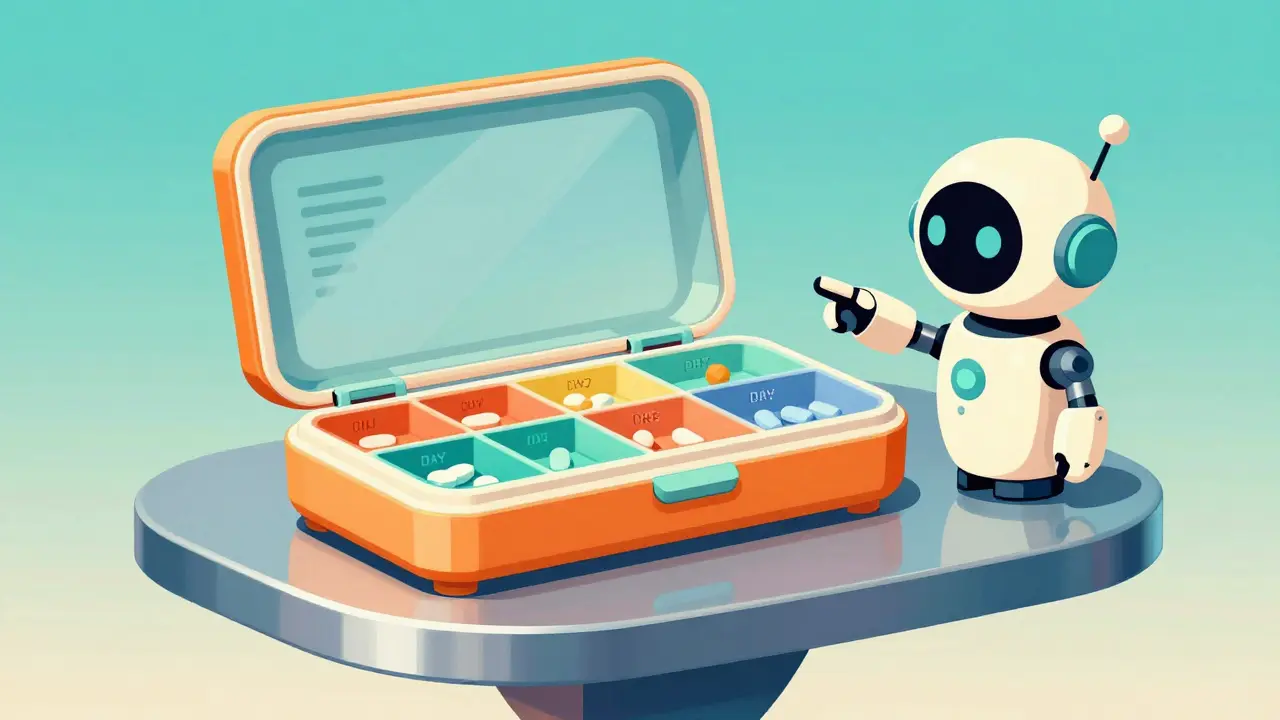
The best way to avoid errors is to stop relying on your memory. Human memory is flawed; systems are not. Start by using a Pill Organizer is a segmented container used to sort medications by day and time to ensure dose adherence. This gives you a visual confirmation: if Tuesday morning is still full, you know you missed a dose.
Implement the "Teach-Back" method during your next pharmacy visit. Instead of just nodding when the pharmacist explains the drug, repeat the instructions back in your own words. Say, "So, I take one tablet of this medication every morning with food, and I should avoid grapefruit juice while taking it. Is that correct?" This forces any misunderstandings to the surface immediately.
For those caring for others, adopt the Dual Control Principle (DCP). This is a fancy way of saying "double-check." Before administering a drug, have a second person verify the dose and the patient's identity. In professional home care settings, those who use this double-verification method report significantly fewer errors.
Mastering the Transition: Hospital to Home
The most dangerous time for a medication error is during a transition of care-like when a patient is discharged from a hospital to their home. This is where Medication Reconciliation is the process of creating the most accurate list possible of all medications a patient is taking and comparing it against the new discharge orders becomes vital.
When you get home from the hospital, do not assume the new instructions automatically replace the old ones. Some medications are stopped, some are adjusted, and some are added. Sit down with all your current bottles and the discharge paperwork. If there is any discrepancy, call your pharmacist immediately. Do not guess.
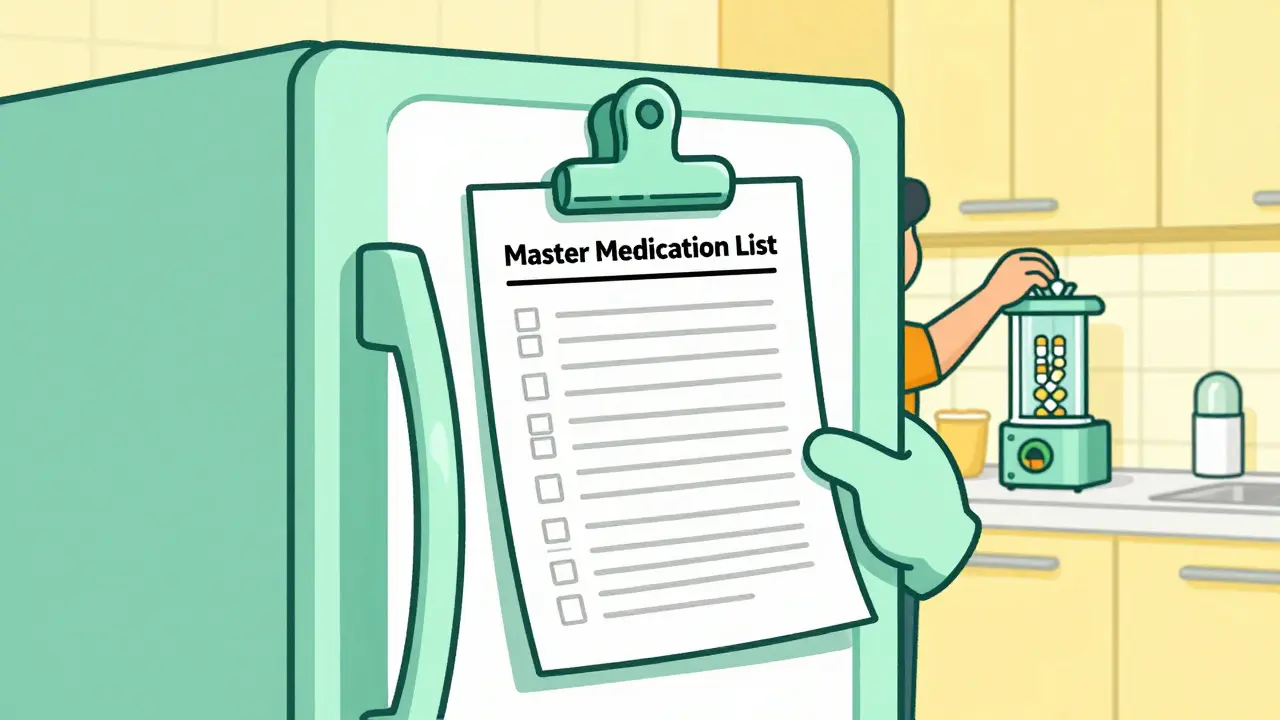
Keep a "Master Medication List" in a visible place, like the fridge. This list should include:
- The generic and brand name of the drug.
- The exact dose (e.g., 20mg, not "one pill").
- The purpose of the medication (e.g., "for blood pressure").
- The exact time it should be taken.
- Any special instructions (e.g., "take on an empty stomach").
Practical Tips for Safe Storage and Handling
Where you keep your meds matters as much as how you take them. Store medications in their original containers. Moving pills into unmarked jars is a recipe for disaster. If you use a pill organizer, fill it once a week and keep it in a secure, cool, and dry place. Avoid the bathroom cabinet, as humidity from the shower can degrade some medications over time.
Be mindful of timing. Some drugs require a specific window to be absorbed correctly. For example, taking a medication with food when it should be taken on an empty stomach can significantly reduce its effectiveness, effectively resulting in an underdose. Conversely, some drugs can become toxic if taken without food.
Lastly, purge your medicine cabinet regularly. Using expired medications can be dangerous because the chemical composition can change, making the drug less potent or even harmful. Check your dates every six months and dispose of old meds at a pharmacy take-back location rather than flushing them.
What is the most common mistake parents make with children's medicine?
The most common and dangerous mistake is confusing the concentration of medications. For example, infant formulations are often more concentrated than children's versions. Using the wrong measuring tool or relying on volume (ml) instead of the child's current weight and age can lead to significant overdosing.
How can I tell if a medication is a "look-alike/sound-alike" drug?
LASA drugs are medications that look similar in their packaging or have names that sound nearly identical (e.g., Celebrex and Celexane). The best way to prevent errors is to read the label every single time you administer the drug and check the generic name, which is often more distinct than the brand name.
Is it safe to alternate Tylenol and Advil for a child's fever?
While some doctors may suggest it, this practice increases the risk of medication errors by 47% because it is much harder to track the timing and dosage of two different drugs. It is generally safer to stick to one medication and follow the dosing schedule strictly.
What should I do if I realize I missed a dose?
Do not automatically double the next dose to "catch up," as this can lead to toxicity. Check the medication's patient information leaflet or call your pharmacist. Some drugs should be taken as soon as you remember, while others require you to wait until the next scheduled dose.
How often should I review my home medication list?
You should perform a full medication reconciliation every time you visit a new specialist, change a primary doctor, or are discharged from a hospital. At a minimum, review your list and check for expiration dates every six months.
Next Steps for Your Home Safety Audit
If you're feeling overwhelmed, start small. This weekend, clear out any expired medications from your cabinets. Next, create a single, handwritten master list of everything you and your family members are taking. Finally, schedule a 10-minute "brown bag" appointment with your pharmacist-bring all your current medications in a bag and ask them to review the list for potential interactions or dosing errors.