
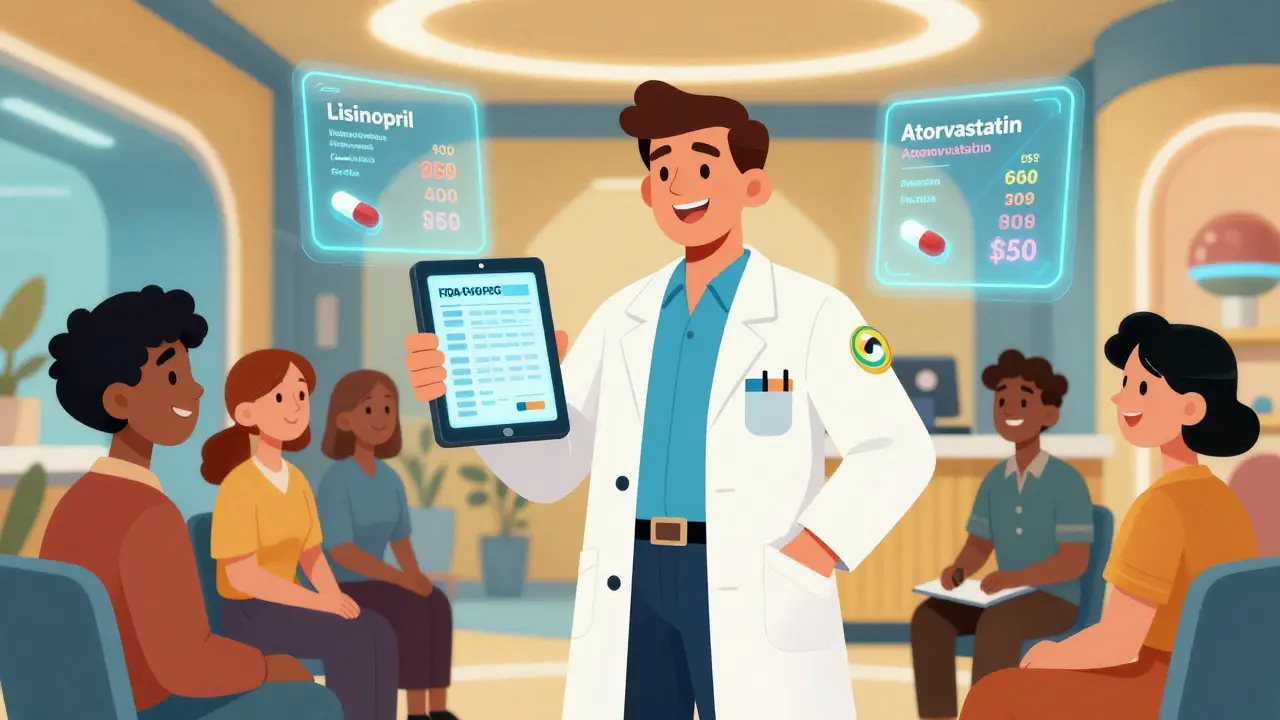
When employees skip their blood pressure pills or delay refilling diabetes meds because of the price, it doesn’t just hurt their health-it hurts productivity, increases absenteeism, and drives up employer healthcare costs. That’s where pharmacists step in. Not as behind-the-counter fillers of prescriptions, but as active members of workplace wellness programs, guiding workers toward affordable, effective generic medications that actually get taken.
Why Generic Drugs Matter More Than You Think
Most people don’t realize that 90% of all prescriptions filled in the U.S. are for generic drugs. Yet those same generics make up only 22% of total drug spending. That gap? It’s billions of dollars saved every year-and pharmacists are the ones making sure those savings reach the people who need them most. Generic drugs aren’t cheap knockoffs. They’re exact copies of brand-name drugs in active ingredient, dosage, safety, strength, and how they work in the body. The FDA requires them to be bioequivalent: meaning they’re absorbed into the bloodstream at the same rate and to the same extent as the brand version, within a tight 80-125% range. In real terms, if your brand-name Lisinopril works, so does the generic version-and at a fraction of the cost. But here’s the problem: many employees still believe generics are inferior. A 2023 Pharmavoice survey found that 78% of workers felt more confident using generics after talking to a pharmacist. Without that conversation, they’re more likely to skip doses, switch to cheaper alternatives like OTC painkillers, or just go without.Pharmacists as Wellness Coaches, Not Just Dispensers
In modern workplace wellness programs, pharmacists aren’t just handing out pills. They’re doing Medication Therapy Management (MTM)-a structured review of every medication a person takes, including over-the-counter drugs and supplements. This isn’t a 2-minute chat at the counter. It’s a 30-minute consultation, often done on-site at company clinics or via secure telehealth. During MTM, pharmacists look for:- Redundant prescriptions (e.g., two different drugs for the same condition)
- Drugs that interact dangerously
- High-cost brand-name drugs that have cheaper, equally effective generics
- Medications the patient stopped taking because of cost
How Pharmacists Actually Get Generics Prescribed
It’s not as simple as swapping a label. Pharmacists need the right tools and authority to make changes. In most U.S. states (49 of them), pharmacists can substitute a generic for a brand-name drug if it’s listed as therapeutically equivalent in the FDA’s Orange Book. But here’s where it gets messy: some states require the prescriber’s permission for therapeutic interchange-even when the generic is proven safe and effective. That slows things down, defeats the purpose, and frustrates both pharmacists and patients. That’s why top workplace wellness programs partner with Pharmacy Benefit Managers (PBMs) like CVS Caremark or OptumRX. These organizations provide pharmacists with real-time access to formularies, Maximum Allowable Cost (MAC) lists, and automated substitution protocols. They also give pharmacists the legal backing to make substitutions without needing to call the doctor every time. And it works. PBMs that include pharmacist-led MTM see 15-20% higher medication adherence than those that don’t. For employers, that means fewer ER visits, fewer missed workdays, and lower insurance premiums.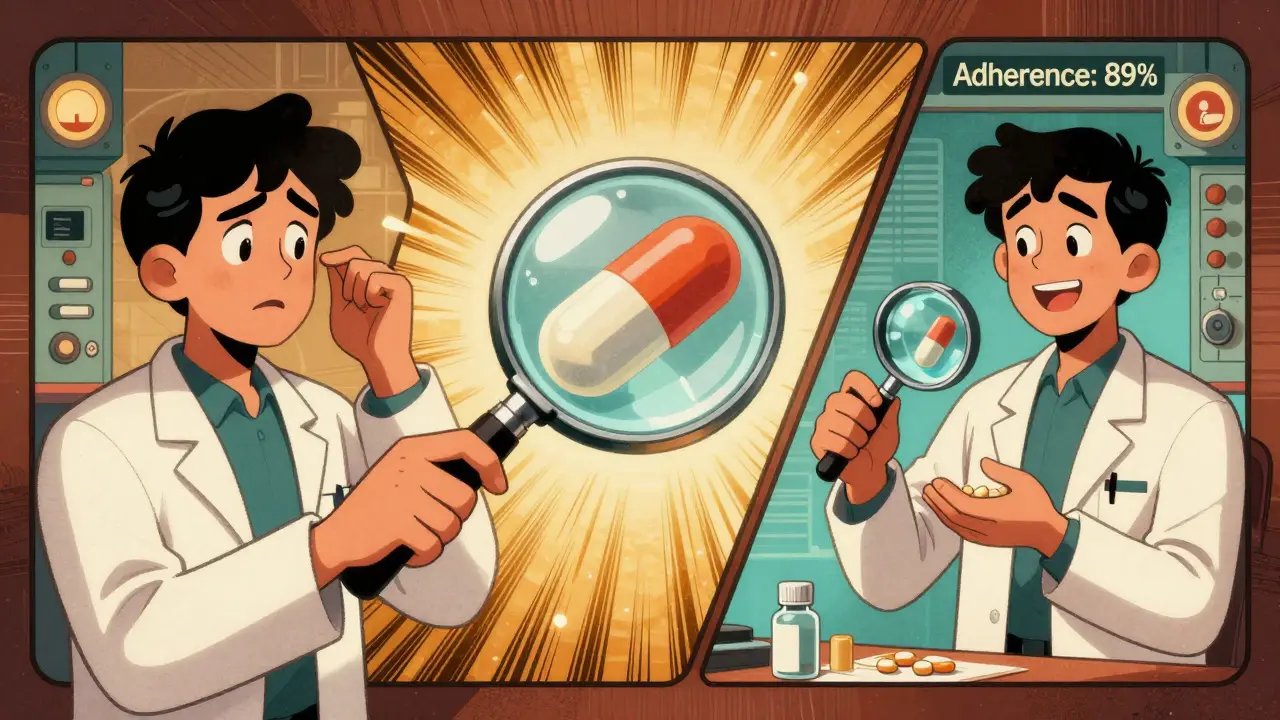
What Employees Really Think-And How Pharmacists Change Minds
The biggest barrier to generic use? Fear. “I’m not taking that stuff,” one employee told a pharmacist at a manufacturing plant. “My cousin took a generic for his heart and ended up in the hospital.” The pharmacist didn’t argue. She asked, “What was the brand name?” “Lipitor.” She pulled up the FDA’s database on her tablet. “Lipitor’s generic is Atorvastatin. The same company that makes Lipitor also makes the generic version. It’s the exact same tablet, just without the brand name on it.” Then she showed the employee her own prescription bottle: Atorvastatin. “I take this. Every day. My cholesterol’s perfect.” That’s the power of trust. Pharmacists don’t just explain science-they share their own experience. A 2023 Reddit thread in r/pharmacy showed how common this is: pharmacists routinely say, “I take generics too,” or “My kid’s on a generic for ADHD and it’s working great.” That personal touch cuts through misinformation faster than any brochure.Why Employers Are Investing More in Pharmacists
Employers aren’t doing this out of charity. They’re doing it because it saves money-and lives. The CDC estimates that better medication adherence alone could prevent 125,000 deaths a year and save the U.S. healthcare system up to $300 billion. For a company with 5,000 employees, that translates into roughly $1.2 million saved annually in reduced claims. And the ROI? It’s clear. The American Pharmacists Association found that for every $1 spent on pharmacist-led medication management, employers save $7.20 in medical costs. That’s not a guess-it’s data from 12 major employer wellness programs tracked over three years. Since 2020, employer adoption of pharmacist-led wellness initiatives has grown 37%. Large companies (5,000+ employees) are now 68% more likely to include pharmacist consultations in their benefits package than they were five years ago. Companies like Walmart Health are even integrating pharmacists into on-site primary care clinics for their employees. Early results? A 23% drop in prescription costs among participants.The Challenges Pharmacists Still Face
It’s not all smooth sailing. Some doctors still resist pharmacist-led substitutions, fearing loss of control. But studies show pharmacists make correct therapeutic substitutions in 98.7% of cases when following established protocols. Others struggle with outdated systems. Smaller employers often don’t have access to the same PBM tools as big corporations. Pharmacists in these settings have to manually check formularies, call prescribers, and explain everything from scratch-time-consuming work that’s hard to scale. State laws also vary wildly. In some places, pharmacists can substitute generics without any notice. In others, they must get written approval from the prescriber-even for a $3 generic version of a $150 brand drug. That’s not patient care. That’s bureaucracy. And then there’s education. Many employees still believe “generic” means “lower quality.” Pharmacists spend hours debunking myths: explaining the ANDA approval process, showing FDA inspection reports, comparing side effect profiles side-by-side.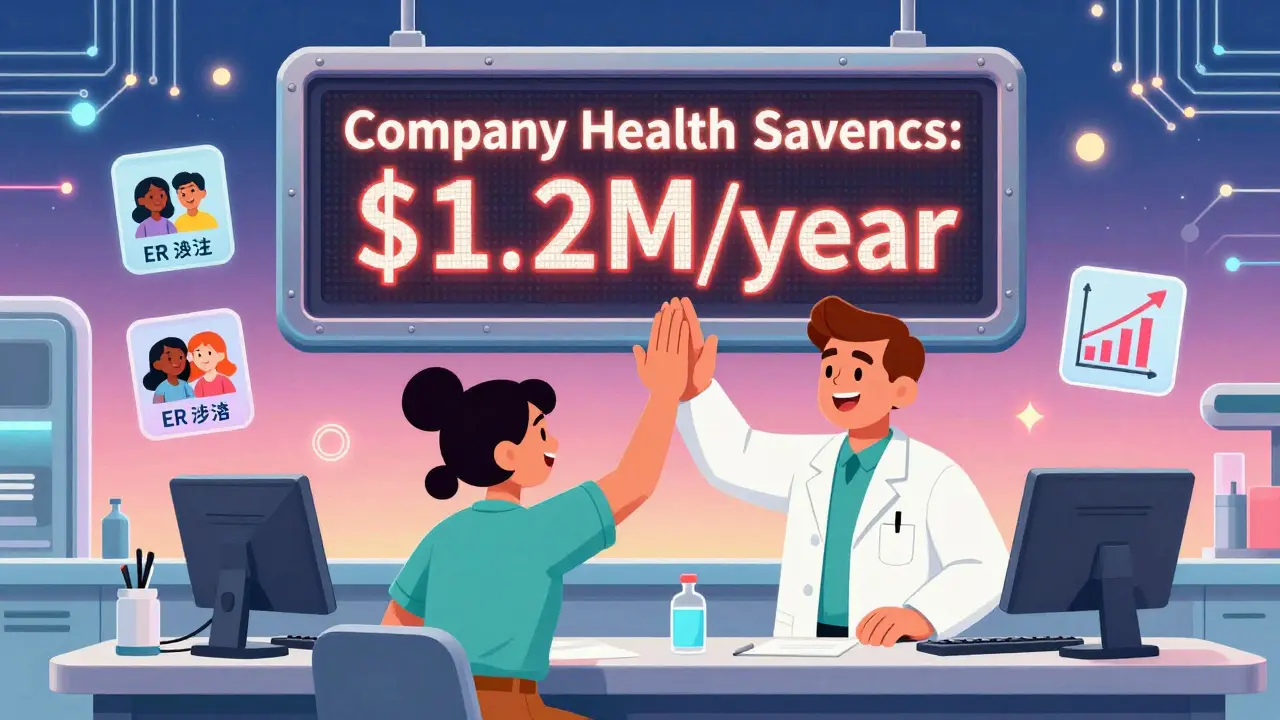
What’s Next? The Future Is Clinical
By 2027, the American Pharmacists Association predicts 85% of large employer wellness programs will include pharmacist-led medication optimization as a standard benefit. That’s not speculation-it’s based on hard data from companies already seeing results. New laws like the 2024 PBM Transparency Act are forcing PBMs to be clearer about pricing, which gives pharmacists more leverage to advocate for generics. And as more employers move toward value-based care, pharmacists are becoming key players-not just in cost control, but in long-term health outcomes. The future isn’t about filling prescriptions. It’s about managing health. And pharmacists, with their unique blend of clinical knowledge, accessibility, and trust, are perfectly positioned to lead that shift.What Employees Can Do Today
If your workplace offers a wellness program with pharmacist access:- Book a free Medication Therapy Management session
- Ask: “Is there a generic version of this drug?”
- Ask: “Is the generic made by the same company as the brand?”
- Ask: “Will switching save me money-and will it still work?”
Are generic drugs really as safe as brand-name drugs?
Yes. The FDA requires generic drugs to meet the same strict standards as brand-name drugs for quality, strength, purity, and stability. They must contain the same active ingredient, work the same way in the body, and have the same risks and benefits. The only differences are in inactive ingredients (like fillers or dyes) and packaging-neither affects how the drug works.
Why do some people say generics don’t work for them?
Sometimes it’s not the drug-it’s the placebo effect or a change in inactive ingredients that affects how the pill feels or tastes. Rarely, a person may have a sensitivity to a filler in the generic version. If someone feels a difference after switching, a pharmacist can check if a different generic manufacturer is available or recommend an authorized generic (same drug, same manufacturer, lower price). Most of the time, the issue isn’t effectiveness-it’s perception.
Can pharmacists switch my prescription to a generic without asking my doctor?
In 49 U.S. states, pharmacists can substitute a generic for a brand-name drug if it’s on the FDA’s Orange Book as therapeutically equivalent. But some states require the prescriber’s permission for therapeutic interchange, especially if the original prescription says “dispense as written.” Workplace wellness programs often work with PBMs that have agreements in place to streamline this process, so pharmacists can act quickly without delays.
How do I know if my pharmacy is part of a workplace wellness program?
Check your employer’s benefits portal or HR handbook. If you’re enrolled in a wellness program, you’ll likely see a section on “Medication Management” or “Pharmacist Consultations.” Some programs offer on-site visits, while others provide free telehealth appointments through your pharmacy benefit provider. If you’re unsure, ask your pharmacist-they’ll know if they’re connected to your employer’s program.
Do generics cost less because they’re lower quality?
No. Generics cost less because their manufacturers don’t have to repeat expensive clinical trials. The original brand company spent years and millions developing the drug; generics just prove they’re the same. The FDA inspects generic manufacturing plants just as rigorously as brand-name ones. In fact, many brand companies make their own generics under different labels. The lower price reflects savings from marketing and R&D-not quality.
Can pharmacists help me switch from multiple brand-name drugs to generics?
Absolutely. That’s one of the main jobs of a pharmacist in a workplace wellness program. They review your entire medication list-prescription, OTC, and supplements-and identify opportunities to switch to generics. For someone on three or four chronic meds, this could mean saving hundreds or even thousands of dollars a year. They’ll also check for interactions and make sure the switch is safe and effective.
What Employers Should Do Next
If you’re an employer or HR professional:- Partner with a PBM that includes clinical pharmacists in their wellness offerings
- Offer free MTM sessions as part of your health benefits
- Train managers to promote pharmacist services-not as a cost-cutting tactic, but as a health support tool
- Share success stories: “Our pharmacist helped 120 employees switch to generics, saving them $85,000 last year.”