
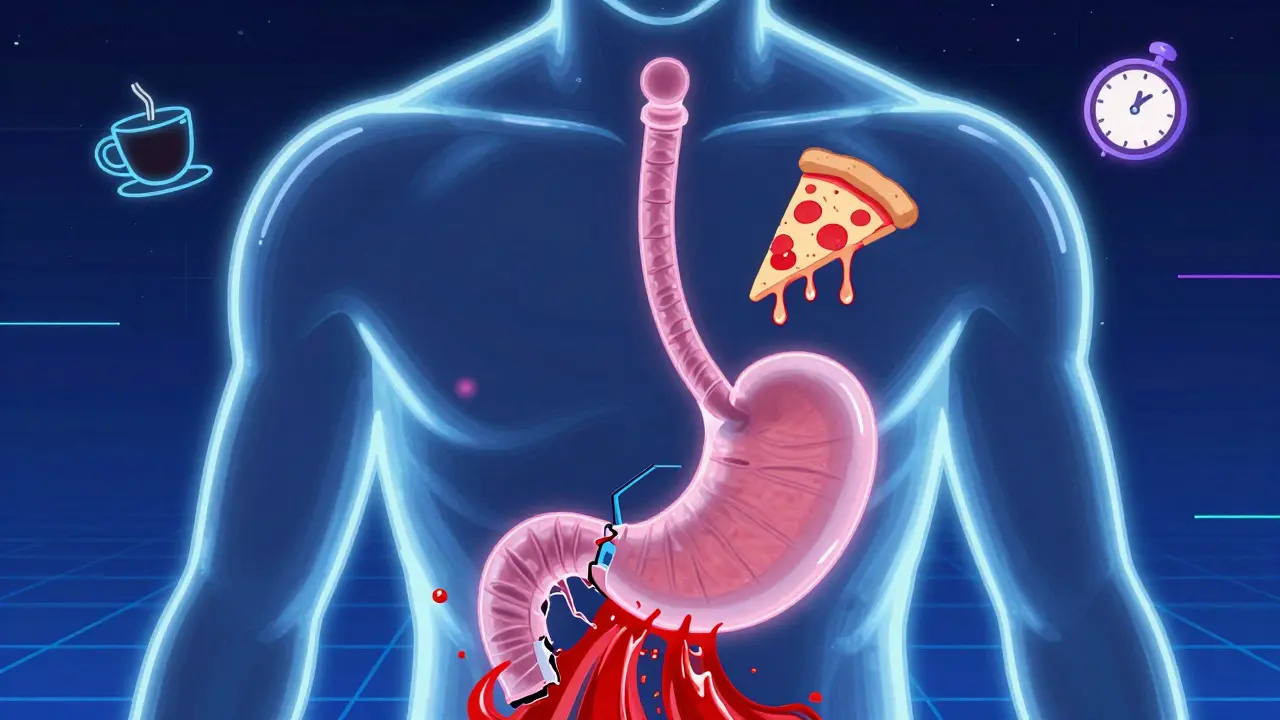
If you’ve ever woken up with a burning chest or a sour taste in your mouth, you’re not alone. About 20% of adults in the U.S. deal with GERD symptoms at least once a week. For many, it starts as an occasional nuisance-but left unchecked, it can turn into something serious. GERD isn’t just heartburn. It’s a chronic condition where stomach acid keeps flowing back into your esophagus, irritating the lining and sometimes leading to complications like Barrett’s esophagus or strictures. The good news? You don’t have to live with it. And you don’t need to rely on pills forever.
What’s Really Happening in Your Body?
Your esophagus and stomach are connected by a muscle ring called the lower esophageal sphincter (LES). Think of it like a door that opens to let food in, then shuts tight to keep stomach acid where it belongs. In GERD, that door doesn’t close properly. Acid leaks up, and your esophagus-designed to handle food, not acid-gets burned. That’s the heartburn. The sour taste? That’s regurgitation. It’s not just discomfort. Studies show that people with GERD have acid exposure in their esophagus for more than 5% of a 24-hour period. That’s constant irritation.Why PPIs Are So Common-and Why They’re Not the Whole Answer
Proton pump inhibitors (PPIs) like omeprazole, pantoprazole, and esomeprazole are the most powerful acid-reducing drugs available. They work by shutting down the acid-producing pumps in your stomach cells. They can cut acid production by 90-98%. That’s why they heal erosive esophagitis in 70-90% of cases, compared to just 50-60% with older H2 blockers like famotidine. But here’s the catch: PPIs treat the symptom, not the cause. They don’t fix the weak LES. They don’t reverse weight gain. They don’t stop you from eating late at night. And they come with risks. Long-term use-especially beyond a year-has been linked to a 20-50% higher risk of gut infections, vitamin B12 deficiency, kidney problems, and even hip fractures in older adults. The FDA issued warnings about these risks years ago. Still, 70% of GERD patients are prescribed PPIs, and 15% take them for more than a year-even though guidelines say to reassess after 8 weeks.The Real Power Move: Lifestyle Changes That Work
The American College of Gastroenterology says it clearly: lifestyle changes should come first. And they’re not just a side note-they’re the foundation.- Weight loss: Losing just 5-10% of your body weight cuts GERD symptoms by 50%. That’s not a guess-it’s from multiple clinical studies. If you weigh 200 pounds, losing 10-20 pounds can make a dramatic difference.
- Stop eating before bed: If you eat within 2-3 hours of lying down, acid has time to creep up. Studies show this simple change reduces nighttime reflux by 40-60%.
- Eliminate trigger foods: Coffee, tomatoes, chocolate, alcohol, and fatty or spicy foods are the top offenders. Research shows 70-80% of GERD patients see worse symptoms after eating these. Cut them out for 3 weeks and track your symptoms. You might be surprised how much better you feel.
- Elevate your head: Raising the head of your bed by 6 inches uses gravity to keep acid down. A patient on the NHS forum said this single change eliminated her nighttime symptoms completely.
What About Rebound Acid?
One of the biggest reasons people stay on PPIs longer than they should? Rebound acid hypersecretion. When you stop PPIs suddenly, your stomach overcompensates and makes even more acid than before. Symptoms flare up-sometimes worse than before. That feels like the medicine stopped working. But it’s your body adjusting. The fix? Don’t quit cold turkey. Taper slowly. Switch to an H2 blocker like famotidine for 2-4 weeks while reducing PPI dose. Or go on an “on-demand” schedule: take the PPI only when you feel symptoms, not every day. A 2021 study found 44% of people who stopped PPIs cold experienced this rebound. Those who tapered had far fewer issues.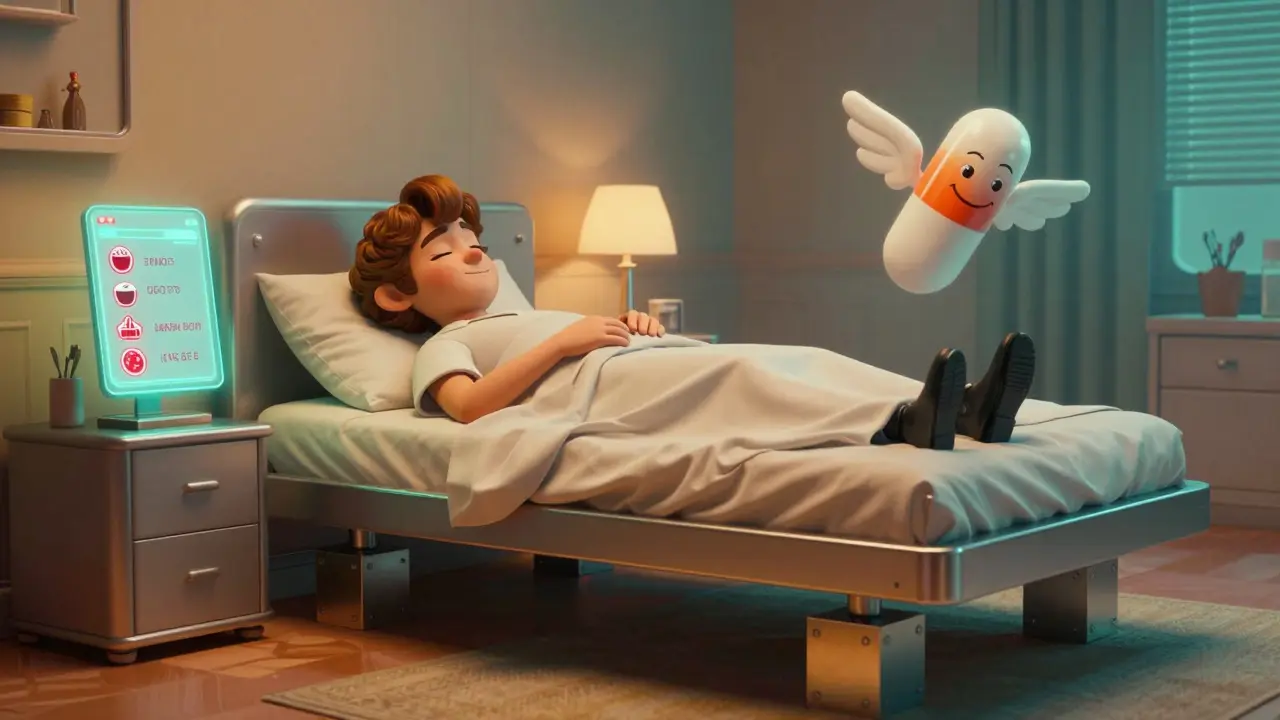
When PPIs Are Necessary-and When They’re Not
PPIs aren’t evil. They’re life-changing for people with erosive esophagitis, Barrett’s esophagus, or severe symptoms that don’t respond to lifestyle changes. If you’ve had an endoscopy showing damage, PPIs are essential to heal it. But if you just have occasional heartburn after spicy food or a big meal? Start with lifestyle changes. Try a food diary for 2 weeks. Note what you eat, when you eat it, and how you feel. Apps like RefluxMD, used by over 8,500 people, help track patterns. You might find your trigger isn’t coffee-it’s your late-night snack of pizza.What the Experts Are Saying Now
In January 2024, the American Gastroenterological Association updated its guidelines to say: “Lifestyle modification is foundational therapy. PPIs should be reserved for confirmed erosive disease or severe symptoms.” That’s a big shift. It means doctors should be asking: “Have you tried losing weight? Stopping late meals? Cutting triggers?” before writing a prescription. Even better: new research from Johns Hopkins showed that a 12-week structured program of diet, sleep, and stress management helped 65% of patients stop PPIs entirely-without symptoms returning. That’s more than double the success rate of standard care.The Future: Smarter, Personalized Care
A new drug called vonoprazan (Voquezna) hit the market in 2023. It’s the first new type of acid blocker in 30 years. It works faster and may be more effective than PPIs for some people. But it’s still a drug. The real innovation is in digital tools. AI-powered food diaries are now predicting individual triggers with 78% accuracy. That means you won’t have to guess what’s causing your reflux-you’ll know. Endoscopic procedures like LINX® (a magnetic ring placed around the LES) or TIF (a minimally invasive surgery that rebuilds the valve) are helping people who don’t want pills or can’t tolerate them. Eighty-five percent report better quality of life than with PPIs after two years.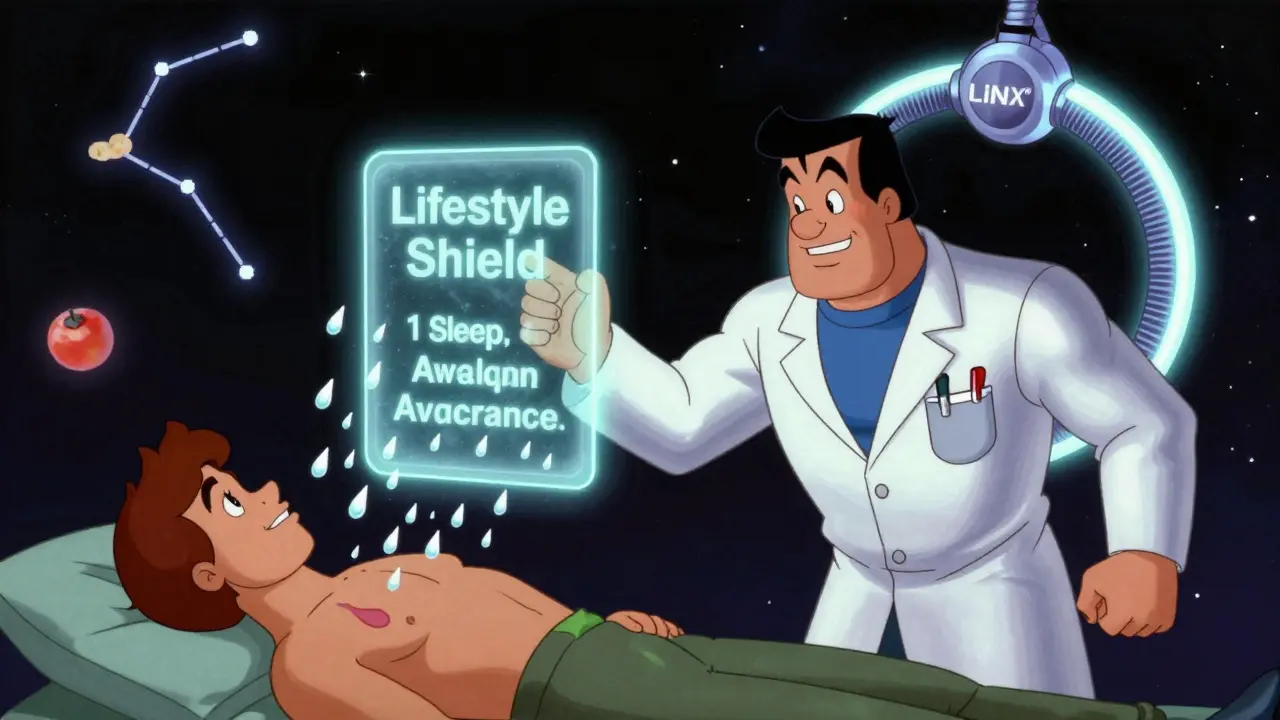
What to Do Right Now
If you’re dealing with GERD:- Start a food and symptom journal for 14 days. Note meals, timing, and symptoms.
- Stop eating 3 hours before bed. Set a phone reminder if you need to.
- Eliminate the top 4 triggers: coffee, alcohol, chocolate, and fatty foods. See how you feel after 2 weeks.
- Elevate your bed. Use wooden blocks under the legs or a wedge pillow-don’t just stack pillows.
- If you’re on PPIs, talk to your doctor about tapering. Don’t stop on your own.
When to See a Doctor
Not all heartburn is harmless. See a doctor if you have:- Difficulty swallowing
- Unexplained weight loss
- Bloody or black stools
- Chronic cough or hoarseness that won’t go away
Final Thought: You’re Not Powerless
GERD feels like a life sentence. But it’s not. Most people can control it without drugs-or with much lower doses. The tools are simple: better timing, smarter eating, weight management, and smart use of medication. You don’t need a miracle. You need consistency. And you’re already ahead just by reading this.Can lifestyle changes cure GERD?
Lifestyle changes don’t always “cure” GERD, but they can eliminate symptoms for many people. Studies show that losing 5-10% of body weight reduces symptoms by 50%. Avoiding trigger foods and not eating before bed can cut reflux episodes by up to 60%. For some, these changes are enough to stop PPIs completely. GERD is often managed, not cured-but managing it well means living without daily discomfort.
Are PPIs safe for long-term use?
PPIs are effective for healing damage, but long-term use (over a year) carries risks. Studies link prolonged use to a higher chance of gut infections, vitamin B12 deficiency, kidney issues, and bone fractures in older adults. The FDA has issued warnings about these risks. Guidelines recommend using the lowest effective dose for the shortest time. Always ask your doctor if you still need the medication-many people take PPIs longer than necessary.
What foods should I avoid with GERD?
The top trigger foods are coffee, alcohol, chocolate, tomatoes, citrus, fatty or fried foods, spicy foods, and carbonated drinks. Research shows 70-80% of GERD patients have worse symptoms after eating these. But triggers vary. Keep a food diary for 2 weeks to find your personal list. Some people tolerate spicy food fine but react badly to chocolate. Others can drink coffee but not wine. It’s individual.
Why do I feel worse when I stop taking PPIs?
This is called rebound acid hypersecretion. When you take PPIs long-term, your stomach increases acid-producing cells to compensate. When you stop suddenly, those cells go into overdrive, making more acid than before. Symptoms return-sometimes worse. The fix is to taper slowly: reduce the dose over 2-4 weeks, switch to an H2 blocker like famotidine, or switch to on-demand use. Never quit cold turkey without medical guidance.
Is surgery an option for GERD?
Yes, for people who don’t respond to medication or can’t tolerate long-term PPI use. Fundoplication wraps the top of the stomach around the LES to strengthen it-it has a 90% success rate at 10 years. Newer options like LINX® (a magnetic ring) and TIF (a minimally invasive procedure) have 85% success in reducing symptoms at 5 years. These are not for everyone, but they’re effective alternatives for those seeking a drug-free solution.
Sonal Guha
January 11, 2026 AT 16:29Katherine Carlock
January 12, 2026 AT 21:54laura manning
January 13, 2026 AT 08:13Sumit Sharma
January 14, 2026 AT 08:18Jay Powers
January 15, 2026 AT 04:46Prachi Chauhan
January 16, 2026 AT 23:06beth cordell
January 17, 2026 AT 01:33Craig Wright
January 18, 2026 AT 14:28Lelia Battle
January 19, 2026 AT 10:31Alice Elanora Shepherd
January 20, 2026 AT 06:08Christina Widodo
January 22, 2026 AT 01:13Lauren Warner
January 23, 2026 AT 16:47TiM Vince
January 23, 2026 AT 17:02