
Lopinavir/Ritonavir Interaction Checker
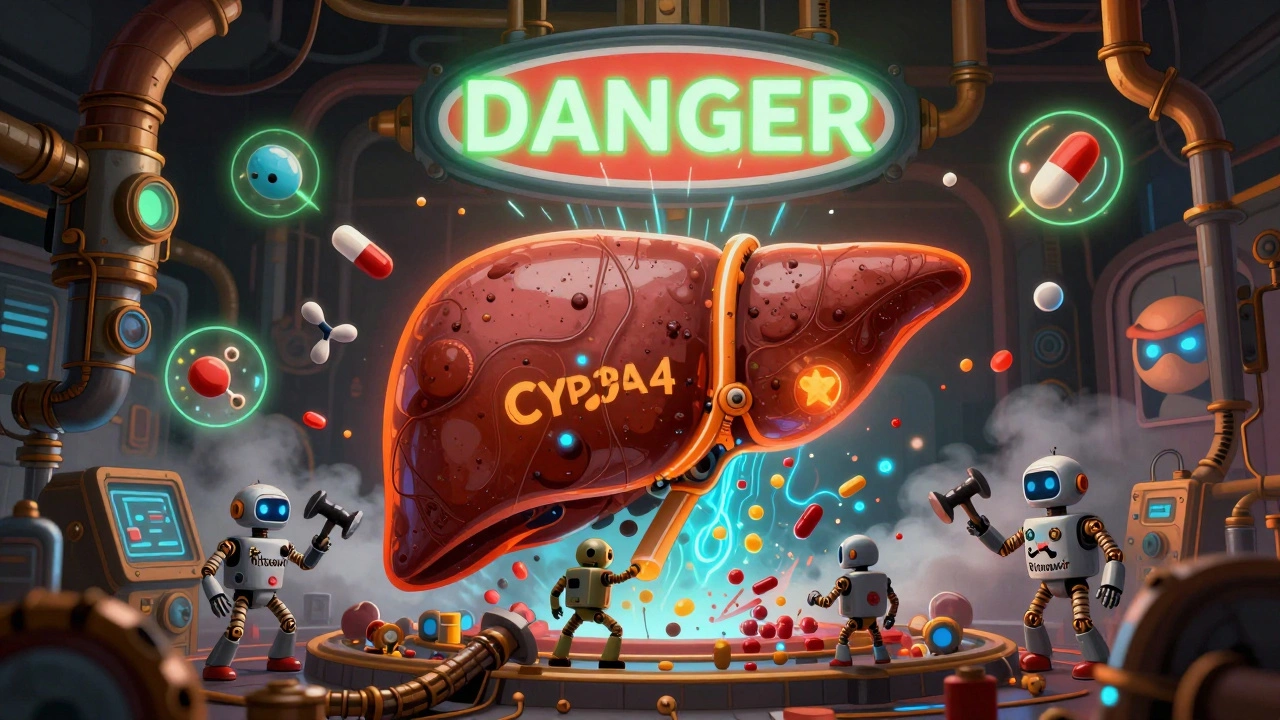
This tool checks potential interactions between lopinavir/ritonavir and common medications. Ritonavir inhibits CYP3A4, which can dangerously increase levels of many drugs. Some combinations are contraindicated (not safe to use together).
Lopinavir/ritonavir isn’t just another HIV pill. It’s a pharmacological workaround built on a powerful, dangerous trick: using a low dose of ritonavir to shut down the liver’s main drug-processing enzyme, CYP3A4, so lopinavir can stick around longer and do its job. This isn’t subtle. It’s a sledgehammer to the body’s metabolism, and it affects dozens-if not hundreds-of other medications patients might be taking. If you’re prescribing or taking this combo, you’re not just managing HIV. You’re managing a minefield of drug interactions that can kill if missed.
How Ritonavir Turns the Liver Into a Drug Trap
Ritonavir’s job isn’t to fight HIV. At the 100mg dose used in lopinavir/ritonavir (Kaletra), it doesn’t even come close. Its real purpose? To wreck CYP3A4, the enzyme responsible for breaking down more than half of all prescription drugs. It doesn’t just block it. It destroys it. Studies show ritonavir binds so tightly to CYP3A4 that it forms a permanent, irreversible complex with the enzyme’s heme group. It also chews up the enzyme’s structure and sticks reactive fragments to its protein frame. This isn’t temporary inhibition-it’s cellular sabotage. Once CYP3A4 is disabled, drugs like lopinavir, which would normally be cleared in under 7 hours, now hang around for over 20 hours. That’s the whole point: less frequent dosing, better adherence. But here’s the catch: CYP3A4 doesn’t just process lopinavir. It handles statins, blood thinners, sedatives, immunosuppressants, and even some birth control pills. When you shut it down, those drugs pile up. A single dose of midazolam, a common sedative, can spike 500% in concentration. Fentanyl? 300% higher levels. That’s not just side effects-that’s respiratory failure risk.The Double-Edged Sword: Inhibition vs. Induction
Ritonavir isn’t just a one-trick pony. It’s a paradox. While it cripples CYP3A4, it also turns on other liver enzymes like CYP1A2, CYP2B6, and CYP2C9. This means it doesn’t just make some drugs stronger-it makes others weaker. Take warfarin, the classic blood thinner. Ritonavir induces CYP2C9, the enzyme that breaks down warfarin. So instead of bleeding risk going up, it goes down. INR levels drop. Patients on stable warfarin doses can suddenly develop clots if their ritonavir dose is added without adjustment. Meanwhile, drugs like tacrolimus (used after transplants) are metabolized almost entirely by CYP3A4. Ritonavir makes their levels skyrocket. Without a 75% dose reduction, transplant patients risk kidney failure or death. This dual behavior-strong inhibitor of some enzymes, strong inducer of others-is what makes ritonavir uniquely unpredictable. Cobicistat, the newer boosting agent, only inhibits CYP3A4. It doesn’t turn on CYP2C9 or CYP1A2. That’s why darunavir/cobicistat has replaced lopinavir/ritonavir in most high-income countries. It’s cleaner. Safer. Less likely to cause a hidden, deadly interaction.Deadly Interactions You Can’t Afford to Miss
The Liverpool HIV Interactions Database, updated in July 2023, lists 1,247 potential drug interactions with lopinavir/ritonavir. That’s more than any other antiretroviral combo. Here are the ones that kill:- Rivaroxaban (Xarelto): Contraindicated. Ritonavir boosts levels so high that major bleeding risk spikes. No exceptions.
- Tacrolimus, Cyclosporine: Must reduce dose by 75%. Monitor levels weekly at first.
- Midazolam, Fentanyl, Alfuzosin: Risk of respiratory arrest. Avoid entirely or use extreme caution with 60-80% dose reductions.
- Voriconazole: Unpredictable levels due to mixed inhibition/induction. Contraindicated.
- Hormonal contraceptives: Ritonavir cuts effectiveness by 50%. Backup methods aren’t optional-they’re mandatory.
- Rifampicin: A CYP3A4 inducer. Lowers lopinavir levels by 76%. Can lead to treatment failure and drug resistance.

Why This Combo Still Exists-And Where
You might wonder: if it’s this dangerous, why is it still used? The answer is cost. In low- and middle-income countries, lopinavir/ritonavir costs about $68 per person per year. Newer drugs like dolutegravir cost nearly four times that. In places where funding is tight and supply chains are unstable, lopinavir/ritonavir is still the backbone of HIV treatment. As of 2022, it made up 28% of first-line regimens in these regions, according to UNAIDS. But even there, it’s fading. Dolutegravir-based regimens are expanding fast. By 2027, its share is projected to drop to 12%. The trade-off is clear: lower cost, higher risk. In the U.S., it’s nearly extinct. Less than 5% of new HIV prescriptions use it, thanks to DHHS guidelines favoring integrase inhibitors. The FDA even has a black box warning for hepatotoxicity and cardiac issues. The European Medicines Agency bans it with drugs like ergot derivatives and alfuzosin-because the risk isn’t theoretical. People have died.What Clinicians Actually Do (And What Goes Wrong)
Good clinicians don’t guess. They check. Every time. The standard protocol? Spend 15 to 20 minutes reviewing every medication a patient is on-prescription, OTC, supplements, even herbal remedies-using the Liverpool HIV Interactions Database. That database gets 2.8 million searches a year. That’s how many people are trying to avoid mistakes. But mistakes still happen. The most common? Assuming ritonavir only increases drug levels. Forgetting it can lower them. A patient on warfarin gets lopinavir/ritonavir added. INR drops. They get a clot. No one checked CYP2C9 induction. Or worse: a patient on methadone. Ritonavir induces CYP3A4 and CYP2B6, which metabolize methadone. Levels drop. Withdrawal starts. The patient relapses. The clinician didn’t know to increase the methadone dose by 20-33%. Even something as simple as a statin can be deadly. Atorvastatin and simvastatin levels can rise 10-fold. Muscle breakdown, kidney failure-real risks. Rosuvastatin is safer, but still needs monitoring.What Patients Need to Know
If you’re on lopinavir/ritonavir, you’re not just taking HIV meds. You’re on a drug that changes how your entire body handles medicine.- Never start a new medication without telling your HIV provider-even if it’s an OTC painkiller or a sleep aid.
- Birth control pills won’t work reliably. Use condoms or an IUD.
- If you’re scheduled for surgery, tell your anesthesiologist you’re on this combo. They’ll need to adjust pain meds drastically.
- Don’t stop or change doses of any other meds on your own. Even if you feel fine, levels could be changing.
- Keep a written list of every pill, supplement, and herb you take. Bring it to every appointment.
The Future: Why This Model Is Fading
Lopinavir/ritonavir was a breakthrough in 2000. It made HIV manageable. But it was always a stopgap. Newer drugs don’t need this kind of metabolic manipulation. Paxlovid, the COVID-19 antiviral, uses the same trick: nirmatrelvir boosted by ritonavir. But even here, problems show up. The “Paxlovid rebound” phenomenon-where viral levels creep back after treatment-may be linked to ritonavir clearing faster than nirmatrelvir, leaving the antiviral underdosed. That’s the same instability that plagues HIV treatment. Research is now looking at genetic differences. Some people have a variant of CYP3A5 that breaks down lopinavir faster. These patients get lower drug levels even with ritonavir boosting. Early data shows 28% lower exposure in these individuals. That’s a big deal. It means one size doesn’t fit all-even with boosting. The future is precision. Drugs that don’t need boosters. Regimens that don’t require 20-minute interaction checks. Dolutegravir. Bictegravir. Cabotegravir. They’re simpler. Safer. More predictable. Lopinavir/ritonavir isn’t going away overnight. But it’s becoming a relic-a powerful, dangerous tool that worked when we had no better options. Today, we do. And the cost of using it isn’t just financial. It’s measured in lives lost to interactions that should have been caught.When to Avoid It Altogether
There are clear red flags. If any of these apply, lopinavir/ritonavir should be off the table:- Taking any drug with a black box warning for CYP3A4 interactions (e.g., ergotamine, pimozide)
- History of severe liver disease (Child-Pugh Class C)
- On long-term anticoagulation with warfarin or rivaroxaban
- Requiring frequent use of sedatives or opioids
- Transplant recipient on calcineurin inhibitors
- Using hormonal contraception without backup
Can I take ibuprofen with lopinavir/ritonavir?
Yes, ibuprofen is generally safe. It’s not metabolized by CYP3A4, so ritonavir doesn’t affect it. But long-term use still carries kidney and stomach risks, especially in people with HIV. Use the lowest effective dose for the shortest time.
Why is ritonavir used in low doses if it’s so powerful?
At 100mg, ritonavir is enough to block CYP3A4 without causing its own severe side effects-like nausea, diarrhea, and liver stress-that come with full therapeutic doses (600mg+). It’s a precision tool: just enough to boost lopinavir, not enough to overwhelm the patient.
Is there a blood test to check if ritonavir is working?
Not directly. But lopinavir plasma levels can be measured through therapeutic drug monitoring (TDM). This is done in complex cases-like transplant patients or those with liver disease-to ensure levels stay between 1 and 5 mcg/mL. Most clinics don’t do this routinely, but it’s critical when interactions are suspected.
Can I switch from lopinavir/ritonavir to a newer drug?
Yes, if you’re stable on HIV treatment and your viral load is undetectable, switching to a newer regimen like dolutegravir or bictegravir is strongly recommended. It reduces interaction risks, side effects, and long-term toxicity. Talk to your provider about a switch-it’s safer and simpler.
Does ritonavir affect my COVID-19 treatment?
If you’re on lopinavir/ritonavir for HIV and get COVID-19, Paxlovid (nirmatrelvir/ritonavir) is usually avoided. You’re already on a ritonavir booster, so adding more increases interaction risks. Alternative treatments like remdesivir or bebtelovimab are preferred. Always consult your HIV and infectious disease teams before starting any new COVID drug.
Rudy Van den Boogaert
December 4, 2025 AT 21:14Man, I’ve seen so many patients on this combo in the ER-half of them didn’t even know they were on it because their primary care doc didn’t check their med list. One guy came in with rhabdo after starting simvastatin. His HIV doc knew, but his cardiologist didn’t. We almost lost him. This post? Spot on. Always check the Liverpool database. No excuses.
Jordan Wall
December 6, 2025 AT 14:50Oh, *another* pedantic breakdown of CYP3A4 pharmacokinetics? How utterly… *quaint*. I mean, we’re still using ritonavir as a metabolic sledgehammer in 2024? The fact that this is even a conversation is a testament to the grotesque inertia of pharmaceutical orthodoxy. Cobicistat is the *bare minimum* upgrade-yet even it’s just a prettier cage. The real issue? We’re still treating HIV like it’s 2003. The future is long-acting injectables, gene therapies, and *non-metabolized* antivirals. This? This is pharmacological fossil fuel.
Pavan Kankala
December 8, 2025 AT 08:00Let’s be real-this isn’t about science. It’s about control. Big Pharma doesn’t want you to know that ritonavir’s ‘side effects’ are just the tip of the iceberg. Why do you think they pushed this combo so hard in Africa? Cheap, yes-but also *easier to monitor*. They want you dependent on clinics, on blood tests, on endless checkups. Meanwhile, dolutegravir? Too simple. Too cheap. Too hard to monetize. They’d rather you die from a drug interaction than let you be free. Wake up.
Martyn Stuart
December 9, 2025 AT 17:44Just to clarify, for anyone skimming: ritonavir doesn’t just ‘inhibit’ CYP3A4-it irreversibly inactivates it, via mechanism-based inactivation, which is why the effect lasts days after discontinuation. And yes, induction of CYP2C9 and CYP1A2 is real, and it’s why warfarin doses drop-often silently. Also, don’t forget: ritonavir is a P-gp inhibitor too, so digoxin, colchicine, and even some chemo drugs get affected. Always check transporters. Always. And yes-rosuvastatin is safer, but not zero-risk. Monitor CK. Always.
Jessica Baydowicz
December 10, 2025 AT 13:09Y’all are making this sound like a horror movie, but honestly? It’s just life with HIV. I’ve been on this combo for 8 years. I keep a laminated card in my wallet: ‘I take Kaletra. Do NOT give me Xarelto, midazolam, or statins without calling my HIV doc.’ My pharmacist knows me by name. My anesthesiologist got a 3-page handout from my clinic. It’s a lot-but it’s manageable. You don’t have to be scared. You just have to be organized. And maybe a little extra loud about your meds. 💪🩺
Shofner Lehto
December 12, 2025 AT 02:27One thing nobody mentions: the psychological toll. You’re not just managing drug interactions-you’re managing constant fear. Every new prescription, every OTC pill, every herbal tea-‘Is this going to kill me?’ It’s exhausting. I stopped taking melatonin because I didn’t know if it interacted. I stopped turmeric. I stopped ginger tea. I stopped trusting my own body. This drug combo doesn’t just affect your liver-it affects your peace of mind.
Rachel Bonaparte
December 13, 2025 AT 11:33Okay, so let me get this straight-ritonavir is a biochemical weapon disguised as medicine? And we’re still using it because it’s cheaper than dolutegravir? But wait-why doesn’t the WHO just fund generic dolutegravir everywhere? Why are we still letting Big Pharma hold low-income countries hostage with outdated, deadly combos? And why is Paxlovid using the same toxic booster? Are we just addicted to this metabolic hack? Someone needs to burn the whole system down. This isn’t medicine. It’s a rigged game.
Michael Feldstein
December 14, 2025 AT 23:51What’s wild is that even clinicians who know this stuff still miss things. I had a patient on ritonavir, on methadone, got prescribed azithromycin for a sinus infection-no one thought about CYP3A4 induction lowering methadone levels. He went into withdrawal in the ER. We had to give him 30mg extra on the spot. That’s not rare. It’s routine. We need mandatory CYP interaction alerts in every EHR. Not just ‘flag high-risk drugs’-but ‘flag ALL drugs that interact with CYP3A4 inhibitors, inducers, or dual-action agents.’ We’re still using paper lists in 2024. That’s insane.
Libby Rees
December 16, 2025 AT 08:58My uncle was on this regimen for years. He took ibuprofen for arthritis. No problem. He took vitamin D. No problem. He took garlic supplements. His doctor told him to stop. That’s the thing-it’s not all drugs. It’s specific ones. Learn the list. Keep it simple. Don’t panic. But don’t ignore it either. Knowledge is the only safety net.
Gillian Watson
December 17, 2025 AT 20:44Been on Kaletra since 2016. I take a statin, but it’s pravastatin-no CYP3A4 involvement. I use condoms. I tell every new doctor. I keep a list. I don’t overthink it. It’s not magic, it’s just responsibility. This post scared me at first-but then I realized: if I do my part, I’m fine. You don’t need to be a pharmacologist. Just be careful.
Gareth Storer
December 18, 2025 AT 05:37So let me get this straight-you’re telling me we’re still using a drug that’s basically a chemical grenade in a world where we have precision-guided missiles? And the only reason it’s still around is because it’s cheaper than a latte in San Francisco? That’s not healthcare. That’s a moral failure dressed in white coats. Bravo, everyone. You’re all heroes of the status quo.