
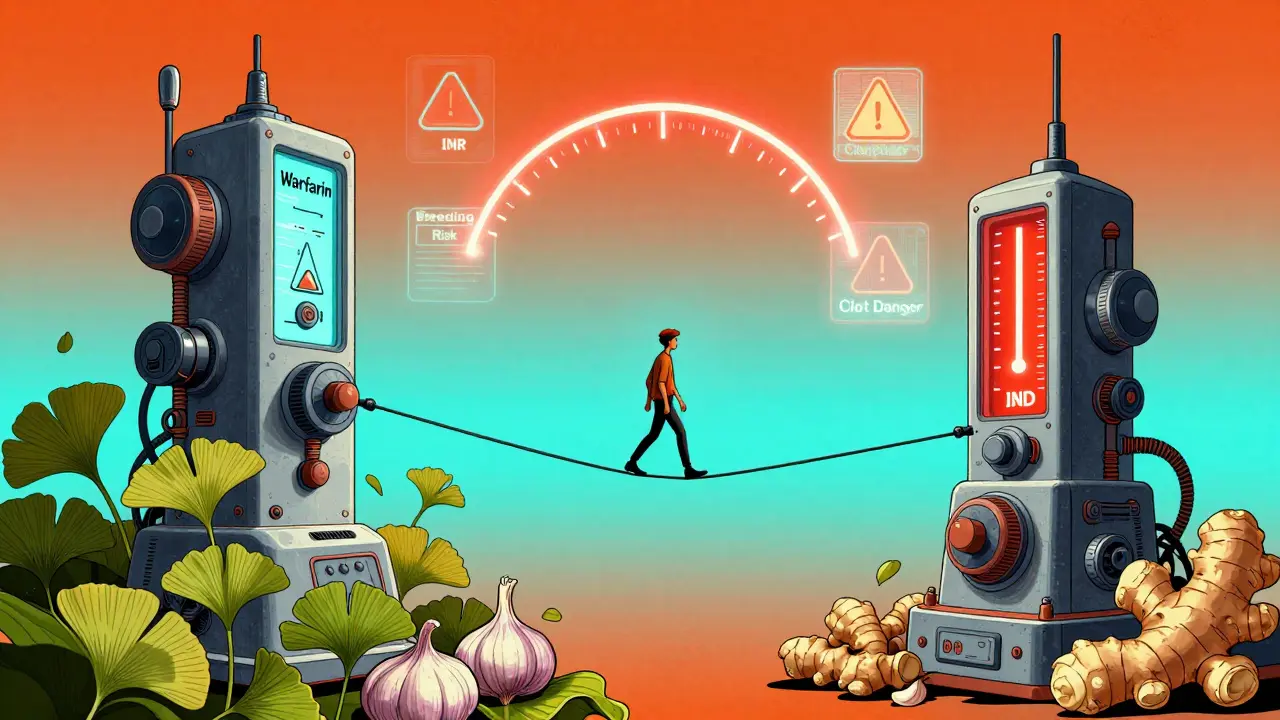
Anticoagulant-Herb Interaction Checker
Warning: This tool is for informational purposes only. Always consult your healthcare provider before taking any supplements with blood thinners.
Check Trusted ResourcesWhen you're on a blood thinner like warfarin, apixaban, or rivaroxaban, your body is walking a tightrope. Too much thinning, and you risk dangerous bleeding. Too little, and a clot could form-possibly leading to a stroke or heart attack. Now add an herbal supplement into the mix, and that tightrope gets even narrower. Many people assume that because something is "natural," it's safe. But that’s not true when it comes to blood thinners and herbs. In fact, the combination can be deadly.
Why Herbal Supplements Are a Hidden Risk
You might take garlic pills for your cholesterol, ginkgo for memory, or turmeric for joint pain. These seem harmless. But if you're on an anticoagulant, they’re not. According to the FDA’s adverse event database, over 14,000 reports of serious problems linked to herbal supplements and blood thinners were logged between 2020 and 2024. Of those, nearly 70% involved one of the top 10 risky herbs: ginkgo, garlic, ginger, ginseng, St. John’s wort, chamomile, cranberry, green tea, Chinese wolfberry, and dong quai. The problem isn’t just that these herbs are strong-they’re unpredictable. Unlike prescription drugs, herbal products aren’t required to prove safety before hitting the shelf. The FDA can’t approve them, test them, or even require accurate labeling. A 2023 FDA report found that over one-third of herbal supplements contain ingredients not listed on the label. That means you could be taking something you didn’t know was in your pill.How Herbs Interfere With Blood Thinners
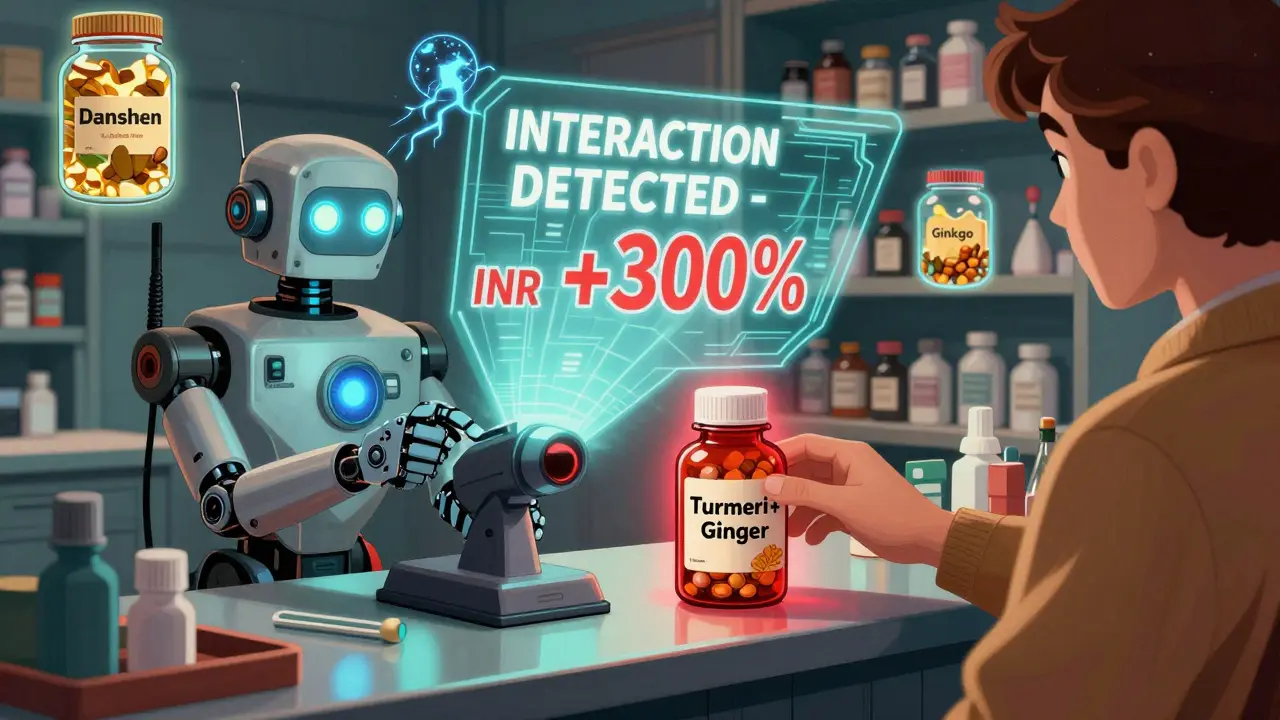
There are two main ways herbs mess with anticoagulants: pharmacokinetic and pharmacodynamic interactions. Pharmacokinetic interactions change how your body absorbs, breaks down, or clears the drug. For example, warfarin is processed by liver enzymes called CYP2C9 and CYP3A4. Herbs like danshen (Salvia miltiorrhiza), commonly used in traditional Chinese medicine, block these enzymes. That causes warfarin to build up in your blood. In documented cases, INR levels-a measure of blood clotting time-spiked 300% to 400% within just three days of adding danshen. That’s not a small change. That’s a medical emergency. Then there’s pharmacodynamic interactions, where the herb and the drug work together to amplify the effect. Ginkgo biloba, for instance, inhibits platelet-activating factor, making platelets less likely to stick together. Warfarin already slows clotting. Add ginkgo, and your blood thins even more. The result? Easy bruising, nosebleeds, or worse-internal bleeding. St. John’s wort is the opposite problem. It speeds up liver metabolism, causing drugs like apixaban to leave your system too fast. One study showed apixaban levels dropped by half within 72 hours of taking St. John’s wort. That means your blood isn’t thin enough anymore. You’re at risk for clots.The Top 5 Most Dangerous Herbal Supplements
Not all herbs are equal when it comes to risk. Here are the five most dangerous based on real-world data from emergency rooms, case reports, and FDA reports:- Ginkgo biloba - Linked to 287 major bleeding events in a 2023 American Pharmacists Association report. It’s in nearly every supplement marketed for brain health.
- Garlic - Even garlic powder or aged garlic extract can increase bleeding risk. 214 documented cases of bleeding linked to garlic use with anticoagulants.
- Ginseng - Can either increase or decrease INR depending on the type and dose. Unpredictable. Dangerous.
- Danshen - Not widely known in the U.S., but common among Asian populations. Causes rapid, severe INR spikes. Often taken without the user realizing it’s a problem.
- Cranberry - Thought to be safe because it’s a fruit. But cranberry juice and supplements can interfere with warfarin metabolism. A single glass a day can push INR into dangerous territory.
What About "Safe" Herbs Like Turmeric or Ginger?
Turmeric and ginger are often called "safe alternatives." But the truth is more complicated. Turmeric contains curcumin, which has mild anticoagulant properties. One Reddit user, u/WarfarinWarrior, reported an INR of 4.2 after adding turmeric to his daily routine. He ended up in the ER with a gastrointestinal bleed. That’s not rare. Multiple case reports confirm this pattern. Ginger is similar. At high doses (over 2 grams per day), it increases bleeding risk. But low doses-under 1 gram daily-may be manageable under close monitoring. A 2024 study on PatientsLikeMe found that 28.6% of users maintained stable INR levels while taking small amounts of ginger, but only if their pharmacist tracked their INR weekly. The takeaway? There’s no such thing as a "safe" herb when you’re on a blood thinner. It’s not about the herb. It’s about the dose, the timing, your genetics, and what else you’re taking.Doctors Don’t Ask-And Patients Don’t Tell
Here’s the biggest problem: almost no one talks about it. A 2024 Medscape survey of 1,247 patients on anticoagulants found that 69% used herbal supplements without telling their doctor. Why? Because 43% believed "natural means safe." Another 22% said their doctor never asked. And when doctors did ask, they often said, "Do you take any vitamins?"-not "Do you take any herbs, teas, or traditional remedies?" Medical records reflect this gap. Only 27% of patient charts document herbal supplement use, even though 47% of adults over 65 on blood thinners take them, according to the CDC and NCCIH. This isn’t just negligence-it’s systemic. Medical training barely covers herbal interactions. Pharmacists are better trained, but most patients don’t see them regularly.What You Should Do Right Now
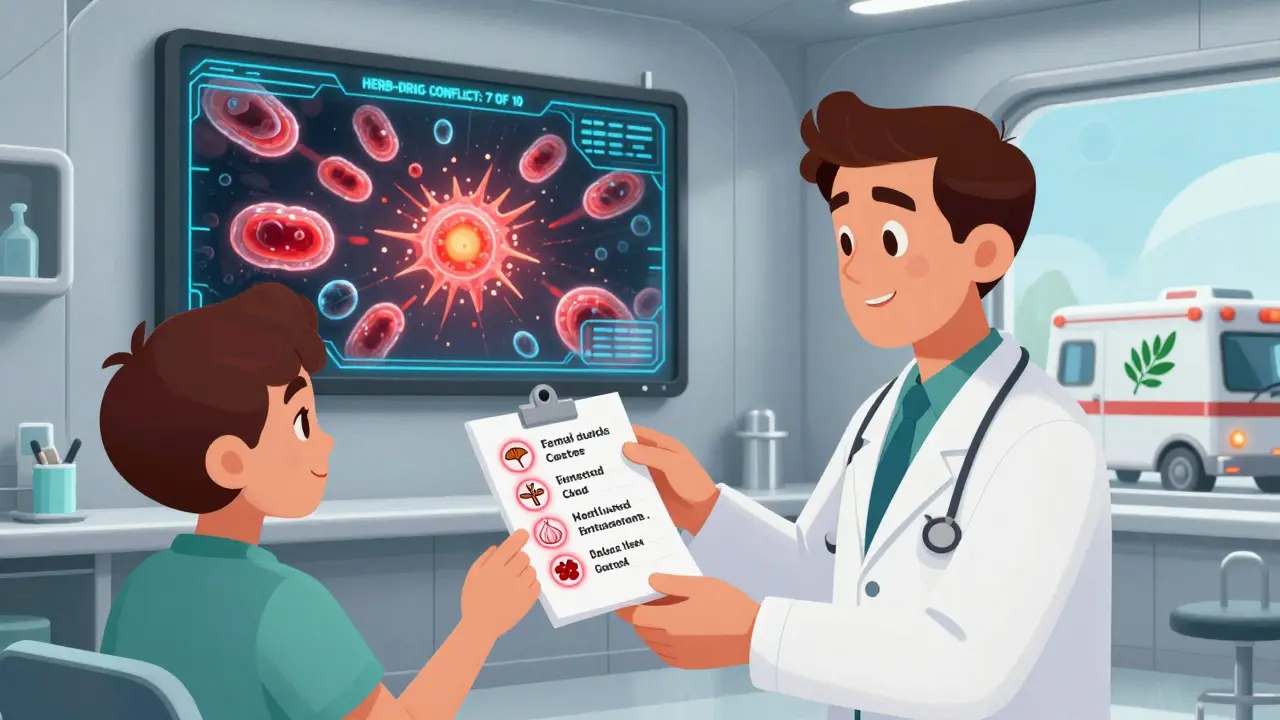
If you’re on a blood thinner, here’s what to do-today:- List every supplement you take-even if you think it’s harmless. Include teas, tinctures, powders, and traditional remedies.
- Bring that list to every appointment. Don’t wait for your doctor to ask. Hand it to them.
- Ask specifically: "Could any of these interact with my blood thinner?" Name each one.
- Use a trusted resource like the Natural Medicines Database (available through many pharmacies). It rates interactions on a scale from 1 (no interaction) to 7 (life-threatening).
- Don’t start or stop anything without checking. Even if you’ve taken ginger for years, your body changes. Your dose might need adjusting.
What About the Newer Blood Thinners?
Many people think dabigatran, apixaban, or rivaroxaban are safer than warfarin. That’s true in some ways-they don’t need frequent INR checks, and they have fewer food interactions. But they’re not immune to herbs. St. John’s wort still cuts apixaban levels in half. Ginkgo and garlic still raise bleeding risk. Even green tea-often considered harmless-can interfere with rivaroxaban absorption. The biggest advantage of newer anticoagulants is that they’re less affected by diet. But herbs? They’re still a major threat.What’s Changing in 2025
The system is starting to wake up. In early 2025, the FDA required all prescriptions for anticoagulants to include a standardized checklist asking patients about herbal supplement use. Pharmacies are now trained to flag high-risk combinations before dispensing. The European Medicines Agency approved MedCheck AI in late 2024-a tool that scans patient profiles and flags dangerous herb-drug interactions with 92% accuracy. It’s being rolled out in hospitals across the U.S. and Europe. And there’s hope in genetics. A 2024 study showed that testing for CYP2C9 and VKORC1 gene variants reduced major bleeding events by 31% in patients using herbs with warfarin. This isn’t routine yet-but it’s coming.The Bottom Line
Herbal supplements aren’t harmless. When you’re on a blood thinner, they’re a silent risk. You might feel fine. Your INR might look normal. But one new supplement, one change in dose, one missed checkup-and everything can shift in days. The solution isn’t to avoid all herbs. It’s to know what you’re taking, talk to your care team, and never assume "natural" means "safe."Your life isn’t worth the gamble.
Can I take turmeric if I’m on warfarin?
Turmeric contains curcumin, which can increase bleeding risk when combined with warfarin. Even small amounts have caused dangerous INR spikes in multiple case reports. If you want to take turmeric, you must monitor your INR closely and only do so under direct supervision from your doctor or pharmacist. Do not start it without discussing it first.
Is ginger safe with blood thinners?
Low doses of ginger (under 1 gram per day) may be tolerated by some people on blood thinners, especially if INR levels are monitored weekly. But higher doses increase bleeding risk. There’s no guaranteed safe dose. Always check with your provider before using ginger supplements or consuming large amounts of fresh ginger.
What herbal supplements should I avoid completely?
Avoid ginkgo biloba, garlic supplements, ginseng, danshen, dong quai, cranberry juice or extracts, and St. John’s wort if you’re on any anticoagulant. These have the strongest evidence linking them to serious bleeding or clotting events. Even "natural" forms like teas or capsules carry risk.
Do newer blood thinners like apixaban have fewer herb interactions?
Newer anticoagulants like apixaban and rivaroxaban have fewer food interactions than warfarin, but they still interact with herbs. St. John’s wort can reduce apixaban levels by 50%, making it ineffective. Ginkgo, garlic, and ginger still raise bleeding risk. Never assume they’re safe just because they’re newer.
Why don’t my doctors ask about herbs?
Many healthcare providers aren’t trained to ask about herbal supplements. They may ask about vitamins or prescription drugs, but not teas, tinctures, or traditional remedies. You need to bring it up yourself. Keep a written list and hand it to your provider at every visit. Don’t wait for them to ask.
Can I use CBD oil with my blood thinner?
CBD oil can significantly increase INR levels in people taking warfarin. A 2024 JAMA Internal Medicine trial showed a 2.8-fold increase in INR in 68% of users. This can lead to life-threatening bleeding. Avoid CBD oil entirely if you’re on a blood thinner unless under strict medical supervision with daily INR monitoring.
Janette Martens
December 28, 2025 AT 14:37so i took ginkgo for like 3 years n my INR was fine?? ur just fearmongering lol. natural = safe. if it was dangerous the gov would ban it. also why do u keep saying "herbs" like theyre some evil cult? its just plants. chill.
Marie-Pierre Gonzalez
December 29, 2025 AT 11:25Thank you for this incredibly important and meticulously detailed post. As a registered nurse in Ontario, I see far too many patients who assume "natural" means harmless. The data you've compiled is both alarming and essential. Please consider sharing this with local pharmacies and senior centers - many elders are unaware of these risks. 🙏
Louis Paré
December 29, 2025 AT 14:09Let’s be real - this whole post is just Big Pharma’s marketing playbook dressed up as public health advice. Herbs have been used for millennia. The FDA doesn’t regulate them because they’re not patentable. Meanwhile, your warfarin? Patent protected. $12,000 a year. Coincidence? I think not. Also, ginkgo doesn’t "thin blood" - it improves circulation. You’re conflating mechanism with fear.
Teresa Marzo Lostalé
December 30, 2025 AT 21:35i live in california and my abuela swears by turmeric tea for arthritis - she’s 82, on warfarin, and still hikes every weekend. i think the real issue isn’t the herbs… it’s that doctors don’t listen. she never told her doc about the tea. nobody asked. maybe the system’s broken, not the supplements?
Julius Hader
December 31, 2025 AT 13:22If you’re taking herbs while on blood thinners, you’re not just being careless - you’re being selfish. Your bleeding could cost the system thousands. Your negligence could mean a bed in the ICU that someone else needs. Take responsibility. Or at least don’t post about it like it’s a lifestyle choice.
Vu L
January 1, 2026 AT 00:21Wait so you’re telling me ginger tea is dangerous but coffee isn’t? lol. i drink 3 cups of ginger tea a day and my INR is 2.1. also why is danshen on the list but not green tea? green tea is everywhere. you’re cherry-picking. this feels like anti-Asian medicine bias.
oluwarotimi w alaka
January 1, 2026 AT 13:38the fda is lying. they banned turmeric in 2022 but the news won’t tell you. they want you dependent on pills so they can sell you more. ginkgo is from the trees that grow in my village in nigeria - we’ve used it for 500 years. your "science" is just poison from america. they don’t want you healthy. they want you buying.
Debra Cagwin
January 1, 2026 AT 18:37This is such a vital conversation - thank you for writing it with such clarity. I’m a pharmacist in Ohio and I’ve had patients come in with 10+ supplements they didn’t realize were interacting. I always say: "If you wouldn’t mix it with your coffee, don’t mix it with your blood thinner." And yes - write it down. Bring it. Say it out loud. Your life depends on it.
Ryan Touhill
January 1, 2026 AT 19:32How dare you reduce centuries of ethnopharmacology to a bullet-pointed FDA database? You’re not educating - you’re colonizing traditional medicine with Western reductionism. Danshen? A cornerstone of TCM. Ginkgo? Used in Kyoto since the 10th century. Your "danger" narrative ignores context, dosage, synergy, and cultural wisdom. This isn’t safety - it’s cultural erasure disguised as science.
ANA MARIE VALENZUELA
January 2, 2026 AT 14:36Wow. Just… wow. You wrote a 2,000-word essay and still didn’t mention CBD. Of course you didn’t. Because the FDA doesn’t want you to know CBD increases INR by 280%. That’s why they let it slide while banning turmeric in 2022. You’re not protecting people - you’re protecting the pharmaceutical monopoly. And you’re doing it with pretty charts. Pathetic.
Bradly Draper
January 3, 2026 AT 08:51i was on warfarin for a year. took ginger tea every morning. never had a problem. my dr said if i feel fine, keep going. just get your blood checked every 4 weeks. that’s it. no fear. just care.