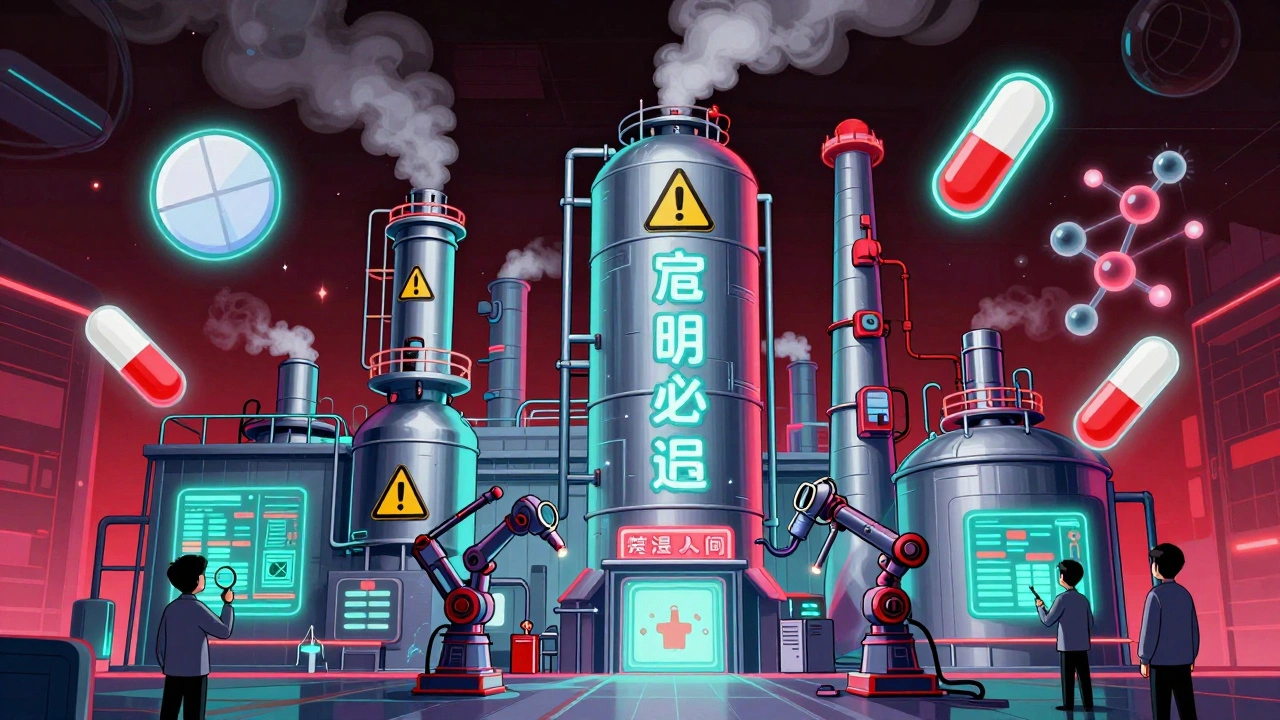
When you take a pill, the active ingredient inside it—called the API, the Active Pharmaceutical Ingredient that makes a drug work. Also known as active ingredient, it’s the reason your blood pressure drops, your infection clears, or your thyroid levels stabilize. But that tiny molecule doesn’t just appear in your bottle. It’s made in factories, often overseas, under rules called CGMP, Current Good Manufacturing Practices that ensure drugs are consistently produced and controlled. These aren’t suggestions. They’re legally required standards that keep your meds safe, effective, and free from contamination.
API manufacturing isn’t just about mixing chemicals. It’s a high-stakes process that involves precise temperature control, sterile environments, and strict documentation. One small mistake—like a wrong solvent or a dirty filter—can turn a life-saving drug into a dangerous one. That’s why the FDA, the U.S. agency that inspects and approves drug manufacturing facilities sends teams to factories in India, China, and beyond. They don’t just check paperwork. They walk through labs, watch how batches are mixed, and test samples. If they find problems, they issue a Form 483. Companies then have to fix it—or lose the right to sell their drugs in the U.S.
Most of the pills you buy are generics. That means they use the same API as the brand-name version, but cost way less. Why? Because multiple factories make the same API, and competition drives prices down. But not all API manufacturers are equal. Some have perfect inspection records. Others get shut down for falsifying data. The difference shows up in your body—sometimes in subtle ways, like a drug that doesn’t work as well, or side effects that didn’t happen before.
That’s why understanding API manufacturing matters. It’s not just for chemists or regulators. It’s for anyone who takes medicine. If you’re on a long-term drug like warfarin or levothyroxine, even tiny changes in the API’s purity can throw off your dose. If you’re using a statin or a blood thinner, you need to know the source. And if you’re worried about drug shortages or price spikes, you’re really worrying about how many factories can make that one API—and whether they’re passing inspection.
The posts below dig into the real-world impact of API manufacturing. You’ll find how the FDA checks facilities before approving new generics, why some drug batches fail, how global pricing ties into production costs, and what happens when quality slips. You’ll also see how genetic testing, drug interactions, and even breastfeeding safety all connect back to the same thing: the quality of the active ingredient in your pill. No fluff. Just facts. What you’re about to read is what happens behind the label.