
When you take a generic pill for high blood pressure, diabetes, or antibiotics, there’s a better than 70% chance the active ingredient inside came from a factory in China. That’s not speculation-it’s fact. China produces 80% of the world’s active pharmaceutical ingredients (APIs), the raw chemical building blocks of nearly every generic drug on the shelf. But behind that massive scale lies a growing crisis: quality control that often falls short of global standards.
Why China Dominates Generic Drug Production
China didn’t become the world’s API powerhouse by accident. After joining the World Trade Organization in 2001, the government poured billions into pharmaceutical manufacturing. State-backed subsidies, relaxed environmental rules, and a vast chemical supply chain gave Chinese producers a massive cost advantage. Today, a kilogram of API like metformin or amoxicillin costs $50-$150 in China. In the U.S. or Europe, the same amount runs $200-$400. That price gap is why 88% of all API facilities supplying the U.S. market are overseas-and nearly a third of them are in China. Chinese factories specialize in the most complex, dangerous steps of drug synthesis: fluorination, handling toxic solvents, and multi-stage chemical reactions. These are the parts Western companies abandoned decades ago because they’re dirty, risky, and expensive. Chinese manufacturers took them on-and scaled them up. Some plants produce 500 to 2,000 metric tons of a single API per year. That kind of volume can’t be matched anywhere else.The Quality Gap: What Goes Wrong
Cost isn’t the only thing China exports. So do quality problems. Between 2022 and 2023, the U.S. Food and Drug Administration issued warning letters to Chinese manufacturers citing three recurring failures: inadequate lab controls (78% of inspections), unvalidated manufacturing processes (65%), and data manipulation (52%). These aren’t minor slips. They’re systemic. In one case, a batch of metformin from a Chinese supplier had inconsistent potency. The U.S. company that imported it had to retest 37% of the lot-nearly five times the rate of Indian-sourced API. Another company recalled 1.2 million bottles of blood pressure medication after finding sub-potent API from Huahai Pharmaceutical. The FDA found the lab records had been altered to hide the problem. A 2023 FDA study showed 12.7% of Chinese API samples failed purity tests. For European APIs, it was 2.3%. For U.S.-made, just 1.8%. That’s not a small difference. That’s a gap big enough to affect how well a drug works-or if it works at all.Manufacturing Methods: Outdated and Risky
Most Chinese API plants still use batch processing-old-school, labor-intensive methods where each step is done in separate vats. It’s cheap, but it’s also prone to contamination and inconsistency. In contrast, 35% of U.S. and European facilities now use continuous manufacturing: a sealed, automated system that runs 24/7 with real-time quality checks. It’s more expensive to set up, but it’s far more reliable. China’s reliance on batch processing isn’t just outdated-it’s dangerous. One small error in temperature, mixing time, or solvent purity can ruin an entire batch. And because many Chinese plants don’t have automated data logging, human error slips through. That’s why 52% of FDA warning letters mention data integrity issues. Someone, somewhere, is backdating records or deleting failed tests.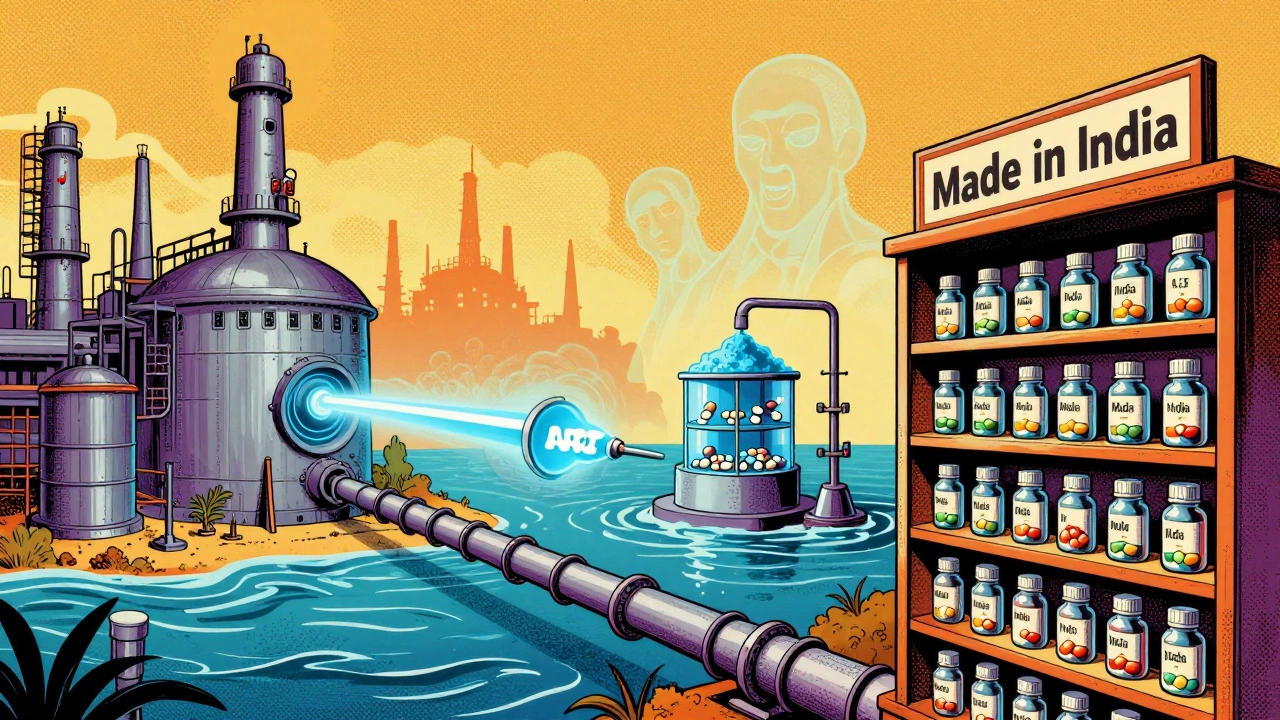
China’s Own Reforms-And Why They’re Not Enough
China isn’t ignoring the problem. Since 2016, the National Medical Products Administration (NMPA) has run the Generic Consistency Evaluation (GCE) program, requiring generics to prove they work the same as the original branded drug. So far, only 35% of approved generics have passed. The rest? Still on the market, unverified. The government has shut down 4,500 non-compliant factories since 2018. That sounds impressive. But many of the survivors are still cutting corners. The NMPA’s own inspections are less frequent and less rigorous than the FDA’s. And while China claims 95% of GMP-certified plants follow international standards, the FDA’s inspection reports tell a different story. Dr. Margaret Hamburg, former FDA commissioner, put it bluntly: “We inspect Chinese facilities at one-tenth the rate of domestic ones. That’s not oversight-it’s a blind spot.”Who’s Really in Charge of Your Medicine?
Here’s the twist: China doesn’t make most of the finished pills you swallow. It makes the powder inside them. India buys 65% of its APIs from China, then turns them into tablets and capsules. So when you buy a generic drug labeled “Made in India,” the active ingredient might have been made in Shijiazhuang. That creates a dangerous chain. If the API is substandard, no amount of good packaging or labeling in India can fix it. The U.S. FDA inspects Indian drug plants regularly. But it can’t inspect the Chinese factories that supply them. That’s a gap in the system-and it’s growing.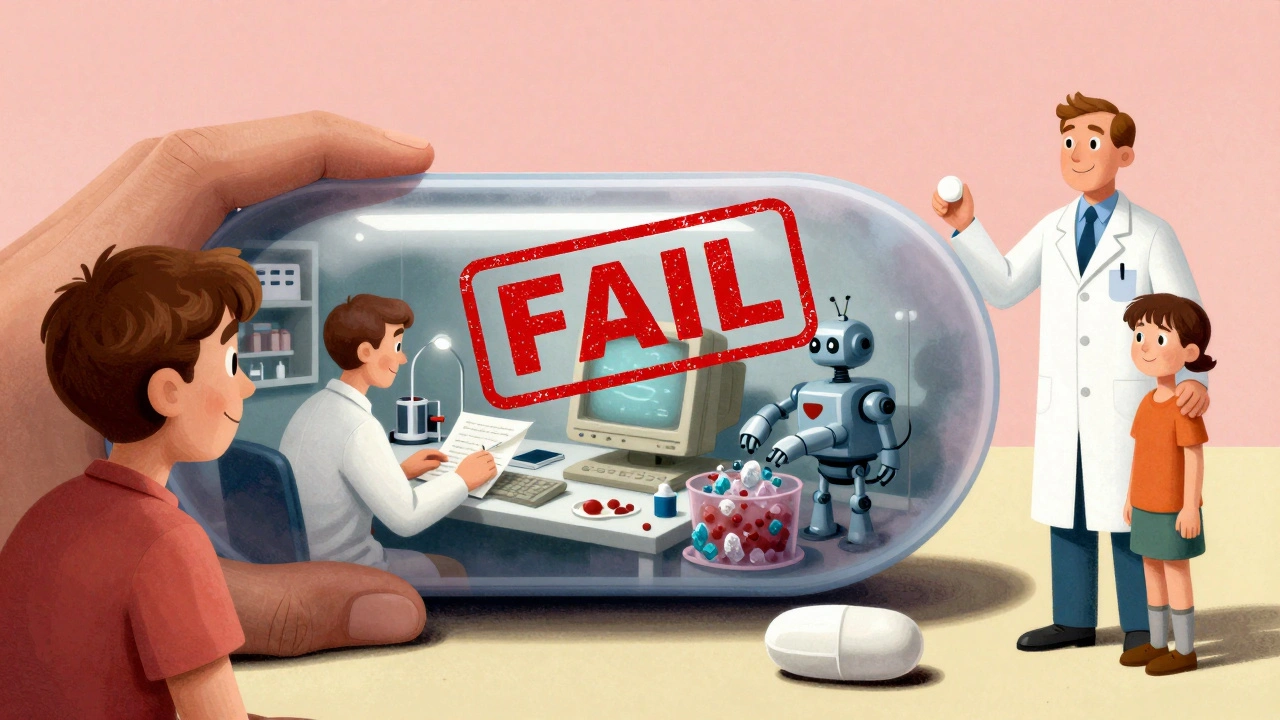
The Cost of Cutting Corners
Some companies swear by Chinese APIs. One procurement manager on Reddit said switching to Chinese-sourced amoxicillin saved his company $4.2 million a year-even though 15% of the batches got rejected. That’s a gamble. Rejected batches mean delays. Delays mean shortages. Shortages mean patients go without. In 2023, a PhRMA survey found 68% of U.S. generic drug makers had experienced quality issues with Chinese suppliers. Forty-two percent cited inconsistent purity. Thirty-seven percent reported falsified documents. That’s not just bad manufacturing. That’s a breakdown in trust. And trust is what medicine is built on. When a patient takes a pill, they assume it’s safe. They don’t assume it’s been tested, retested, and verified. They assume it just works. When it doesn’t-when a blood pressure drug doesn’t lower pressure, or an antibiotic doesn’t kill the infection-the consequences aren’t abstract. They’re life-threatening.What’s Changing? And What’s Not
China’s 2024 “Pharma 2035” plan promises $22 billion to upgrade factories, adopt continuous manufacturing, and improve data systems. By 2027, it wants 500 of its plants FDA-inspected-up from 187. That’s a big jump. But it’s also a race against time. The U.S. and EU are moving fast to reduce dependency. The U.S. CHIPS and Science Act now includes $500 million for domestic API production. The EU’s 2024 Pharmaceutical Strategy aims to cut China’s share of API supply from 80% to 40% by 2030. India, Vietnam, and Mexico are stepping in to fill the gap. McKinsey predicts China’s API market share will drop from 78% in 2023 to 65% by 2030. That’s still huge-but it’s not the monopoly it once was.What You Should Know
You can’t always know where your generic drug’s active ingredient came from. Labels don’t say. But here’s what you can do:- Ask your pharmacist: “Is this generic made by a company that sources API from China?” Some pharmacists track this.
- Check the FDA’s drug shortage list. Many shortages are tied to API supply issues from China.
- If a generic drug seems less effective than the brand version, report it. Your feedback helps regulators spot patterns.
- Support policies that fund domestic API production. It’s not about nationalism-it’s about security.
For now, the system works because it’s cheap. But medicine isn’t a commodity. It’s a lifeline. And when your life depends on it, you don’t want to gamble on a price tag.
Are Chinese generic drugs safe to take?
Many Chinese-made generic drugs are safe and effective, especially those that have passed the FDA’s inspection process or China’s own Generic Consistency Evaluation. But not all do. The FDA has found that 12.7% of Chinese API samples fail purity tests-far higher than the 1.8% failure rate for U.S.-made APIs. If a drug is approved by the FDA, it meets U.S. standards, regardless of origin. But unapproved or unverified generics carry higher risk.
Why do U.S. companies still use Chinese APIs if the quality is questionable?
Cost. Chinese APIs are 30-40% cheaper than those made in the U.S. or Europe. For generic drug makers operating on thin margins, that savings is critical. Many companies accept higher rejection rates because the overall cost is still lower. Some also rely on China’s massive production capacity-no other country can match its output of high-volume APIs like metformin or atorvastatin.
How can I tell if my generic drug contains Chinese-sourced ingredients?
You usually can’t. Drug labels don’t list where the active ingredient was made. The best you can do is ask your pharmacist or check the manufacturer’s website. Some companies disclose their supply chain. Others don’t. The FDA’s Drug Shortage Database can help-if a drug is in short supply, it may be linked to API issues from China.
Has China improved its drug quality standards recently?
Yes, but slowly. Since 2015, China has closed over 4,500 non-compliant factories and required manufacturers to follow stricter GMP rules. The Generic Consistency Evaluation program has pushed some companies to improve. But enforcement is uneven. Only 35% of generics have completed the evaluation as of 2024. And while China claims 95% of GMP-certified plants follow international standards, FDA inspections tell a different story-showing persistent failures in lab controls and data integrity.
Is India a safer alternative for generic drugs?
India has better regulatory oversight and higher FDA inspection rates than China. But here’s the catch: India imports 65% of its APIs from China. So even if your drug says “Made in India,” the active ingredient might still be Chinese. India’s strength is in formulation-turning powder into pills-not in making the raw chemicals. That makes the supply chain complex, not necessarily safer.
What happens if a Chinese API fails in the U.S.?
If the FDA finds a problem, it can issue a warning letter, block imports, or require a recall. In 2023, Zydus Pharmaceuticals recalled over a million bottles of blood pressure medication due to sub-potent API from China. The company had to halt production, retest batches, and rebuild trust. These recalls cost millions and delay patient access. But they’re necessary to protect public health.
Will the U.S. ever stop relying on Chinese APIs?
Not completely-yet. The U.S. is investing $500 million to build domestic API capacity, and the EU aims to cut Chinese dependency from 80% to 40% by 2030. But China still controls 78% of the global API market. Replacing that scale will take decades and tens of billions in investment. The goal isn’t to cut ties-it’s to diversify so no single country holds a chokehold on essential medicines.
Michael Bene
December 4, 2025 AT 07:22Let’s be real-China’s not just making pills, they’re making a global pharmacy empire on the backs of half-baked QA and backdated spreadsheets. I’ve seen lab reports from these places that look like they were typed in MS Paint during a power outage. And don’t get me started on the ‘batch processing’-it’s like cooking soup in a bathtub and calling it fine dining. The FDA’s inspections? A joke. They inspect one Chinese plant every 10 years while checking their own backyards twice a month. We’re not importing medicine-we’re importing liability.
Brian Perry
December 5, 2025 AT 05:55omg i just took some generic blood pressure stuff last week and my head felt like a balloon that got popped too hard… maybe it was the chinese api?? 🤔
Ethan McIvor
December 6, 2025 AT 19:10It’s heartbreaking, really. We’ve outsourced the very thing that keeps us alive-our medicine-to a system where profit outweighs principle. And we pretend it’s fine because the price is low. But when your grandma’s heart meds don’t work, who do you blame? The factory worker? The regulator? Or the CEO who signed the contract because it saved $2 million? We’re all complicit. We want cheap. We want convenient. We don’t want to think about the truth behind the pill bottle. But the truth doesn’t care about our convenience. It just waits… until it’s too late.
Mindy Bilotta
December 7, 2025 AT 22:17My pharmacist actually told me last month that my metformin was from India, but she said the API was from China. She said if you want to know for sure, you can ask for the lot number and look it up on the FDA site. I didn’t know you could do that! So now I do. Small thing, but it helps. Also, if you’re on a tight budget, don’t panic-FDA-approved generics are still way safer than random online sellers. Just stay informed, not paranoid. 😊
Chloe Madison
December 8, 2025 AT 02:06Let’s not forget: the FDA doesn’t approve the country-it approves the facility. If a Chinese plant passes inspection, it’s safe. Period. The problem isn’t China-it’s the lack of consistent oversight and transparency. But here’s the good news: more plants are getting FDA-cleared every year. And companies that care about quality are switching to continuous manufacturing. We’re not powerless. We can demand better. We can support domestic production. We can vote with our wallets. And we can thank our pharmacists for being the unsung heroes keeping us safe. You’ve got this. 💪
Vincent Soldja
December 8, 2025 AT 05:53Makenzie Keely
December 9, 2025 AT 11:04Let me just say this-when I was in Mumbai last year, I visited a pharma plant that makes pills for the U.S. market. The facility was immaculate, the staff were trained, the documentation was flawless. But guess what? The active ingredient? Came from Shandong. And the manager told me, ‘We don’t test it-we trust the supplier.’ That’s not trust. That’s a gamble. And we’re all on the table. We need traceability. We need labeling. We need to stop pretending that ‘Made in India’ means ‘Made in India.’ It doesn’t. It means ‘Made in China, packaged in India.’ And until we fix that, we’re just delaying the inevitable.
Joykrishna Banerjee
December 10, 2025 AT 16:50Let’s not infantilize the Chinese pharmaceutical industry. Their GMP standards are now aligned with ICH guidelines. The FDA’s 12.7% failure rate? That’s a cherry-picked sample from non-compliant facilities-many of which were already blacklisted. The real issue is Western hypocrisy: we outsource to save costs, then blame the supplier when our own regulatory capture fails. India’s 65% API dependency? That’s a failure of their own industrial policy. And your ‘domestic production’ fantasies? They’re economically naive. The cost of U.S.-made metformin would be $800/kg. Do you really want to pay $50 per prescription? Or are you just enjoying the moral high ground while your insurance premiums rise? 🤷♂️