
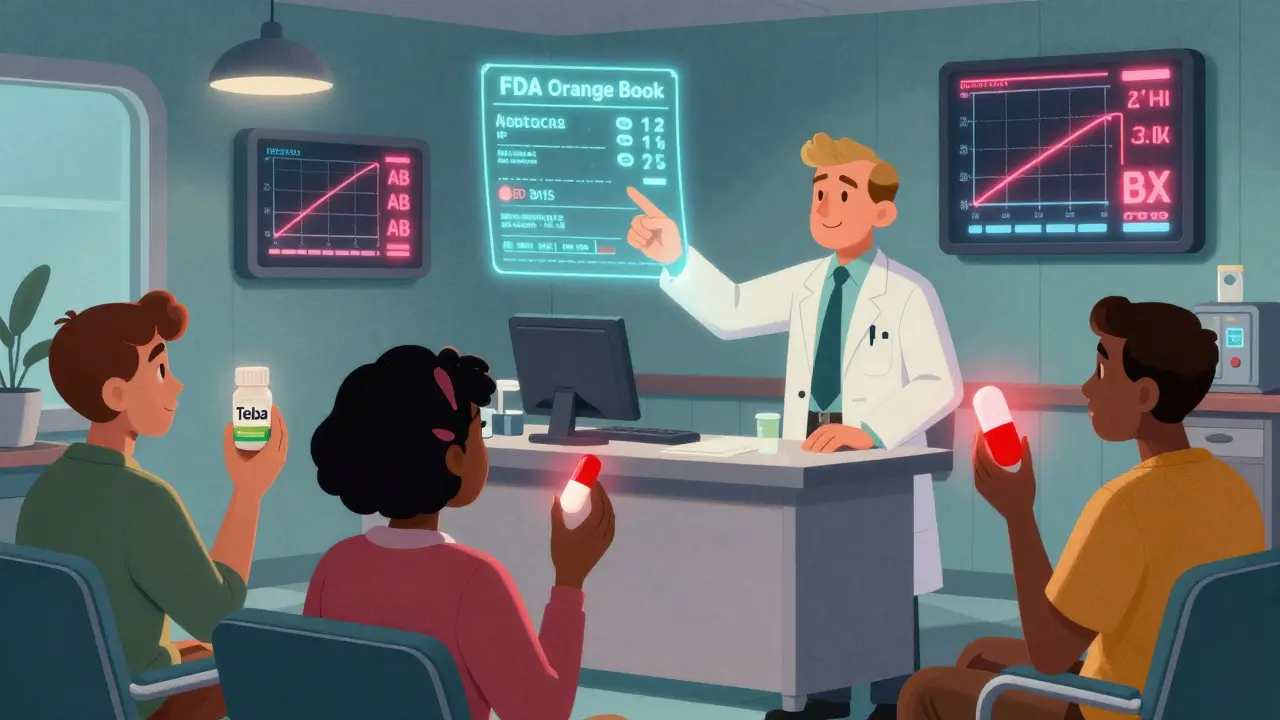
When a patient walks into a clinic and asks why their prescription changed from a brand-name pill to a plain white capsule, the answer isn’t always simple. For doctors, pharmacists, and nurse practitioners, the shift to generic medications isn’t just a cost-saving move-it’s a daily clinical decision with real consequences. Across the U.S., generics make up 90% of all prescriptions filled, yet providers still face confusion, resistance, and unexpected outcomes when switching patients. This isn’t theory. It’s practice. And the data tells a story far more nuanced than "generic equals cheap."
What Providers Actually See in Clinic
Most providers agree: for the majority of drugs, generics work just as well. Statins like atorvastatin, blood pressure meds like lisinopril, and antidepressants like sertraline show nearly identical outcomes in real-world use. A 2019 JAMA Internal Medicine study tracked over 10 drugs with both brand and generic versions and found no difference in hospitalizations, emergency visits, or treatment failure rates. That’s reassuring. But it’s not the whole picture. Providers treating patients on narrow therapeutic index (NTI) drugs see a different reality. These are medications where a tiny change in blood level can mean the difference between control and crisis. Think warfarin, levothyroxine, and immunosuppressants like cyclosporine. A 2015 review of eight studies found that nearly half of all reported issues with generics involved NTI drugs. One provider in Ohio shared a case: a kidney transplant patient switched from brand cyclosporine to a generic version and developed acute rejection within two weeks. Switching back to the brand reversed the decline. No one knew why-bioequivalence tests passed. But in practice, something changed. For epilepsy patients, the stakes are even higher. The American College of Neurology explicitly advises against automatic substitution of antiepileptic drugs (AEDs) like lamotrigine. There are documented cases where patients stabilized for years on brand lamotrigine had breakthrough seizures after switching to a generic. In most cases, switching back restored control. Providers now routinely write "dispense as written" on these scripts. It’s not about distrust-it’s about safety.When Generics Don’t Perform as Expected
In 2016, the FDA launched a full investigation after hundreds of reports came in about generic versions of Concerta, a popular ADHD medication. Patients reported loss of symptom control, mood swings, and increased side effects. The agency tested the pills, reviewed manufacturing data, and consulted experts. The result? Two generic versions were downgraded from "AB" (therapeutically equivalent) to "BX" (not equivalent) in the Orange Book. That’s rare. And it shows regulators aren’t blind. This wasn’t an isolated glitch. The same thing happened with a generic version of the asthma inhaler Flovent. Patients reported reduced effectiveness. Testing revealed inconsistent particle size distribution-a critical factor for lung delivery. The FDA pulled the rating. These aren’t failures of generics as a category. They’re failures of specific batches or manufacturing processes. And providers are the ones who notice the pattern first.The Patient Factor: Perception vs. Reality
Patients don’t always trust generics. A 2024 survey in Greece found that 68% of women followed their doctor’s advice to switch, but only 64% of men did. Why? Because patients often associate pill appearance with quality. A white capsule feels "cheap." A colorful tablet feels "real." Worse, some patients get multiple generic versions in one year. One patient on metformin might get a pill from Teva one month, Mylan the next, and Apotex the third. The shape, color, and even taste change. Without explanation, patients assume the medication isn’t working. Providers report patients calling in saying, "This isn’t helping like the last one did." The drug is identical. The packaging isn’t. Pharmacists play a huge role here. When a pharmacist takes two minutes to explain, "This is the same medicine, just made by a different company," adherence improves. But many don’t. A Portuguese study found that patients who discussed substitution with their provider were 40% more likely to accept generics. Education matters.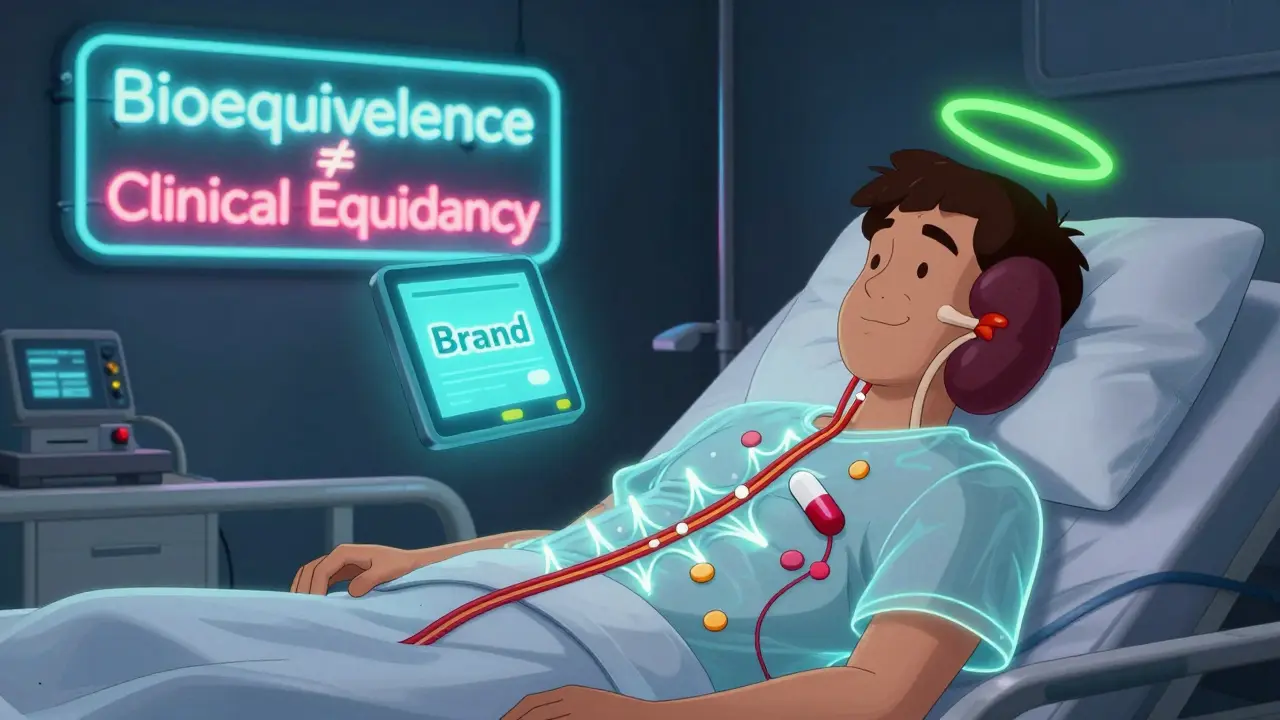
State Laws Make It Complicated
In 19 states, pharmacists can substitute generics without telling the patient. In 7 states and Washington, D.C., they must get written consent. In 24 states, pharmacists have no legal protection if something goes wrong after a substitution. This patchwork creates confusion. A provider in California might assume a switch is automatic. A patient in New York might be shocked when they’re handed a different pill with no warning. The JAMA study of U.S. states found that states requiring patient consent had 25% lower generic substitution rates. That means more brand-name drugs are being used-costing the system millions. Dr. William Shrank’s research showed that eliminating consent requirements for just three drugs (atorvastatin, clopidogrel, olanzapine) could have saved over $100 million in one year.What Works: Best Practices from the Field
Providers who manage generics well use three strategies:- Preemptive counseling. Don’t wait for the patient to ask. Say early: "This is a generic version of your old medication. It’s the same active ingredient, approved by the FDA, and costs much less."
- Use the Orange Book. Check therapeutic equivalence ratings. AB = fine to substitute. BX = don’t substitute without review.
- Document everything. If you write "dispense as written," note why. If you’re switching a patient on warfarin, check INR levels more closely for the first month.

The Bigger Picture: Cost, Access, and Trust
Generics saved the U.S. healthcare system over $300 billion between 2009 and 2023. Without them, millions of patients couldn’t afford treatment. The Medicare Part D program now has a 91% generic utilization rate among seniors. For statins, it’s 98%. For antiepileptics? Only 52%. That gap isn’t about science. It’s about fear. The Inflation Reduction Act of 2022 is pushing even harder for generics by capping insulin prices and requiring Medicare to prioritize low-cost drugs. By 2025, generic substitution rates are expected to rise 5-7%. But if providers don’t lead the conversation, patients will keep believing the myth that generics are inferior.Final Takeaway: Generics Work-When Handled Right
For 90% of prescriptions, generics are safe, effective, and life-changing. But for the other 10%, especially with NTI drugs, the stakes are high. The key isn’t avoiding generics. It’s managing them with care. Providers who treat generics like any other clinical tool-assessing patient history, checking ratings, explaining changes, and monitoring outcomes-see better adherence, fewer side effects, and lower costs. Those who ignore the nuances? They’re the ones fielding the calls from patients wondering why their seizure came back. The evidence is clear: generics aren’t a compromise. They’re a cornerstone of modern medicine. But they require thoughtful use-not blind substitution.Are generic medications as effective as brand-name drugs?
For the vast majority of medications, yes. The FDA requires generics to prove they deliver the same amount of active ingredient into the bloodstream at the same rate as the brand-name version. Studies show no meaningful difference in outcomes for drugs like statins, blood pressure meds, and antidepressants. However, for narrow therapeutic index drugs-like warfarin, levothyroxine, and antiepileptics-some patients experience issues after switching. These cases are rare but real, and require careful monitoring.
Why do some patients have problems after switching to generics?
Sometimes, it’s not the drug itself-it’s the change. Patients may notice different colors, shapes, or pill coatings, which can trigger psychological concerns. Other times, manufacturing inconsistencies (like particle size in inhalers or dissolution rates in extended-release pills) can affect absorption. A 2016 FDA review found two generic versions of Concerta were less effective than the brand, leading to a downgrade in therapeutic rating. These are exceptions, not the rule, but they highlight why provider oversight matters.
Can pharmacists substitute generics without my consent?
It depends on your state. In 19 states, pharmacists can substitute without telling you. In 7 states and Washington, D.C., they must get your written consent. In 24 states, pharmacists have no legal protection if something goes wrong after substitution. Always ask your pharmacist if a generic was substituted, and check the label for the manufacturer name. If you’re on a high-risk medication like warfarin or epilepsy drugs, ask your provider to write "dispense as written" on the prescription.
What does "AB" and "BX" mean on the Orange Book?
The FDA’s Orange Book rates generic drugs for therapeutic equivalence. "AB" means the generic is considered equivalent to the brand-name drug and can be substituted safely. "BX" means the generic is not considered equivalent-either due to inconsistent performance or lack of proven bioequivalence. Providers use this list to decide whether substitution is appropriate. Always check the rating if you’re switching a patient on a critical medication.
Why do some doctors refuse to prescribe generics?
Most don’t. But some avoid generics for drugs with narrow therapeutic windows-like immunosuppressants, thyroid meds, or antiepileptics-because of documented cases where patients had adverse events after switching. It’s not about distrust of generics overall. It’s about protecting vulnerable patients. For these cases, the risk of a small change in drug levels outweighs the cost savings. Providers who do this aren’t anti-generic-they’re practicing cautious, individualized care.
Are authorized generics different from regular generics?
Yes. Authorized generics are made by the original brand-name company but sold without the brand name. They’re identical in every way to the brand drug-same ingredients, same factory, same packaging except for the label. Regular generics are made by other companies and must meet FDA standards but may differ slightly in inactive ingredients or manufacturing. Studies show authorized generics perform just like the brand, and often better than regular generics in patient perception and adherence.
Do generics cause more side effects?
No, not overall. A large 2019 JAMA study found no increase in side effects or hospitalizations with generic drugs compared to brand-name versions. However, some patients report side effects after switching due to changes in inactive ingredients (like fillers or dyes) or psychological factors. If a patient claims a new side effect after a switch, the provider should consider the timing, rule out other causes, and consider switching back temporarily to confirm.
How can I trust that a generic is safe?
All generics approved by the FDA must pass strict bioequivalence tests. They must deliver the same amount of active ingredient within the same time frame as the brand. The FDA inspects manufacturing facilities-same as for brand drugs. You can check the FDA’s Orange Book to see if a generic has an "AB" rating. If your provider says it’s safe to use, that’s a strong signal. If you’re unsure, ask for the manufacturer name and look it up. Most are reliable.
Robert Bliss
March 8, 2026 AT 21:10Generics saved my dad's life. He's on warfarin and we were scared to switch, but his pharmacist sat down with us and explained everything. Same drug, same results, $20 instead of $200. I wish more people knew this stuff. 😊
Peter Kovac
March 9, 2026 AT 07:25The data presented is statistically robust, yet the anecdotal evidence regarding narrow therapeutic index (NTI) agents remains a critical confounding variable. Bioequivalence, as defined by FDA guidelines, is predicated upon pharmacokinetic parameters, which may not fully capture pharmacodynamic variability in heterogeneous patient populations. The clinical implications are non-trivial.
APRIL HARRINGTON
March 10, 2026 AT 04:31OMG I JUST HAD THIS HAPPEN TO ME 😭
Switched from brand Lamictal to generic and had a seizure in the shower. My husband had to call 911. They said it was "just a coincidence" but I KNOW it was the pill. Now I only take the brand even though it costs half my rent. Someone needs to fix this system. #GenericsAreNotSafe
Leon Hallal
March 10, 2026 AT 23:41I've been on generic metformin for 5 years. No problems. But then my pharmacy switched me to a different maker and I started having stomach issues. I went back to the old one and it was fine. So yeah, sometimes it's the filler. Not the drug. But no one tells you that. Just another way the system screws you.
Judith Manzano
March 11, 2026 AT 03:09This is such an important conversation. I work in a clinic and we’ve started doing pre-emptive counseling with every patient switching to generics. Just 2 minutes saying "this is the same medicine, just cheaper" makes a huge difference. Patients feel respected, not tricked. And adherence goes way up. We need more of this, not less.
rafeq khlo
March 12, 2026 AT 03:25It is evident that the FDA's regulatory framework is fundamentally inadequate to ensure therapeutic equivalence across all generic pharmaceutical products. The systemic failure to account for inter-batch variability, compounded by the absence of mandatory post-market surveillance, represents a profound dereliction of duty. Millions of vulnerable patients are being subjected to uncontrolled clinical risk under the guise of cost containment. This is not healthcare. This is negligence.
Morgan Dodgen
March 12, 2026 AT 18:58Let’s be real - the FDA is in bed with Big Pharma. They downgrade generics only when the brand name company complains. That’s why Concerta got pulled - not because it was unsafe, but because Janssen sued. And now? The same companies make "authorized generics" and sell them at brand prices. You think that’s a coincidence? Wake up. The system is rigged. 🤡
Philip Mattawashish
March 13, 2026 AT 21:19You people are so naive. You think generics are safe because some study says so? Where do you think the pills come from? China. India. Factories with no inspections. No oversight. They don’t test for purity. They test for "close enough." And then they slap an FDA sticker on it. You’re not saving money - you’re gambling with your life. And for what? A few bucks? Pathetic.
Tom Sanders
March 14, 2026 AT 01:52Just don’t switch me. I don’t care if it’s 10x cheaper. I don’t want to find out if my blood pressure med works or not after I get home from work. Too much stress already. Just give me the brand.