
When you pick up a prescription for metformin, lisinopril, or atorvastatin, you might assume you're getting the cheapest option because it's a generic drug. But here’s the truth: just because it’s generic doesn’t mean you’re paying the lowest possible price. In fact, you could be overpaying by hundreds of dollars - even when multiple companies are making the same pill.
What’s happening isn’t a mystery. It’s called a generic drug price war. When a brand-name drug’s patent expires, other manufacturers can legally make identical versions. This triggers a fierce battle over price. And yes, that competition should mean lower costs for you. But in the U.S., the system is broken. The savings aren’t reaching patients the way they should.
How Generic Price Wars Actually Work
The rules were set in 1984 with the Hatch-Waxman Act. It created a fast-track path for generic manufacturers to bring drugs to market without repeating expensive clinical trials. The idea was simple: more competitors = lower prices. And for the most part, it worked - at least on paper.
According to the FDA, when six or more companies make the same generic drug, prices drop more than 95% compared to the original brand. That’s not a guess. That’s data from billions of transactions. With just two competitors, prices are already 44-54% lower. With four, they’re down 73-79%. At ten or more, savings hit 70-80%.
So why do some people pay $0 for their blood pressure meds at Walmart, while others shell out $300 for the same drug? It’s not about the drug. It’s about the middlemen.
Who’s Getting the Savings - And Who’s Not
Here’s where things get ugly. Theoretically, pharmacies should pass along those 90%+ savings to you. But they don’t always. Why? Because pharmacy benefit managers (PBMs) - the invisible middlemen between insurers, pharmacies, and drug makers - have built a system that profits from confusion.
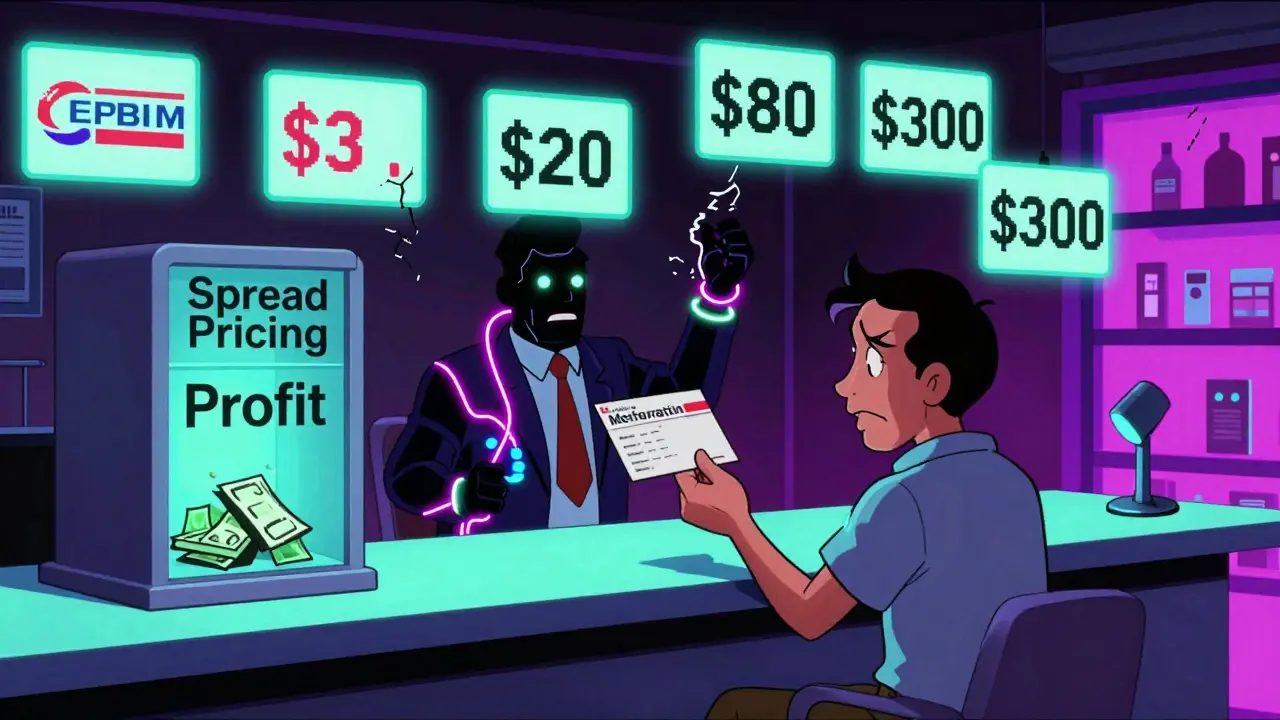
PBMs negotiate discounts with drug makers, then set what you pay at the counter. But they don’t always tell pharmacies what the real cash price is. In fact, they often use a trick called “spread pricing”: they tell the insurer one price, tell the pharmacy another, and pocket the difference. That means you might pay $20 for a generic that only costs $3 to make - and your insurer has no idea.
And here’s the kicker: pharmacies make 42.7% gross margins on generics, compared to just 3.5% on brand-name drugs. So they have every incentive to push you toward generics - but only if they can keep the markup hidden.
Dr. Darius Lakdawalla from the USC Schaeffer Center put it bluntly: “PBMs’ current practices have inflated retail generic prices.”
The Real Cost of Low Competition
Not all generics are created equal. If only one company makes a drug, it’s not really a price war - it’s a monopoly. And that’s more common than you think.
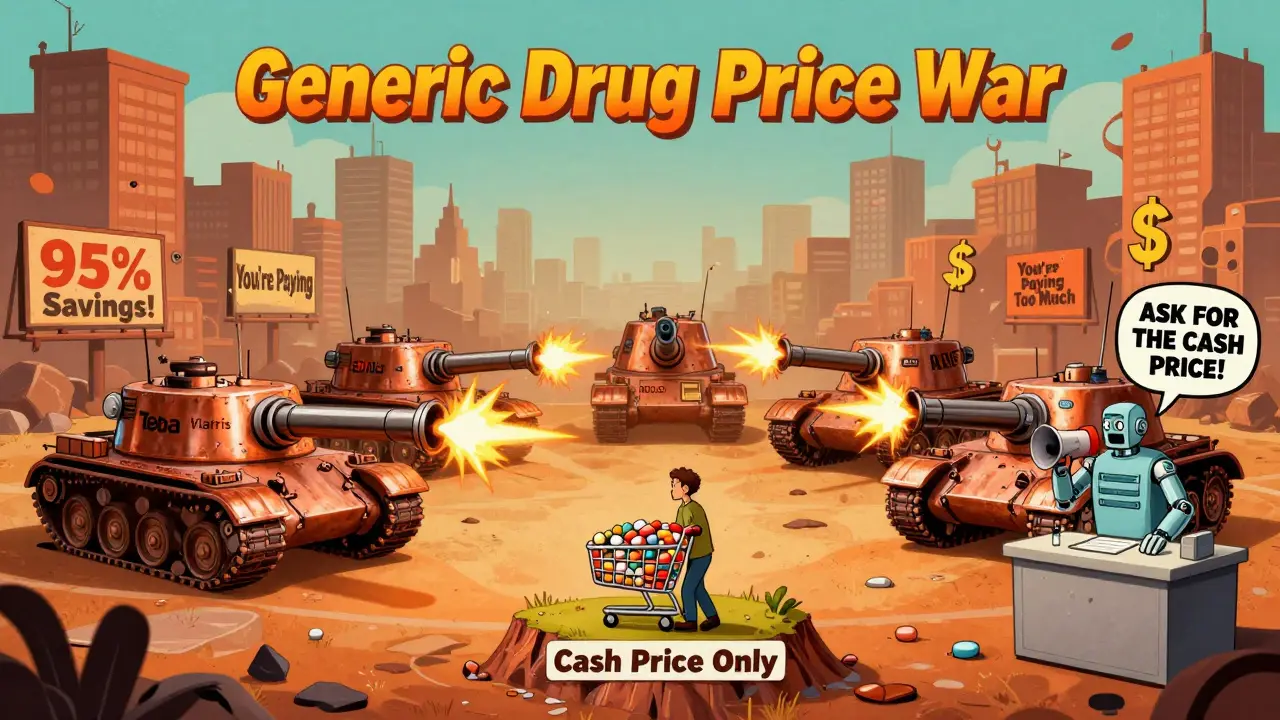
Five companies - Teva, Viatris, Sandoz, Amneal, and Aurobindo - control over 60% of the U.S. generic market. When competition is thin, prices don’t fall. In fact, some generics with just one or two makers cost nearly as much as the original brand.
And when prices drop too low? Manufacturers quit. That’s right. If a pill sells for $1 and costs $1.10 to produce, the company shuts down. Then you get a shortage. The AEA Web analysis found that 30% of generic shortages happen in markets with four or more competitors - because the price war killed the business.
Take apixaban, the blood thinner. When only one generic was available, it cost $400 a month. When three more entered, the price dropped to $15. Then one manufacturer left. The price jumped back to $90. You didn’t get a better deal. You got a worse one.
How to Actually Save - Even When the System Fails
You can’t fix the system. But you can outsmart it. Here’s how:
- Always ask for the cash price. In 28% of cases, paying out of pocket is cheaper than using insurance. That’s because PBMs often set copays higher than the actual cost of the drug.
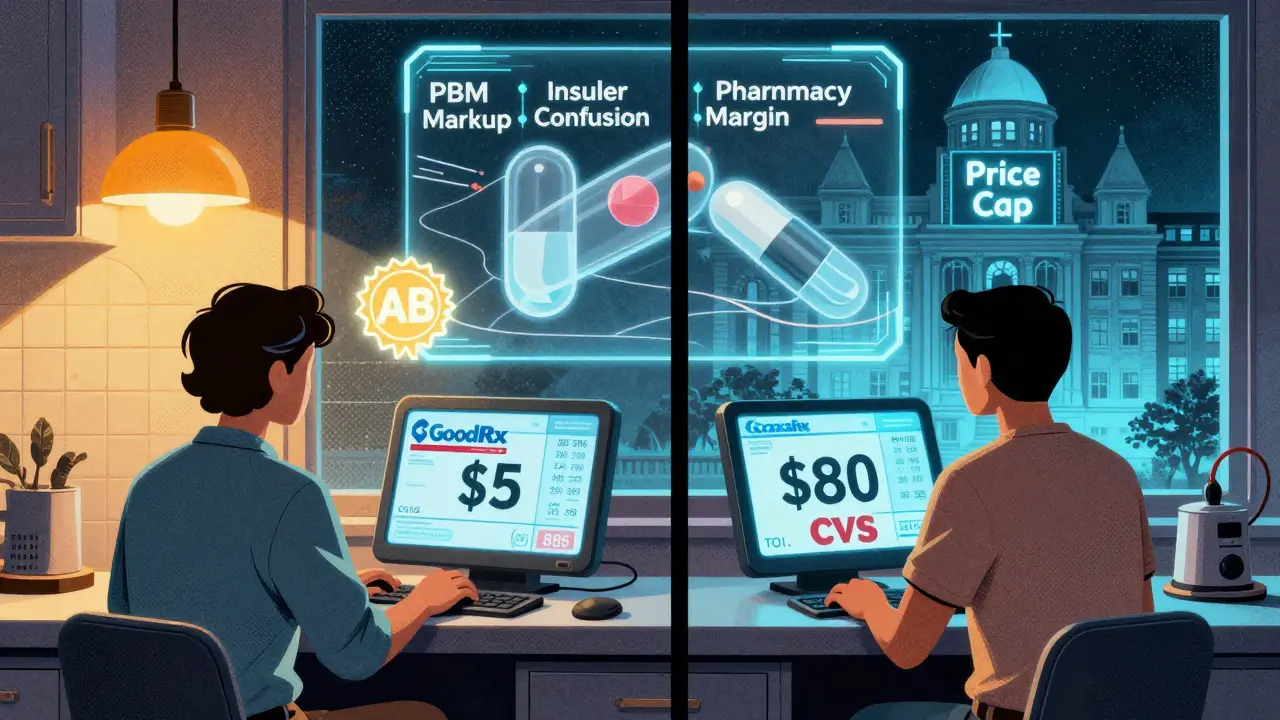
- Compare prices across pharmacies. The same generic drug can cost $5 at Costco and $80 at CVS. Use GoodRx or SingleCare. They show real-time prices.
- Check for therapeutic equivalence. Not all generics are identical. Look for the “AB” rating on the label. That means it’s bioequivalent to the brand.
- Focus on chronic meds. If you take a drug every day, even a $5 difference adds up. A $5 monthly saving on metformin = $60 a year. On five drugs? $300. That’s a vacation.
- Don’t trust your insurance copay. Your plan might be pushing you toward a more expensive generic because it’s on a preferred list - not because it’s cheaper.
Consumer Reports found that 42% of people didn’t know they could ask for the cash price. That’s because pharmacists were legally blocked from telling you - until the 2018 Know the Lowest Price Act banned those “gag clauses.” Now, they’re required to tell you. Use that power.
Why Other Countries Do It Better
In Canada, the UK, and Germany, governments directly negotiate drug prices. They don’t rely on PBMs or market chaos. When multiple generics enter, they cap the price. The result? Consistent savings. Patients pay 80-90% less - and there are no shortages.
The U.S. system is supposed to be market-driven. But it’s not a free market. It’s a rigged one. PBMs, insurers, and manufacturers have structured it to maximize profit - not patient savings.
What’s Changing - And What’s Not
The FDA approved 1,010 generic drugs in 2023 - up from 748 in 2022. That’s good news. More options mean more competition. The Inflation Reduction Act lets Medicare negotiate some drug prices. The Pharmacy Benefit Manager Transparency Act is in Congress to ban spread pricing.
But here’s the reality: none of these fixes will help you tomorrow. The system won’t change overnight. And while lawmakers debate, people are still choosing between food and insulin.
The only thing you can control? Your own actions. Ask for the cash price. Compare. Switch. Speak up. That’s how you win the price war - even when the rules are stacked against you.
Why is my generic drug more expensive than the brand?
It’s rare, but it happens when only one or two companies make the generic. Without competition, there’s no pressure to lower prices. Some generics cost nearly as much as the brand because manufacturers have no rivals. Always check the cash price - you might find a cheaper version at another pharmacy.
Can I really save money by paying cash instead of using insurance?
Yes - and it’s more common than you think. PBMs often set copays higher than the actual cost of the drug. In 28% of cases, the cash price is lower. Use tools like GoodRx to compare. For chronic medications, this can save hundreds a year.
Why do generic drug prices vary so much between pharmacies?
Each pharmacy negotiates its own deal with PBMs and wholesalers. Some get bulk discounts. Others are stuck with inflated prices. CVS, Walgreens, and Walmart may charge wildly different rates for the same pill. Always check at least two places before paying.
Are all generic drugs the same as the brand?
Legally, yes - if they have an AB rating. The FDA requires generics to have the same active ingredient, strength, dosage, and absorption rate as the brand. But some people notice differences due to inactive ingredients or manufacturing variations. If you feel a change, talk to your doctor. Switching brands might help.
What should I do if my generic drug suddenly gets more expensive?
Check if a manufacturer left the market - that’s the most common reason. Search for another generic with the same active ingredient. If none are available, ask your doctor about alternatives. You can also call your pharmacy and ask if they have a cash price option. Sometimes, a different pharmacy has the same drug for half the cost.
Mihir Patel
March 26, 2026 AT 07:47peter vencken
March 28, 2026 AT 05:41Anil Arekar
March 28, 2026 AT 18:20Caroline Dennis
March 29, 2026 AT 13:21Stephen Alabi
March 30, 2026 AT 17:23Elaine Parra
March 31, 2026 AT 03:29Kevin Siewe
March 31, 2026 AT 19:27Kevin Y.
March 31, 2026 AT 22:18Natasha Rodríguez Lara
April 1, 2026 AT 01:56Chris Crosson
April 1, 2026 AT 04:01Linda Foster
April 2, 2026 AT 13:25Grace Kusta Nasralla
April 2, 2026 AT 14:31Rama Rish
April 4, 2026 AT 04:11