

Every year, millions of older adults in the U.S. and Australia are prescribed benzodiazepines for anxiety or trouble sleeping. Drugs like Valium, Xanax, and Ativan work fast - too fast, sometimes. For a 70-year-old with a panic attack, a pill might feel like a lifesaver. But for long-term use? The risks aren’t just possible - they’re proven, serious, and often ignored.
Why Benzodiazepines Are Dangerous for Seniors
These drugs boost GABA, a calming chemical in the brain. That’s why they reduce anxiety and help people fall asleep. But in older adults, the body doesn’t process them the same way. Liver function slows down. Kidneys filter less. Brain receptors become more sensitive. That means even small doses stick around longer and hit harder.
One study of over 43,000 people over 65 found that those taking benzodiazepines had a 50% higher chance of breaking a hip. That’s not a small risk. It’s the difference between falling once and needing surgery, rehab, or never walking the same again. The risk of a car crash? It’s the same as driving with a blood alcohol level of 0.05% - legally drunk in many places.
And it’s not just falls. Long-term use is linked to memory loss, confusion, and a sharp rise in dementia risk. A major 2023 study showed that seniors taking benzodiazepines for more than six months had an 84% higher chance of developing Alzheimer’s. The longer they took it, and the higher the dose, the worse the risk. This isn’t speculation - it’s from peer-reviewed research published in top medical journals.
Even short-term use can cause problems. Drowsiness, dizziness, slowed reflexes - all common side effects. But for someone already at risk of tripping over a rug or forgetting where they put their keys, these effects can be dangerous. And when mixed with alcohol, opioids, or even some over-the-counter sleep aids, the risk of breathing problems or fatal overdose spikes.
What the Experts Say
The American Geriatrics Society has been clear since 2019: benzodiazepines are on their Beers Criteria list of potentially inappropriate medications for older adults. That means doctors should avoid prescribing them unless there’s no other option.
Dr. Sharon Inouye from Harvard calls them “among the most dangerous medications for older adults.” Dr. Michael Steinman from UCSF says even short-term use carries risks most doctors underestimate. The Substance Abuse and Mental Health Services Administration (SAMHSA) echoed this in 2025, urging prescribers to reconsider these drugs for seniors.
And it’s not just doctors. Patient data tells the same story. On review sites like Drugs.com and WebMD, seniors who’ve used benzodiazepines long-term rate them an average of 5.2 out of 10. Compare that to non-benzodiazepine sleep aids, which average 7.8. The complaints? “Foggy all day,” “can’t stop falling,” “I can’t quit even though I know I should.”
Why Do Doctors Still Prescribe Them?
It’s not because they don’t know the risks. It’s because it’s easier.
Writing a prescription for Xanax takes two minutes. Setting up cognitive behavioral therapy for insomnia (CBT-I) takes weeks. Patients often come in saying, “I can’t sleep,” and the quickest fix is a pill. Many seniors don’t even know they’re on a high-risk medication. A 2015 study found only 32% of elderly patients were aware benzodiazepines could hurt their memory. Most thought it was safe because their doctor prescribed it.
And once someone’s been on it for months - or years - quitting feels impossible. Withdrawal can cause rebound anxiety, insomnia, tremors, and even seizures. That’s why many patients and families resist stopping, even when they know it’s risky.
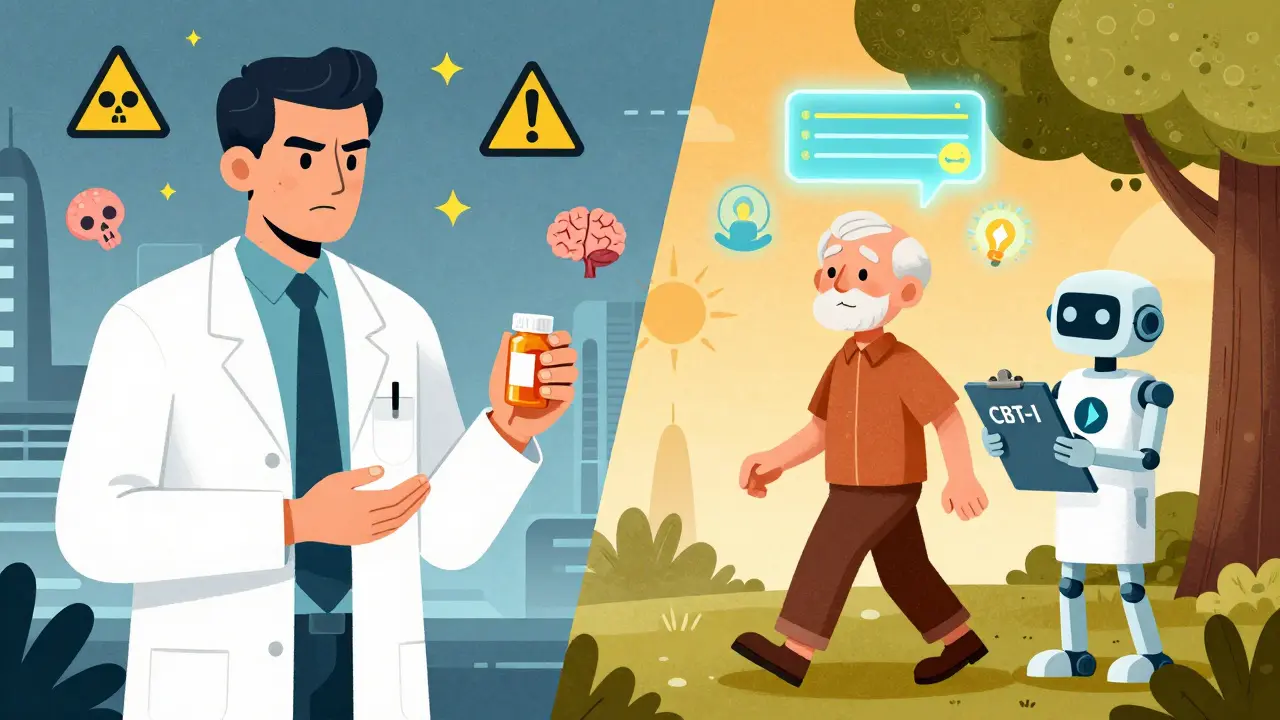
What Are the Safer Alternatives?
There are better options. Not just “less bad” - actually better. And they work without the brain fog, falls, or dementia risk.
- Cognitive Behavioral Therapy for Insomnia (CBT-I): This is the gold standard. It doesn’t involve pills. It teaches you how to reset your sleep habits, manage racing thoughts, and improve sleep efficiency. Studies show 70-80% of seniors improve significantly - and the results last. Medicare now covers CBT-I under its Behavioral Health Integration benefit, but only 12% of eligible seniors use it. Why? Limited providers. But it’s growing.
- SSRIs and SNRIs: For anxiety, drugs like sertraline (Zoloft) or venlafaxine (Effexor) are first-line choices. They take 4-6 weeks to work, but they don’t cause dependence, memory loss, or falls. They’re safer for long-term use.
- Ramelteon: A melatonin receptor agonist that helps with sleep onset. It’s not a sedative. It doesn’t cause next-day grogginess. It’s not addictive. It’s not perfect - it doesn’t help much with staying asleep - but it’s one of the safest options for sleep initiation.
- Non-drug approaches: Regular exercise, sunlight exposure, limiting caffeine after noon, and a consistent bedtime routine can do more than most pills. A 2024 study showed seniors who walked 30 minutes daily and avoided screens before bed improved sleep quality as much as those on sleep meds - without the side effects.
And avoid antihistamines like diphenhydramine (Benadryl). They’re often sold as “natural sleep aids,” but they block acetylcholine - a brain chemical tied to memory. Long-term use is linked to higher dementia risk. They’re not safer. They’re just cheaper.
How to Safely Stop Taking Benzodiazepines
If you or a loved one has been on a benzodiazepine for months or years, quitting cold turkey is dangerous. Withdrawal can be severe. But tapering slowly - with support - works.
The American Society of Addiction Medicine recommends reducing the dose by 5-10% every 1-2 weeks. For some, that means a 6-12 month process. The key is patience. Rushing it increases the chance of relapse or withdrawal symptoms.
Success rates jump when tapering is paired with CBT. One study found 65% of seniors successfully stopped their benzodiazepine when they got CBT support. Without it? Only 35% made it through.
Here’s what to ask your doctor:
- Is this medication still necessary, or was it meant for short-term use?
- What are the risks if I keep taking it?
- What are the risks if I stop - and how can we manage them?
- Can we try CBT-I or an SSRI instead?
- Can we start a slow taper plan together?
Don’t be afraid to ask for a referral to a geriatric psychiatrist or a sleep specialist. Many primary care doctors aren’t trained in deprescribing. But specialists are.

The Bigger Picture: A System That Still Lets Seniors Down
Prescriptions for benzodiazepines in seniors have dropped 18% since 2015. That’s progress. But 3.2 million older adults are still on them long-term. Among those over 85? Nearly 1 in 8 are still taking them.
CMS is now flagging inappropriate prescriptions in Medicare Part D. The FDA now requires warning labels about dementia risk on all benzodiazepine packaging. The Beers Criteria 2024 update says all benzodiazepines - no matter the half-life - are risky in older adults.
But awareness isn’t enough. Change needs action. Families need to ask questions. Doctors need time to have hard conversations. And seniors need better access to non-drug therapies.
The future isn’t more pills. It’s more support. More therapy. More education. And fewer people waking up feeling foggy, afraid, and at risk of falling.
Final Thoughts
Benzodiazepines aren’t evil. They have a place - in emergencies, in short bursts, in rare cases where nothing else works. But for chronic anxiety or insomnia in older adults? They’re outdated. Dangerous. Out of step with modern medicine.
The truth is simple: if you’re over 65 and taking a benzodiazepine every day, you’re not alone. But you don’t have to stay on it. Safer, more effective options exist. And with the right plan, you can get off - without losing your peace of mind.
Are benzodiazepines safe for seniors if taken occasionally?
Even occasional use carries risks. Older adults metabolize these drugs slower, so a single dose can linger longer than expected. This increases the chance of dizziness, falls, or confusion - especially when combined with other medications or alcohol. The American Geriatrics Society advises avoiding benzodiazepines entirely in seniors, even for short-term use, unless there’s no other option - like severe panic attacks or procedural sedation.
How long does it take to safely stop taking benzodiazepines?
Tapering usually takes 8 to 16 weeks, but for some seniors - especially those on high doses or long-term use - it can take 6 to 12 months. The key is slow, steady reductions: 5-10% of the current dose every 1-2 weeks. Going too fast can trigger withdrawal symptoms like rebound anxiety, insomnia, or even seizures. Always work with a doctor who understands deprescribing.
Can CBT-I really replace sleeping pills for seniors?
Yes - and it’s more effective long-term. Studies show 70-80% of older adults who complete CBT-I improve their sleep quality significantly. Unlike pills, the benefits last after treatment ends. CBT-I teaches skills like sleep restriction, stimulus control, and managing nighttime worries. Medicare now covers it, but finding a provider can be hard. Ask your doctor for a referral to a certified sleep psychologist.
What’s the biggest risk of long-term benzodiazepine use in seniors?
The biggest risk is dementia. Research shows seniors who take benzodiazepines for more than six months have an 84% higher risk of developing Alzheimer’s disease. The longer the use and the higher the dose, the greater the risk. This isn’t just memory lapses - it’s a measurable increase in neurodegenerative disease. Other risks like falls and fractures are serious, but dementia is irreversible.
Why aren’t more seniors switched to safer alternatives?
Three main reasons: time, access, and habit. Doctors are busy, and prescribing a pill is faster than arranging therapy. Many areas lack specialists trained in CBT-I or geriatric mental health. And seniors often don’t realize their medication is risky - they trust their doctor. Plus, quitting can feel scary. With proper education, support, and access to alternatives, that can change - but it needs systemic effort.
Art Van Gelder
December 22, 2025 AT 02:47Man, I remember my grandma on Xanax for three years straight. She’d zone out during family dinners like she was in a soap opera rerun. One day she tried to put the cat in the microwave because she thought it was the TV remote. No joke. Doctors kept saying 'it’s just for anxiety' like that’s some magical excuse. Turns out, she was just slowly forgetting how to be human. I wish someone had told us about CBT-I before it was too late.
Kathryn Weymouth
December 22, 2025 AT 22:31It’s alarming how normalized this is. A 78-year-old patient of mine was prescribed lorazepam for 'sleep issues' after a minor fall. No sleep study. No behavioral assessment. Just a script. And yet, the American Geriatrics Society has been screaming about this for over five years. The system isn’t broken-it’s been designed this way. Profit over prevention. Pills over patience.
Julie Chavassieux
December 23, 2025 AT 10:39Just stop. Please. I’m tired of seeing my mom’s eyes go blank. She’s 74. She used to read Tolstoy. Now she stares at the ceiling like a confused robot. Benzodiazepines didn’t help her sleep. They stole her. And now she says she ‘can’t quit’ because the doctor said it was ‘safe.’ Safe? Safe is not forgetting your own birthday.
Herman Rousseau
December 24, 2025 AT 19:08Big shoutout to anyone who’s tried CBT-I! 🙌 I helped my dad taper off Ativan last year-slowly, with a sleep coach. He’s been drug-free for 11 months now. Better sleep. Sharper mind. Even started gardening again. It’s not magic, but it’s real. And yes, finding a provider sucked-but Medicare covers it now. Ask your doctor. Seriously. It’s worth the call.
Johnnie R. Bailey
December 25, 2025 AT 07:40There’s a quiet tragedy here. We treat aging like a glitch to be patched with chemicals. But the brain isn’t a broken circuit-it’s a slow river. Benzodiazepines don’t fix insomnia; they drown the river in sediment. CBT-I? That’s not a treatment. It’s a homecoming. Teaching the mind to remember how to rest without crutches. The real scandal isn’t the prescription-it’s that we’ve forgotten how to help people heal without pills.
Nader Bsyouni
December 25, 2025 AT 13:31Jeremy Hendriks
December 26, 2025 AT 13:25You think this is about dementia? Nah. It’s about control. The medical industry doesn’t want seniors to get better-they want them to stay dependent. CBT-I? Too expensive. Too human. Too much effort. Give them a pill, slap on a warning label, and call it a day. Meanwhile, the real solution-community, routine, purpose-isn’t patented. And that’s why it’ll never be promoted.
Aliyu Sani
December 27, 2025 AT 05:52Bro, in Nigeria we don’t even have access to benzos for elderly. Our grandmas take ginger tea, palm oil massage, and talk to ancestors. They sleep better than my cousin on lorazepam. Maybe the real problem isn’t the drug-it’s that we’ve outsourced healing to chemistry and lost the village. We need elders back in the rhythm of life, not stuck in a pharmacy aisle.
Art Van Gelder
December 28, 2025 AT 07:12Re: Nader’s comment above. I get it. I’ve been there. My uncle had a panic attack after his wife passed. He took Xanax for 18 months. He didn’t die alone-he died confused, tangled in his own fear, unable to remember her face. That’s not peace. That’s chemical sedation masquerading as care. The pill doesn’t fix grief. It just mutes it until the body breaks. There’s a difference between comfort and surrender.
Sam Black
December 30, 2025 AT 06:51Sam here from Melbourne. In Australia, we’re starting to see geriatric clinics push CBT-I hard-especially in rural areas. One nurse I know runs group sessions via Zoom. Seniors log in, share stories, learn breathing techniques. No pills. Just connection. One woman said, 'I didn’t know I could sleep without feeling like I’d been drugged.' That’s the win. We’re not just reducing meds-we’re restoring dignity.
Kiranjit Kaur
December 30, 2025 AT 20:54Vikrant Sura
December 31, 2025 AT 20:31