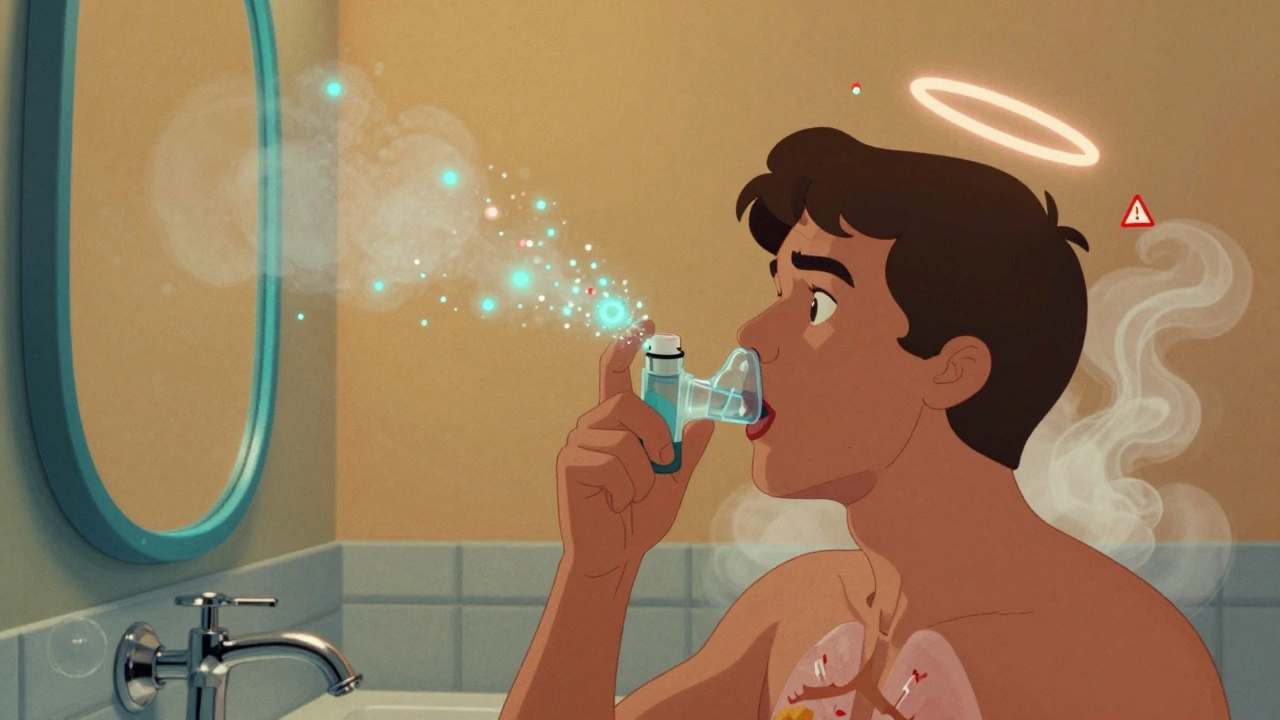
When you get a white, patchy coating on your tongue or inside your cheeks that won’t brush off, it’s often oral thrush, a fungal infection caused by an overgrowth of Candida albicans, a yeast that normally lives harmlessly in the mouth. Also known as candidiasis, it’s not contagious like a cold, but it can spread if your immune system is down or you’re using certain medications.
Oral thrush doesn’t just happen out of nowhere. It often shows up after antibiotics wipe out good bacteria that keep yeast in check. People on inhaled steroids for asthma or COPD are at higher risk too—especially if they don’t rinse their mouth afterward. Diabetics with high blood sugar, infants, older adults, and anyone with HIV or cancer are also more likely to get it. It’s not just about hygiene; it’s about balance. Your mouth has a whole ecosystem, and when something tips it—meds, illness, dry mouth—the yeast takes over.
What makes oral thrush tricky is that it often looks harmless. People mistake it for food residue or even a sore throat. But if those white patches bleed when scraped, or if you feel burning, loss of taste, or cracking at the corners of your mouth, it’s not just a nuisance—it’s a sign your body’s defenses are struggling. Left untreated, it can spread to the esophagus, making swallowing painful. The good news? It’s usually easy to treat with antifungal mouth rinses or tablets, like nystatin or fluconazole. But if it keeps coming back, that’s a red flag. Recurring thrush can point to something deeper: undiagnosed diabetes, an immune disorder, or even a drug interaction you didn’t know about.
You might not realize it, but your oral thrush could be linked to other meds you’re taking. For example, SSRIs, a class of antidepressants, can cause dry mouth, which creates the perfect environment for yeast to grow. And if you’re on anticoagulants, blood thinners like warfarin, you might be more prone to mouth irritation from brushing or even minor injuries, making thrush harder to manage. Even levothyroxine, a thyroid hormone replacement, can indirectly affect oral health if it’s not absorbed properly due to interactions with calcium or iron supplements—something that can throw off your whole system.
What you’ll find in the posts below isn’t just a list of treatments. It’s a collection of real, practical insights from people who’ve been there—how to spot the difference between thrush and something else, how to prevent it from coming back, what to ask your doctor if it won’t go away, and why some meds make it worse. You’ll see how drug interactions, immune health, and even how you take your pills can all play a role. No fluff. Just what you need to understand, manage, and stop oral thrush for good.