
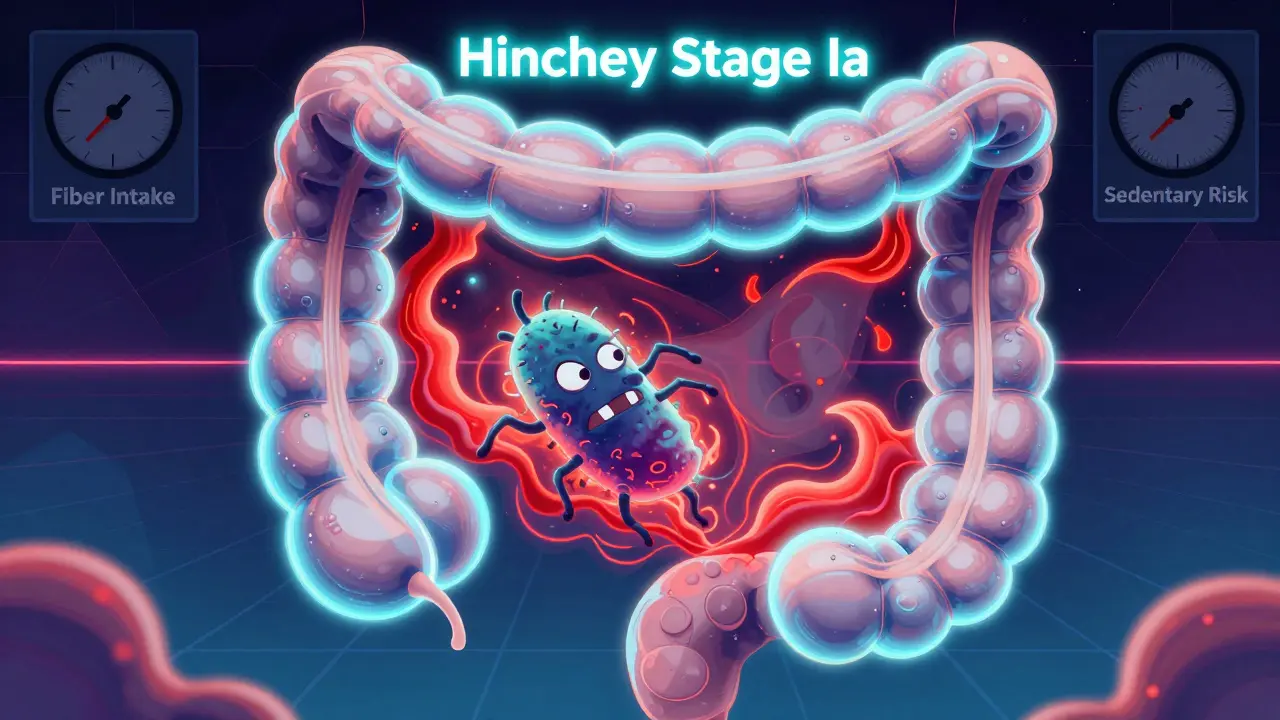
When your lower left abdomen suddenly locks up with sharp, persistent pain-like someone’s stabbing you with a hot knife-you might not realize it’s not just a bad stomach bug. It could be diverticulitis, an inflamed pouch in your colon. This isn’t rare. In fact, nearly 6 in 10 people over 60 have these little sacs in their colon wall. Most never know they’re there-until they get infected. And when they do, the pain, fever, and nausea can knock you out for days. The good news? Treatment has changed dramatically in the last five years. No more automatic antibiotics. No more avoiding nuts and seeds. What actually works now might surprise you.
What Are Diverticula, and Why Do They Get Inflamed?
Diverticula are tiny, balloon-like pouches that push out through weak spots in the colon wall. Think of them like bulges in an old garden hose under pressure. They form because of long-term strain-usually from low-fiber diets, constipation, or chronic tight bowel movements. The colon gets squeezed, and the weakest spots give way. These pouches are usually 5 to 10 millimeters wide, and 95% of them appear in the sigmoid colon-the last section before the rectum. That’s why most people feel pain on the lower left side.
But here’s the twist: having diverticula doesn’t mean you have diverticulitis. That’s called diverticulosis, and it’s common. Only when bacteria get trapped inside one of these pouches, or when pressure causes a tiny tear, does inflammation kick in. That’s diverticulitis. The body responds with swelling, fever, and intense pain. In some cases, the pouch bursts, leading to an abscess or even a leak into the belly cavity. That’s serious.
How Do You Know It’s Diverticulitis and Not Something Else?
It’s easy to confuse diverticulitis with other gut problems. Irritable bowel syndrome (IBS) causes bloating and cramps too. But IBS pain comes and goes, often after eating, and doesn’t come with fever. Diverticulitis? The pain is steady, sharp, and often gets worse when you move. You’ll likely have a fever over 38°C (100.4°F), and your white blood cell count will be up. Blood tests, symptoms, and a CT scan are the real keys to diagnosis.
Here’s what doctors look for: at least two of these three signs-localized tenderness in the lower left belly, fever, or high white blood cells. A CT scan confirms it by showing swelling around the pouches. Misdiagnosis is common. Women often get told it’s an ovarian cyst. Others are sent home thinking it’s kidney stones. According to patient reports, it takes an average of 3.2 days to get the right diagnosis. Some visit three different doctors before someone says, “It’s diverticulitis.”
How Severe Is Your Case? The Hinchey System Explained
Not all diverticulitis is the same. Doctors use the Hinchey system to grade severity:
- Stage Ia: Small abscess under 3 cm, still contained near the colon. Mild.
- Stage Ib: Larger abscess, 3-5 cm. Still contained but more serious.
- Stage II: Abscess in the pelvis, not yet spreading.
- Stage III: Pus in the belly cavity-generalized peritonitis.
- Stage IV: Fecal leakage into the abdomen. A medical emergency.
Most people (about 80%) have Stage I or II. These can often be treated at home. The rest? They need hospital care or surgery. The stage tells you what treatment path to take.
Modern Treatment: Antibiotics Are No Longer a Must
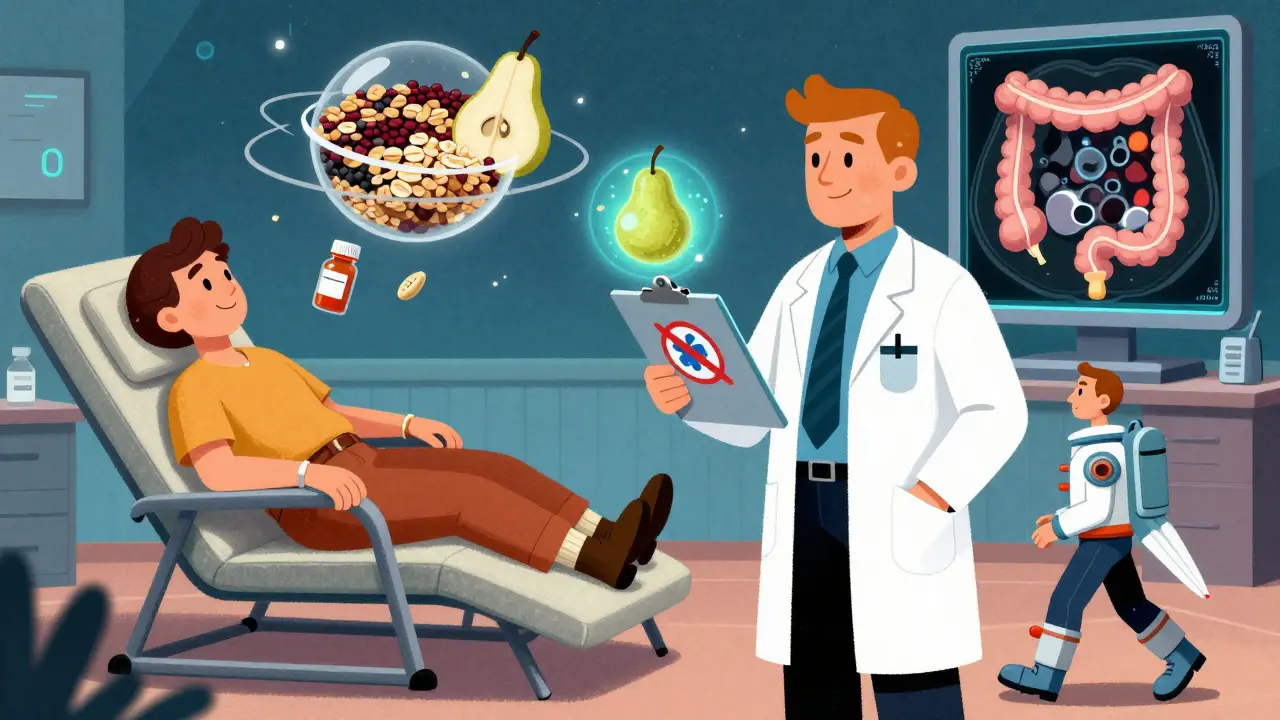
Here’s the biggest shift in recent years: you don’t always need antibiotics.
Five years ago, every case got them. Now? Guidelines from the American Gastroenterological Association and the American Society of Colon and Rectal Surgeons say: if it’s mild, rest your gut and drink fluids. A 2021 study called the DIVERT trial followed over 500 patients. Those treated with fluids and rest alone recovered just as fast as those on antibiotics-7 days vs. 7.3 days. No difference. That’s huge.
So when do you still need antibiotics? If you have a fever over 38.5°C, a white blood cell count over 15,000, or you’re not improving after 48 hours. Then yes, antibiotics help. Common ones include amoxicillin-clavulanate (875/125 mg twice daily) for mild cases, or IV piperacillin-tazobactam for hospital stays.
And forget NSAIDs like ibuprofen. They increase the risk of perforation. Use acetaminophen (Tylenol) instead for pain. Stick to clear liquids for 48-72 hours. Then slowly add low-fiber foods-white rice, eggs, skinless chicken, mashed potatoes. No beans, whole grains, or raw veggies yet. Let your colon rest.
When Surgery Becomes Necessary
For Stage III or IV, you’re going to the hospital fast. You’ll need IV antibiotics and surgery. Two main options:
- Laparoscopic lavage: Surgeons clean out the infection without removing any colon. Success rate: 82% for contained leaks.
- Resection: Remove the damaged part of the colon. Often followed by a temporary colostomy.
The 2022 SCANDIV trial showed lavage works better for younger, healthier patients with clean leaks. But if the infection is messy or you’ve had multiple attacks, removing the section is safer long-term.
After surgery, you’ll need a colonoscopy 6-8 weeks later. Why? Because diverticulitis can mask colon cancer. Studies show about 1.3% of patients over 50 have cancer hiding behind the inflammation. Better safe than sorry.
What Causes Diverticulitis? It’s Not What You Think
For decades, doctors told people to avoid nuts, seeds, popcorn, and corn. “They get stuck in the pouches!” they said. That advice? Totally wrong.
A massive 18-year study tracking 47,000 women (the Nurses’ Health Study) found no link between eating nuts, seeds, or popcorn and diverticulitis attacks. In fact, those who ate more of these foods had lower rates. The British Medical Journal published this in 2021. You can eat them. No restrictions.
What actually increases your risk?
- Low-fiber diet: Less than 15g of fiber daily raises risk significantly.
- Obesity: BMI over 30? Your risk doubles.
- Smoking: Smokers are nearly 3 times more likely to have attacks.
- Sedentary lifestyle: Exercising less than 2 hours a week increases risk by 38%.
- Age: Risk climbs after 40. By 60, more than half of people have diverticulosis.
And yes-diverticulitis is no longer just an “old person” disease. Young adults (18-44) now make up 22% of hospitalizations, up from 14% in 2000. Processed foods, lack of fiber, and sitting too much are catching up with younger bodies.
Preventing Recurrence: Fiber, Probiotics, and New Medications
One in four people have another attack within five years. But you can lower that risk.
First, get your fiber up. Aim for 30-35 grams daily. That’s not just “eat more salads.” Try:
- 1 cup cooked lentils (15.6g fiber)
- 1 medium pear (5.5g)
- 1 cup oats (4g)
- 2 tablespoons chia seeds (10g)
That’s 35g in one day. Studies show people who hit this target cut their recurrence risk by nearly half.
Second, talk to your doctor about mesalazine (Pentasa®). In a 2023 trial, it reduced recurrence by 31% over 12 months. It’s an anti-inflammatory drug used for IBD, and now it’s being used preventively.
Third, consider your gut bacteria. Research shows people with diverticulitis have lower levels of Faecalibacterium prausnitzii, a good bug that calms inflammation. Probiotics with this strain are still experimental, but eating fermented foods (yogurt, kefir, sauerkraut) may help.
What Happens After an Attack?
Recovery isn’t just about the pain going away. It’s about building habits that stop it from coming back.
After your first attack, you need to:
- Start a high-fiber diet-gradually, so your gut adjusts.
- Drink plenty of water-fiber needs water to work.
- Move daily-even a 20-minute walk helps.
- Quit smoking if you smoke.
- Get a colonoscopy 6-8 weeks after recovery.
And if you’ve had two attacks that landed you in the hospital? Talk to your surgeon. The guidelines now say: consider removing the affected colon section. Why? Because between attacks, many people live with constant bloating, cramping, and fear. Quality of life drops. One patient said, “I didn’t know I could feel this good again until I had the surgery.”
What’s Next? AI and Personalized Risk Predictions
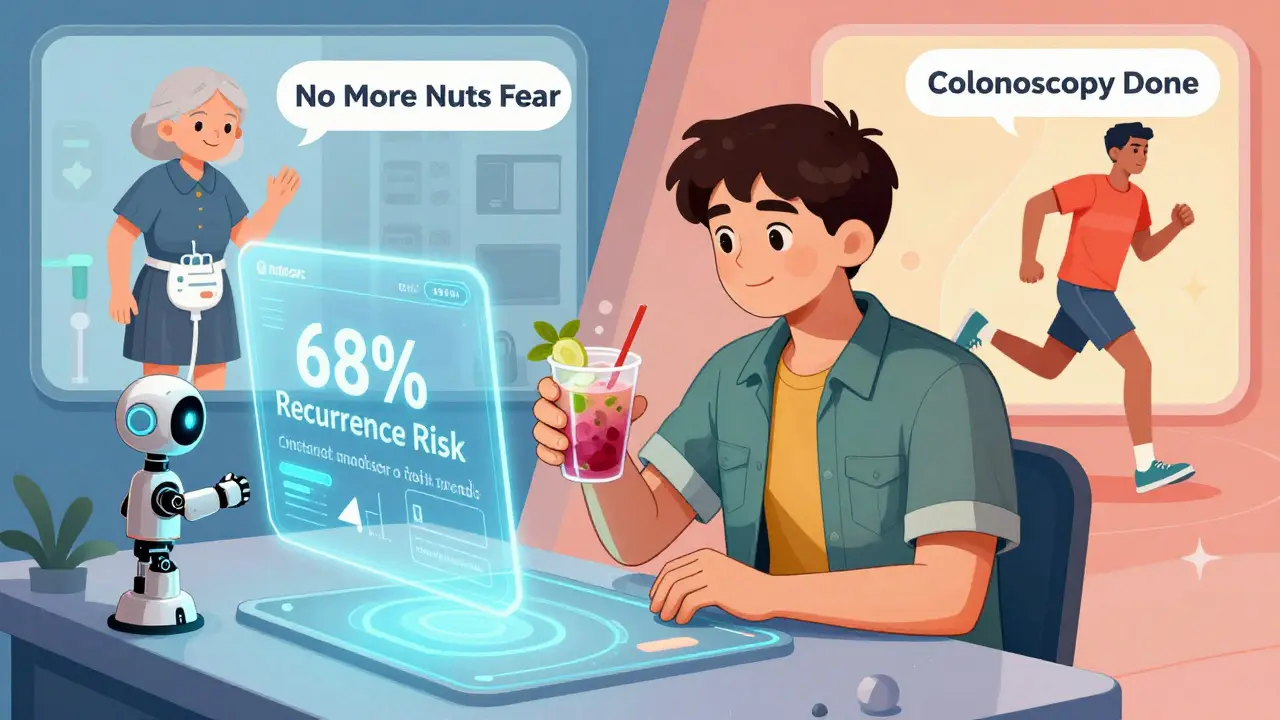
Doctors are starting to use AI to predict who’s likely to have another attack. Mayo Clinic built a model that looks at your CT scan, blood results, age, BMI, and smoking history. It predicts recurrence risk with 83% accuracy. Soon, you might get a personalized plan: “You have a 68% chance of another attack in 2 years. Start mesalazine and increase fiber to 35g daily.”
Research funded by the National Institutes of Health is now exploring the microbiome in depth. Could a stool transplant help? Could specific probiotics become standard? We’re on the edge of a new era.
Diverticulitis isn’t just a one-time emergency. It’s a sign your gut has been under strain for years. The good news? You can change that. With the right diet, movement, and medical care, most people never have another attack. You don’t need to live in fear of your next meal-or your next pain.
Christina VanOsdol
February 24, 2026 AT 00:55Brooke Exley
February 24, 2026 AT 12:56Alfred Noble
February 25, 2026 AT 05:14Emily Wolff
February 27, 2026 AT 01:37Khaya Street
February 28, 2026 AT 03:38Lou Suito
March 1, 2026 AT 18:42Joseph Cantu
March 2, 2026 AT 18:50Jacob Carthy
March 3, 2026 AT 23:40Lisandra Lautert
March 5, 2026 AT 22:36Matthew Brooker
March 6, 2026 AT 10:28William James
March 6, 2026 AT 10:37Bhaskar Anand
March 7, 2026 AT 10:42